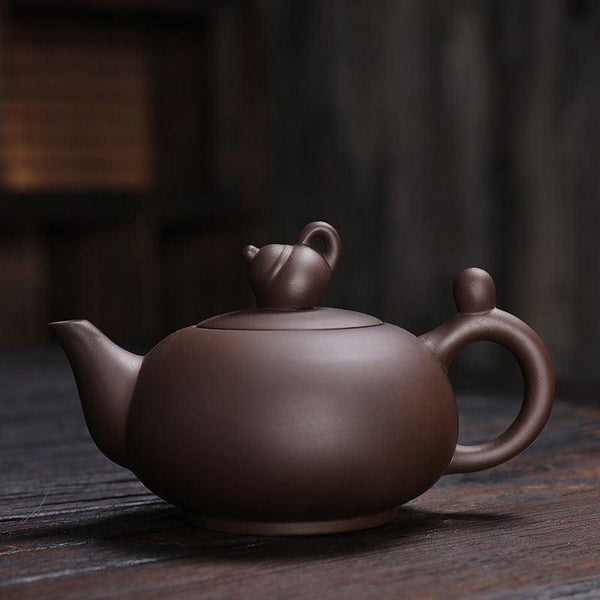
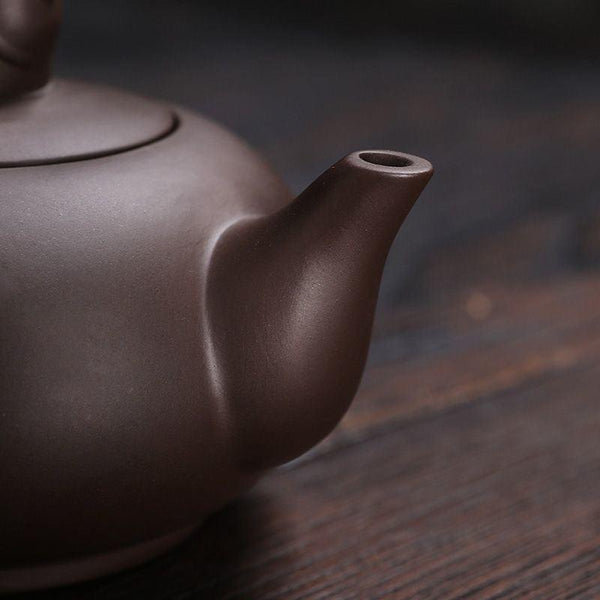
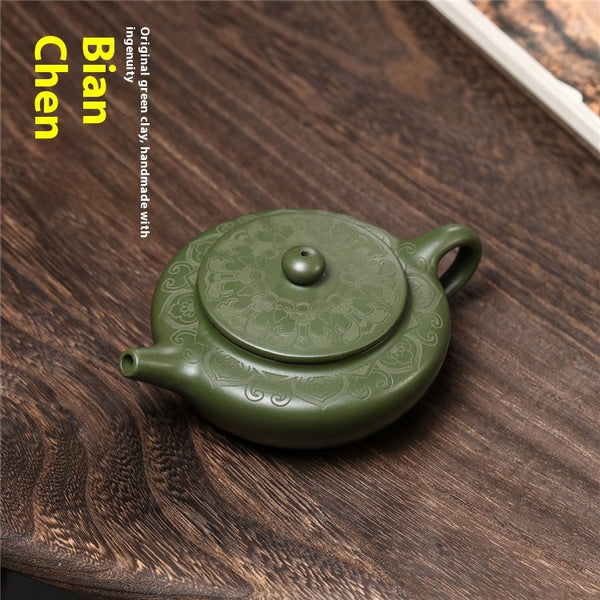
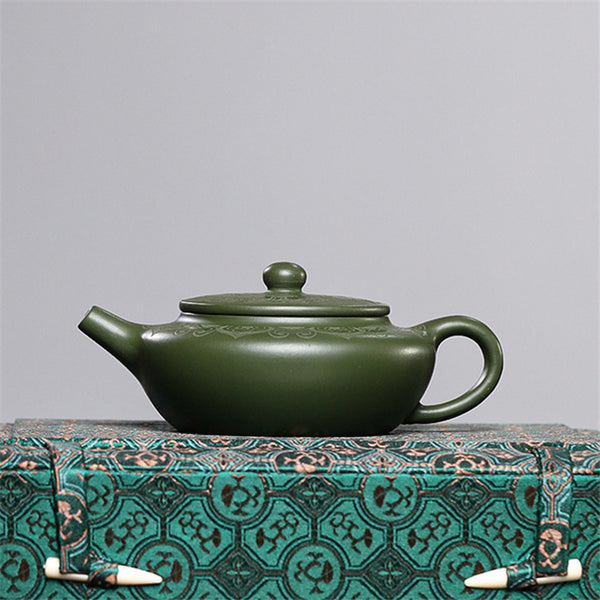
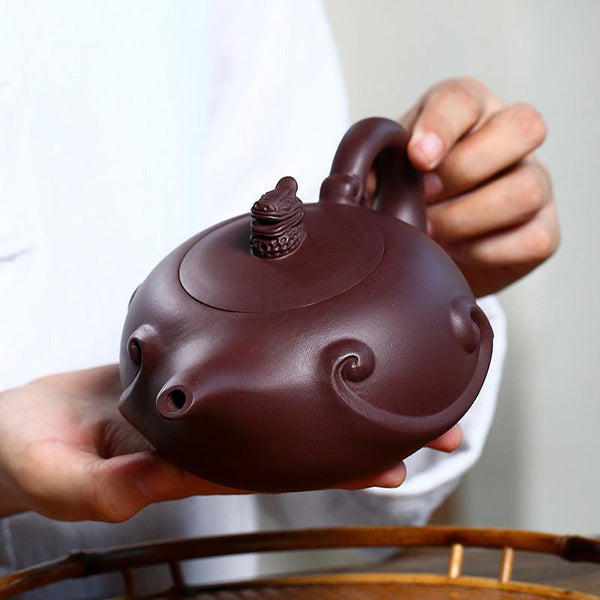
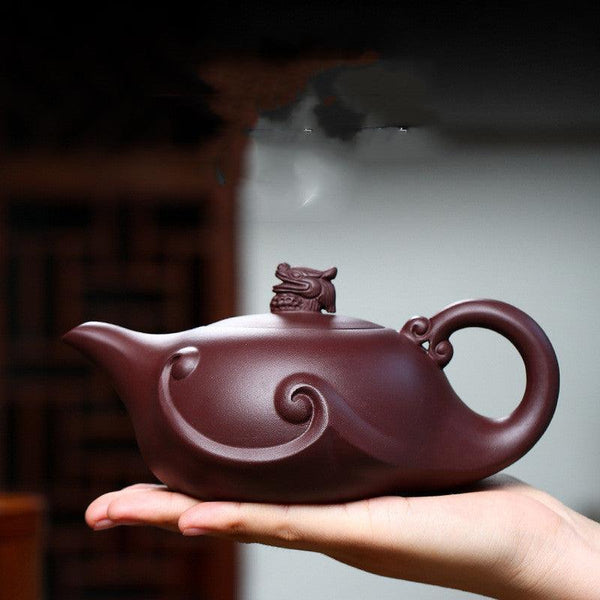
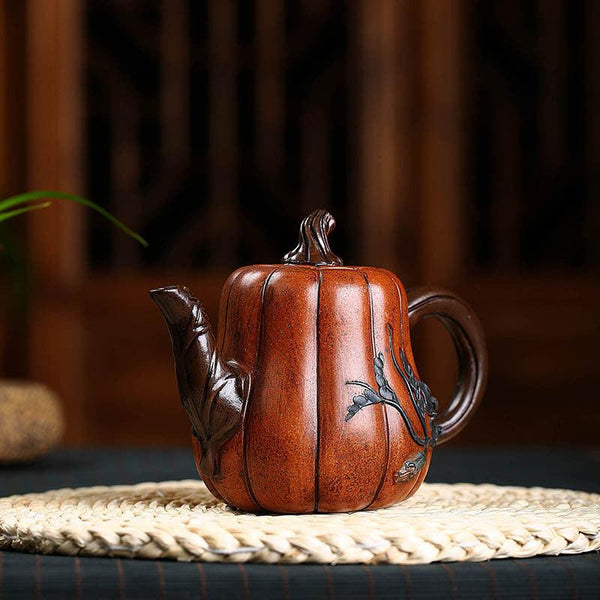
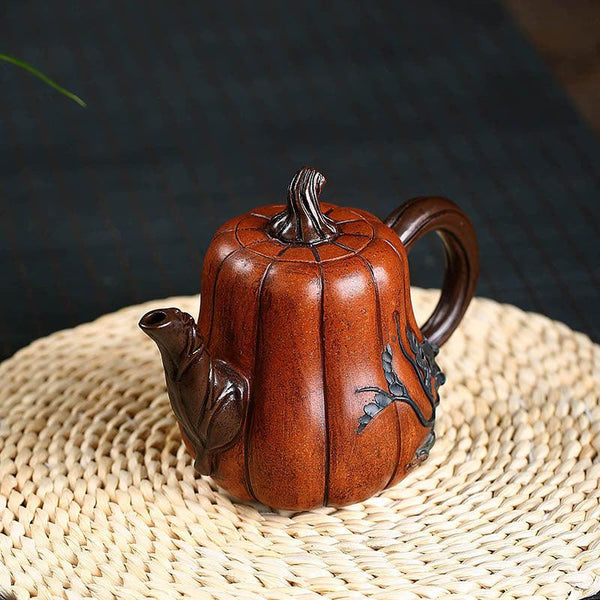
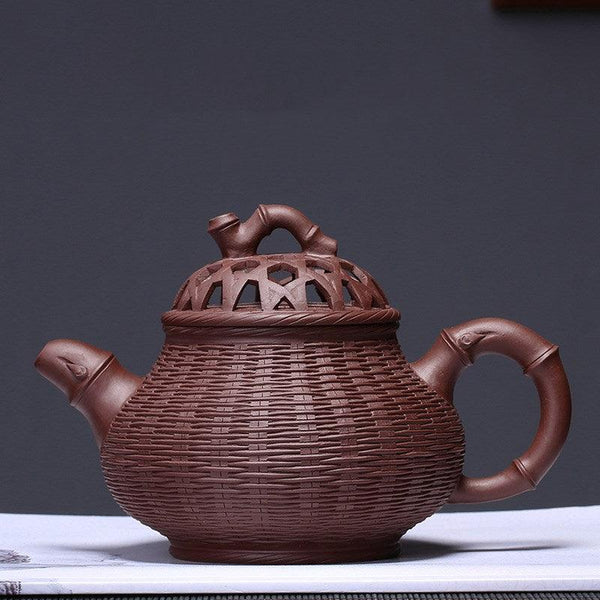
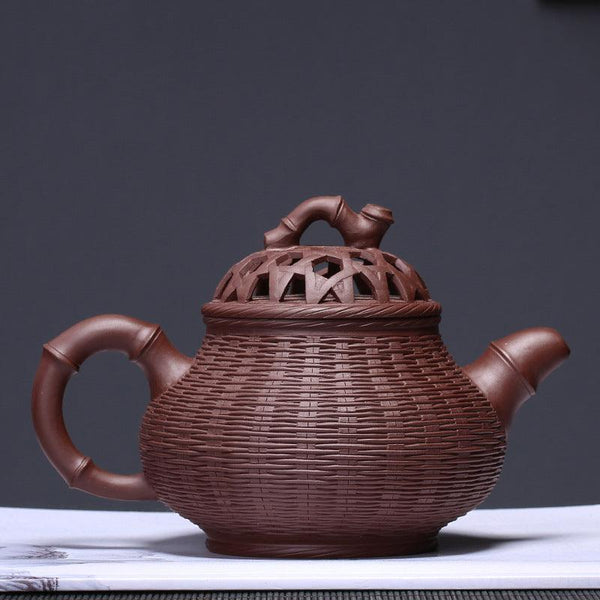
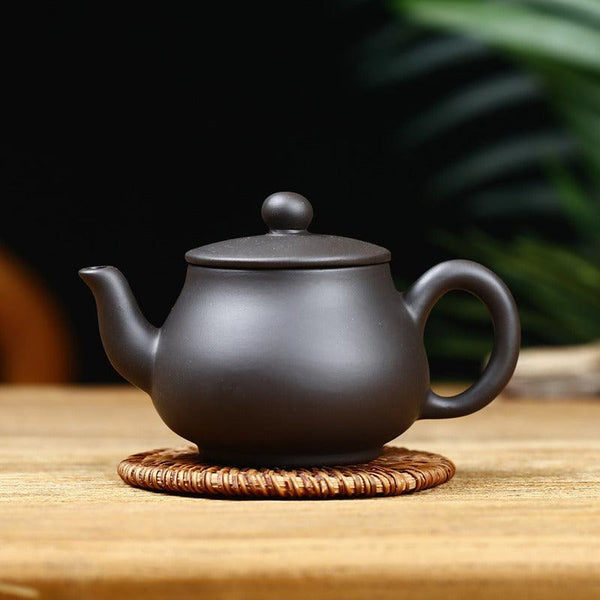
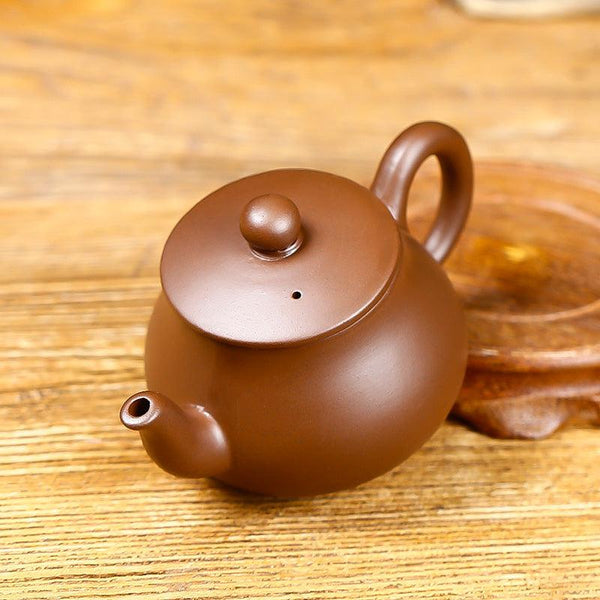
When tea drinkers pick up a handmade Yixing Zisha teapot for the first time, one of the very first things they notice is how the lid meets the rim. In Chinese tea culture, the meeting of lid and mouth—known as the kougai—is treated as both an engineering benchmark and an aesthetic signature.
Yet lid fit is also one of the most misunderstood details in Yixing pottery. Many buyers assume that a high-quality handmade lid should seal like a laboratory vacuum jar, or that flipping a water-filled pot upside down without the lid falling proves master craftsmanship. In reality, fitting a clay lid that shrinks dramatically in a 1180°C kiln is a delicate balancing act of geometry, firing physics, and practical usability.
This guide explores how Yixing artisans construct, shrink-compensate, and refine teapot lids—and how you can inspect one safely without falling for common market myths.

1. Why Lid Fit Matters
A well-fitted lid is essential to both the visual integrity and the daily performance of a Yixing teapot.
- Visual Harmony: An unglazed teapot relies entirely on silhouette and proportion rather than painted decoration. If a lid sits too low, tilts unevenly, or looks visibly undersized—a defect potters call a "shrunk lid"—the visual rhythm of the entire vessel breaks down.
- Thermal and Aromatic Stability: During Gongfu brewing, boiling water is poured over compressed or rolled tea leaves for short, concentrated infusions. A properly seated lid helps trap rising heat inside the chamber and prevents aromatic steam from escaping prematurely through wide rim gaps.
- Safe, Effortless Handling: In real use, a lid should lift cleanly with one hand, never jam mid-session, and stay securely seated when you tilt the teapot to decant tea soup.
2. The Three Main Lid Structures
Nearly every traditional Yixing teapot uses one of three foundational lid designs. Each creates a distinct visual effect and presents its own technical challenges:
Pressed Lid (Ya Gai)
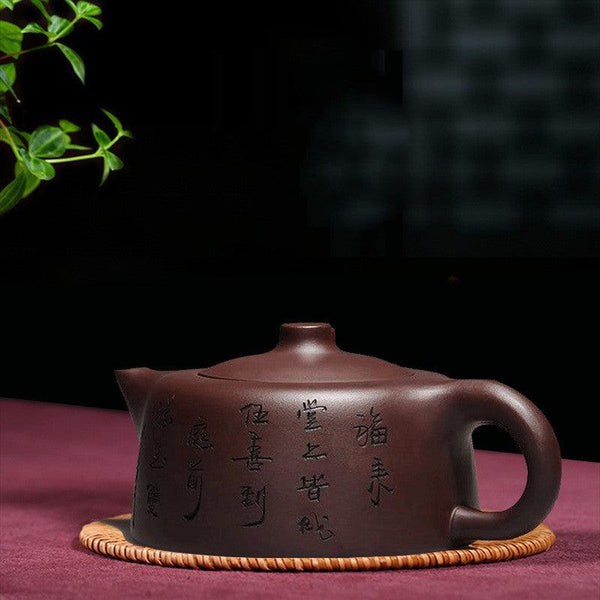
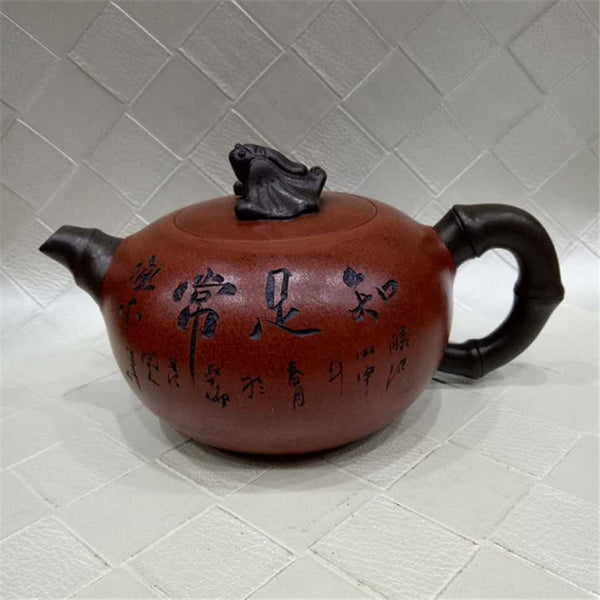
Often described as "sky pressing earth," a pressed lid rests directly on top of the teapot's mouth rim, with an outer edge that either matches or slightly overhangs the neck. Classic examples include the Fanggu, Duoqiu, and Shipiao. Depending on the design, the top surface may be completely flat, gently domed, or subtly recessed. Pressed lids are prized for their generous openings, easy tea loading, and commanding horizontal lines.
Inset Lid (Qian Gai)
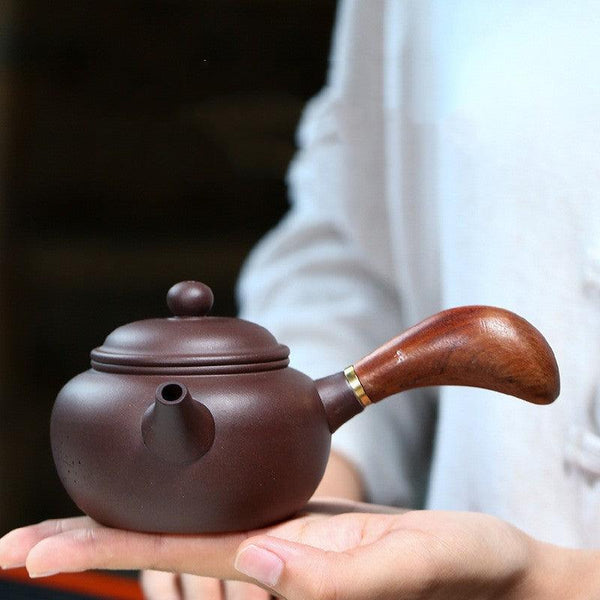
Known colloquially as "earth wrapping sky," an inset lid drops inside the collar of the pot's opening so its outer edge sits flush within the rim. You will see this structure on cylindrical Jinglan pots and compact round shapes like Yilizhu. Because the lid sits tucked inside the mouth wall, it creates a sleek, uncluttered top profile. Flat-inset lids are often cut from the exact same clay slab as the surrounding mouth ring so both pieces shrink at matching rates.
Cut Lid (Jie Gai)
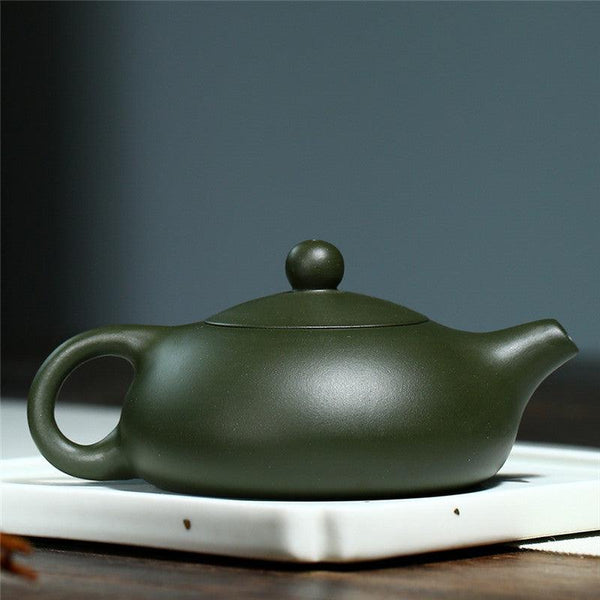
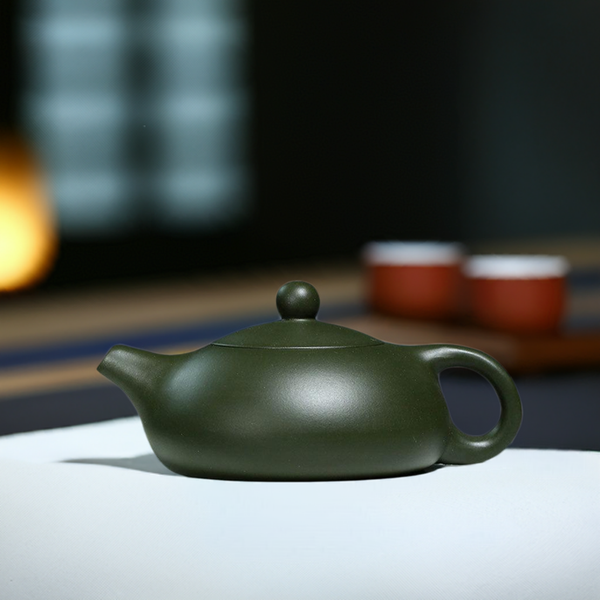
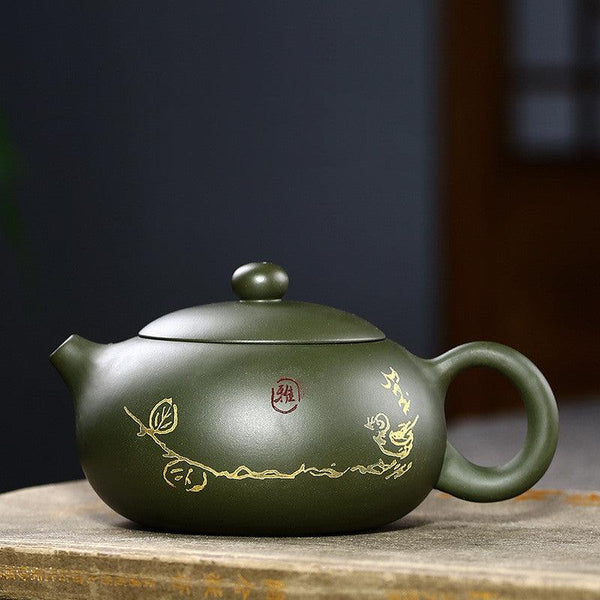
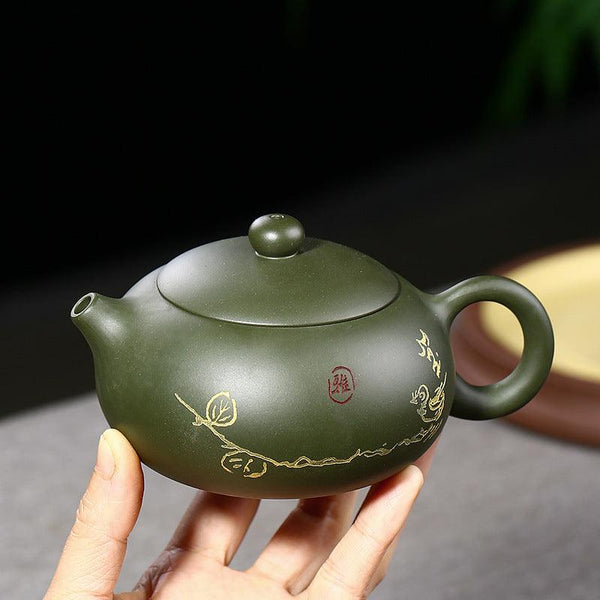
The cut lid—famously seen on the Xishi and Qin Quan forms—is sculpted as an unbroken continuation of the teapot's upper curve. Imagine slicing off the crown of a smooth sphere or pear and turning that top section into the lid. When closed, the joint nearly disappears to the eye, letting your fingers glide uninterrupted from body to finial. Because there is no overhanging lip or collar to hide slight misalignment, cut lids are among the hardest forms to execute cleanly.
The Unsung Hero: The Zikou (Inner Flange)
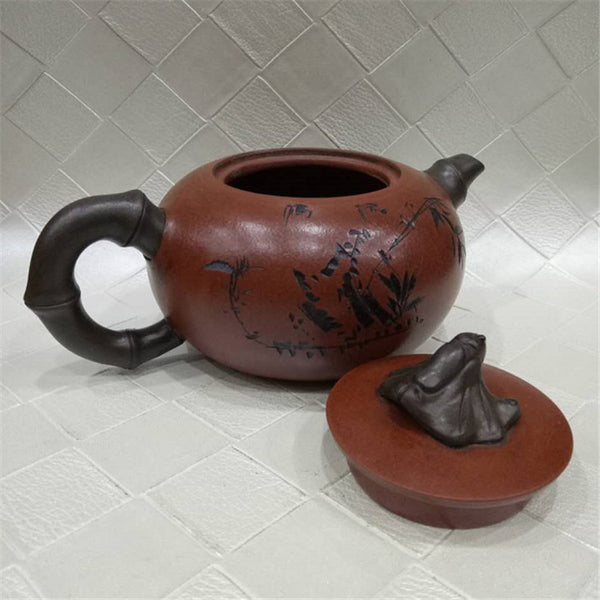
Underneath almost every well-made lid sits the zikou—the vertical inner collar that drops into the neck of the pot. While beginners focus on the top seam, experienced brewers flip the lid over to check the zikou. A deep, straight zikou acts as a mechanical anchor against the inner mouth wall, keeping the lid from sliding out when the teapot is tilted steeply to pour.
3. How Artisans Form the Lid and Opening
Authentic Yixing teapots are not thrown on a high-speed potter's wheel. Instead, artisans pound conditioned clay into controlled slabs and build the body by hand-paddling (da shentong) or joining cut geometric panels (xiang shentong). The lid and mouth opening are crafted with equal precision:
- Matching Slab Density: Artisans prepare the lid and mouth collar from the exact same batch of aged clay, ensuring consistent moisture content and mineral density. For flat-inset lids, the lid disk is literally sliced out from inside the mouth slab itself.
- Shaping and Burnishing: Using wooden templates, bamboo calipers, and smooth horn or metal tools (mingzhen), the potter refines the bevel of the lid edge, builds the zikou flange, and compresses the clay surface to tighten the mineral grains.
- Co-Firing with Quartz Sand: Unlike glazed porcelain, Yixing teapots are fired with the lid sitting directly on the pot. Firing them separately would cause the round openings to warp unevenly out of alignment. To prevent raw clay from fusing together at peak kiln heat, potters lightly dust the contact seam with fine, non-toxic white quartz sand, which brushes right off after cooling.
- Post-Firing Truing (Zhengkou): Even when fired together, differential stress can leave tiny high spots between lid and rim. In contemporary craft, many artisans perform zhengkou after the first firing—carefully grinding down microscopic unevenness along the contact lip, brushing on a thin coat of matching clay slip, and re-firing the pot so the lid seats smoothly and rotates cleanly.
4. Compensating for Firing Shrinkage
Inside the kiln, Yixing clay transforms from soft greenware into dense stoneware at temperatures between 1150°C and 1200°C, undergoing irreversible physical shrinkage as moisture evaporates and clay minerals vitrify.
Different Yixing clays contract at very different rates:
- Purple Clay (Zini): Typically shrinks around 10% to 12%.
- Duan Clay (Duanni): Generally contracts around 8% to 12%.
- Red Clay (Zhuni): Can shrink dramatically—often 15% to 25% depending on the ore.
Because a solid flat lid, a reinforced mouth collar, and a thin hollow body have different wall thicknesses, they do not pull inward at identical speeds. A circular mouth can easily contract slightly oval, or a heavy lid can shrink differently from a thin neck.
To compensate, artisans must scale up (fangma) the unfired pot and carefully calibrate the raw allowance between lid and opening. Potters intentionally shape the raw lid with a calculated margin—slightly proud or tight relative to the opening—knowing that an undersized green lid will only widen its gap after firing. Using identical clay moisture for both parts is equally critical; even a slight mismatch in clay aging can create noticeable shrinkage gaps.
5. What Is a Reasonable Lid Gap?
In handmade stoneware, perfection does not mean zero clearance. A machine-lathed metal valve has zero tolerance; a handmade fired clay pot should not.
A well-crafted handmade Yixing teapot typically shows a tiny, functional clearance—often described by artisans as a "paper-thin" or "hair-thin" gap. In practical measurements, precision radial clearances often sit around 0.03 mm to 0.08 mm, with up to roughly 0.5 mm of subtle lateral play depending on the clay texture and pot shape. Round shapes allow tighter, smoother rotation (tongzhuan), whereas square or fluted ribbed teapots naturally require slightly more corner clearance so edges do not bind.
Why is an ultra-tight, zero-gap fit actually undesirable for tea?
- Thermal Expansion: When boiling water fills a teapot, the clay expands slightly. A lid that feels snug when dry can seize tightly once heated.
- Stray Tea Leaves: During Gongfu brewing, tiny broken tea leaves inevitably wash toward the rim. If there is zero tolerance, a single speck of leaf will wedge the lid shut mid-session.
- Rim Wear: Grinding bare, sand-rich clay tightly against itself accelerates wear along the rim, gradually loosening the fit over years of daily brewing.
The ideal fit feels balanced: secure enough that it does not rattle noisily, yet free enough to lift effortlessly and turn smoothly.
6. Why an Airtight Test Can Be Misleading
Few tea-world party tricks cause more confusion than the classic "airtight lid tests": filling a pot with water, covering the spout, and flipping it upside down to prove the lid won't fall; or plugging the lid's steam vent with a finger to see if pouring stops immediately.
While entertaining, these tests do not measure overall craftsmanship or clay authenticity.
Controlled comparisons between classic teapot shapes reveal why. Take two equally well-made teapots: a round Xishi and a flat-lidded Shipiao. Fill both with water, cover the spout, and invert them. Almost every Xishi lid will stay suspended in place, while almost every Shipiao lid will drop straight off.
Is the Shipiao poorly made? Not at all. The difference comes down to pure fluid physics and knob vent-hole depth:
- A Xishi features a tall, solid round knob with an air-vent tunnel roughly 10 to 15 mm deep. When inverted, water fills that deep tunnel, creating a miniature water column that combines hydrostatic pressure with a partial vacuum inside the pot—strong enough to hold the lid up.
- A Shipiao uses a low arch-shaped bridge knob whose air hole is only 2 to 3 mm deep. It physically cannot form a deep enough water column to generate suction, no matter how precisely the rim fits.
Similarly, whether water stops flowing when you plug the air hole depends on vent diameter, water level, pouring angle, and surface tension. A brand-new pot with unseasoned, slightly micro-rough clay rims wets differently than a seasoned pot smoothed by months of tea oils. Relying on vacuum tricks leads buyers to overlook proportion, clay quality, and real brewing ergonomics.
7. How to Inspect a Lid Safely
When evaluating a handmade Yixing teapot—whether in a tea shop or right after unboxing an online order—skip the risky stunts and use a gentle, structured inspection instead.
What Never to Do
- Never flip a filled pot upside down over a table; a slipping lid can shatter against stone or wood in an instant.
- Never tap or strike the lid against the body to "test the clay's ring"; striking bare stoneware easily chips delicate rim edges or causes invisible hairline fractures.
- Never force-twist a tight lid when dry or jammed with sand dust.
A Safe Four-Step Inspection
- Check Visual Alignment at Eye Level: Place the pot on a flat surface and examine the seam. Does the lid sit level without rocking? On pressed lids, do the rim lines sit parallel? On cut lids, does the silhouette flow smoothly from body to lid without looking sunken or pinched?
- Test Lateral Play Gently: Place two fingertips lightly on opposite sides of the dry lid and nudge it side to side. A tiny whisper of movement is healthy and normal; loud clattering or wide shifting indicates poor sizing. For round pots, slowly rotate the lid—you should hear a crisp, even sand-on-sand whisper without hard catching points.
- Inspect the Zikou Depth and Straightness: Lift the lid out cleanly and view its inner collar from the side. Look for a straight, smooth wall deep enough to hold securely when tilting the pot to pour, and check that the clay around the inner corner is free of kiln cracks.
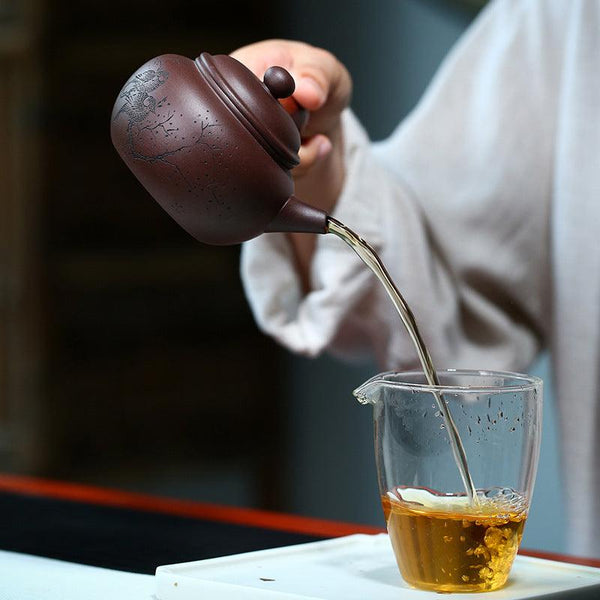
- Practice Safe Everyday Pouring: Even on a teapot with a deep zikou and snug fit, traditional Gongfu etiquette calls for resting your index finger or thumb lightly on the lid knob whenever you pour. Treating the lid with quiet mindfulness is always better than trusting gravity alone.
Conclusion
The lid of a handmade Yixing teapot is a quiet triumph of ceramic problem-solving. Rather than aiming for sterile, airtight perfection, skilled potters balance shrinkage math, zikou geometry, and subtle functional tolerances so the teapot handles boiling water, expanding tea leaves, and decades of daily use with effortless grace. Once you look past parlor tricks and understand how a lid is truly engineered, choosing—and caring for—a fine Yixing teapot becomes infinitely more rewarding.