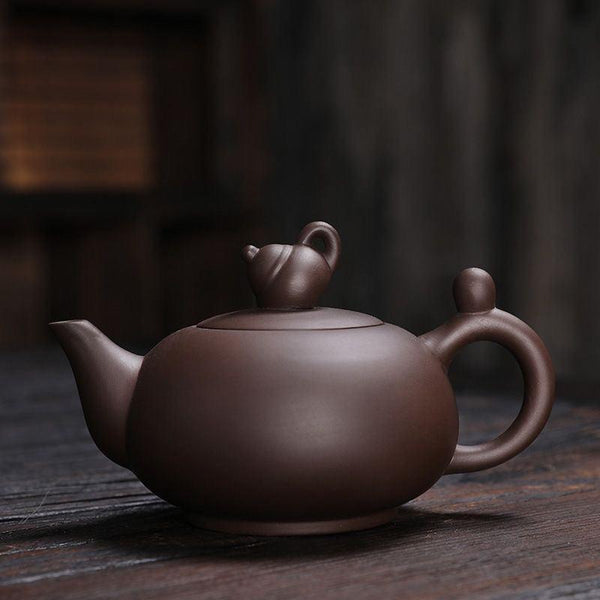
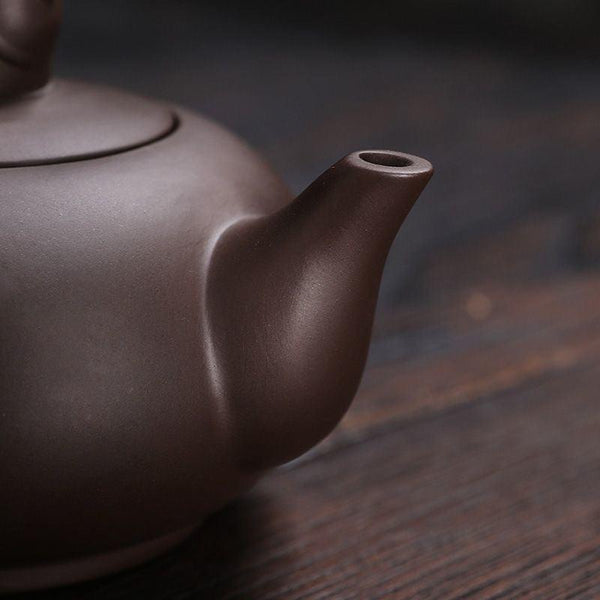
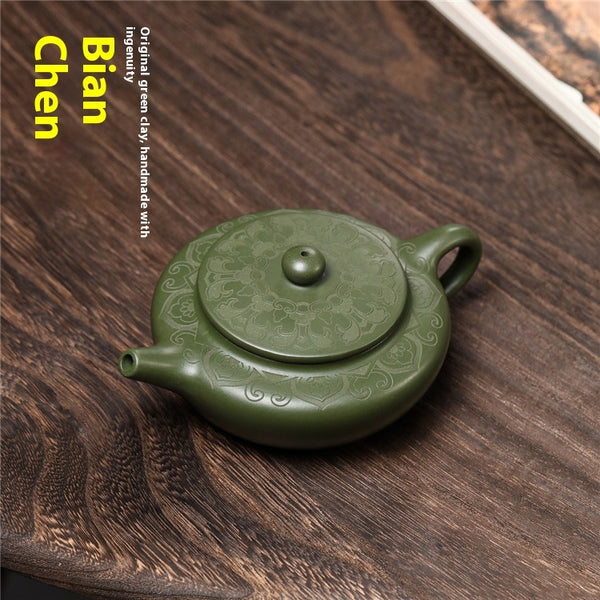
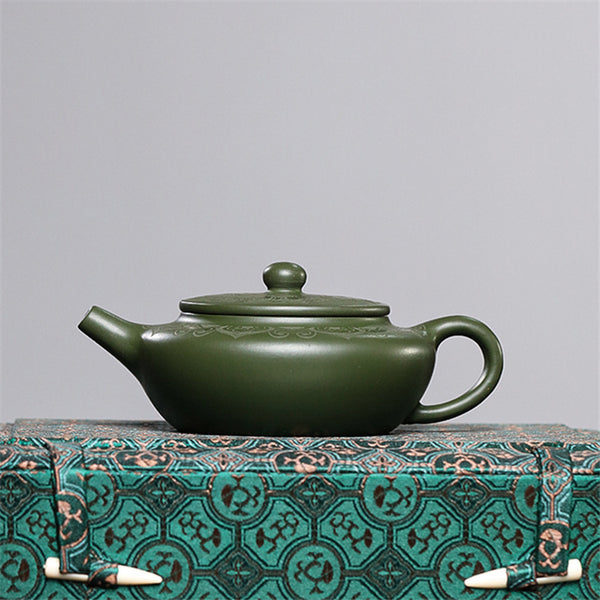
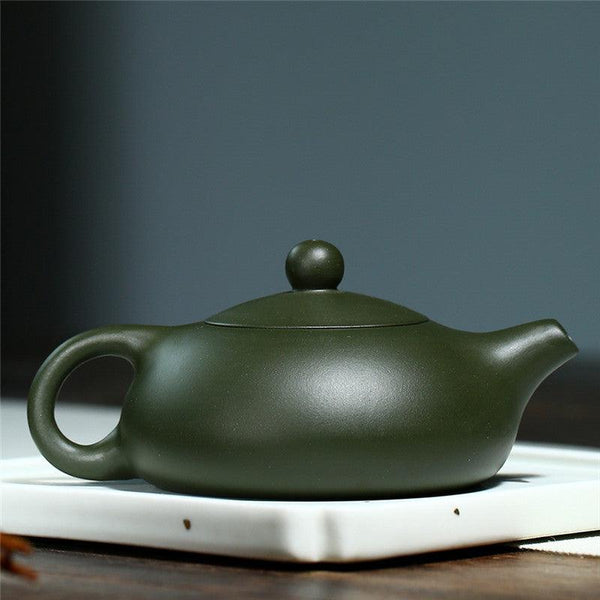
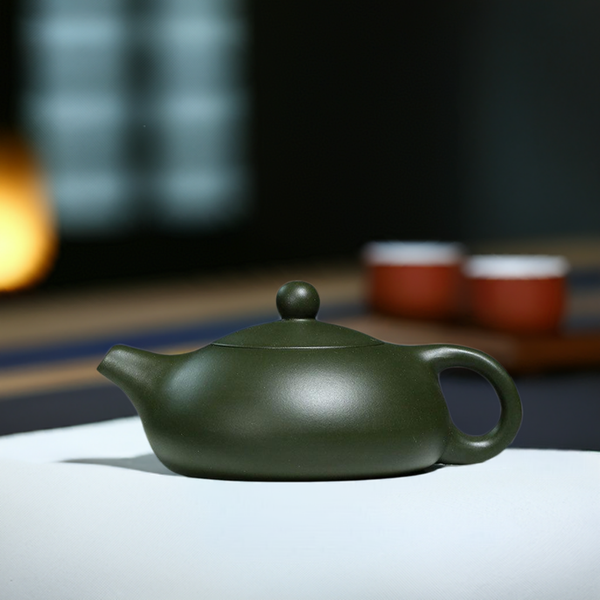
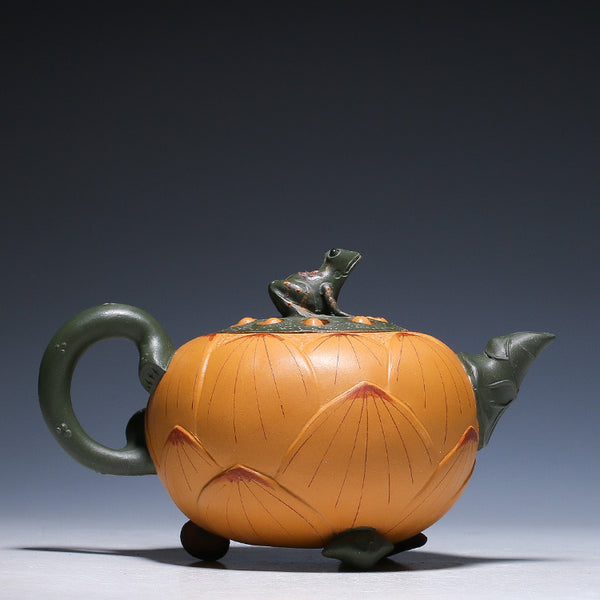
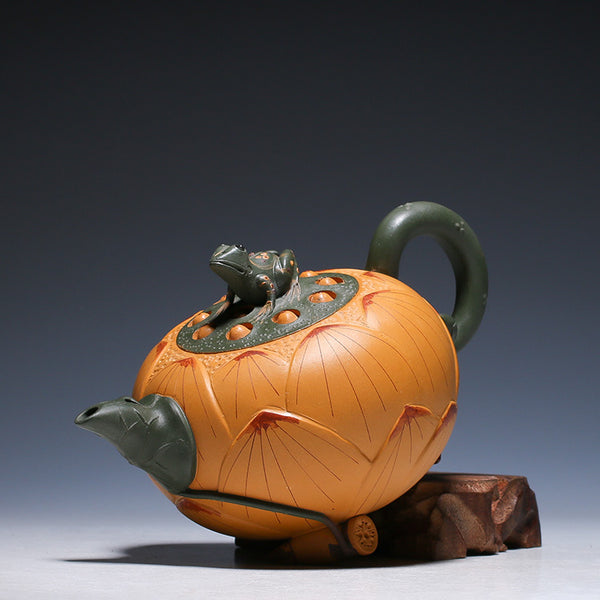
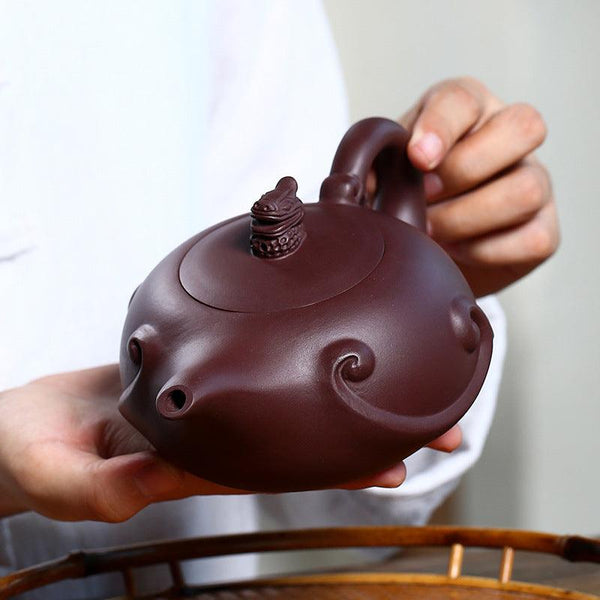
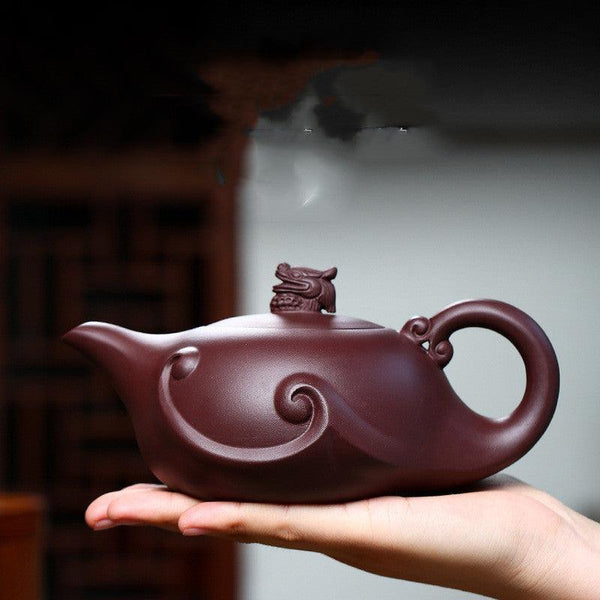
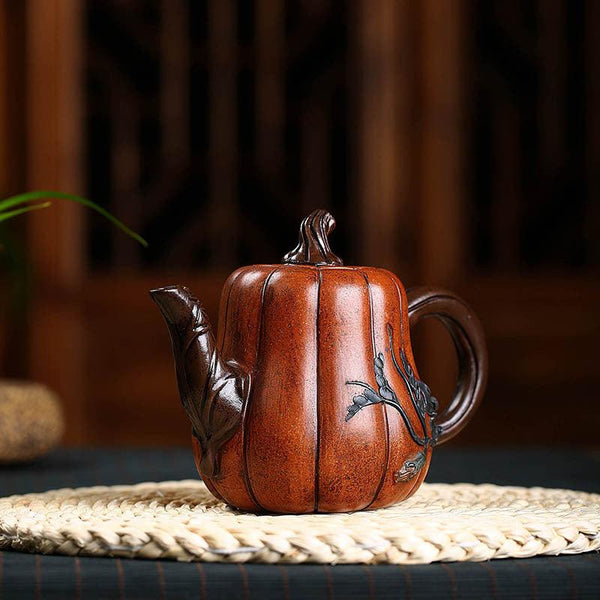
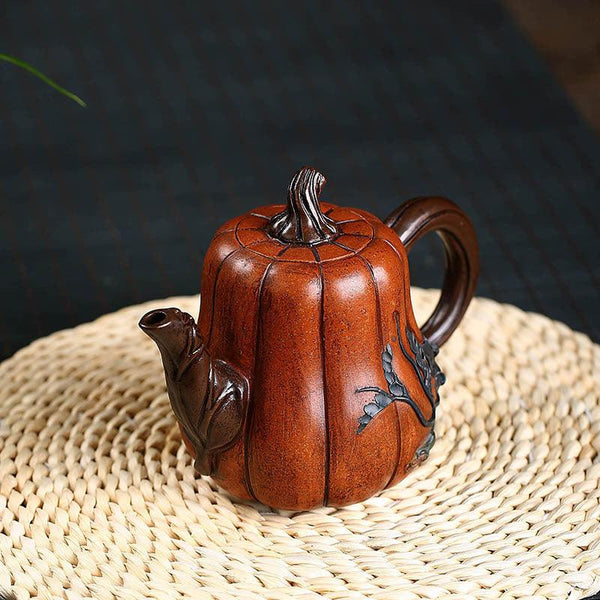
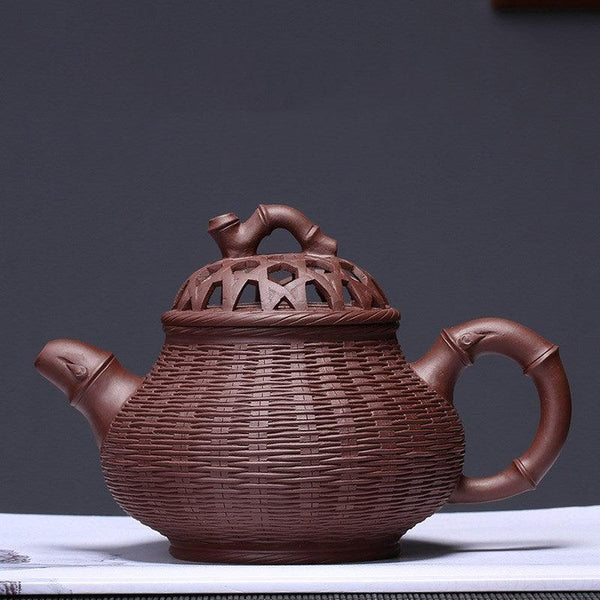
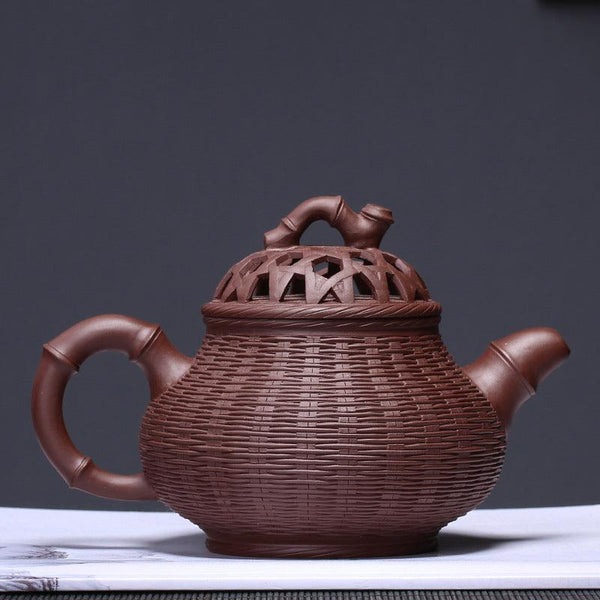
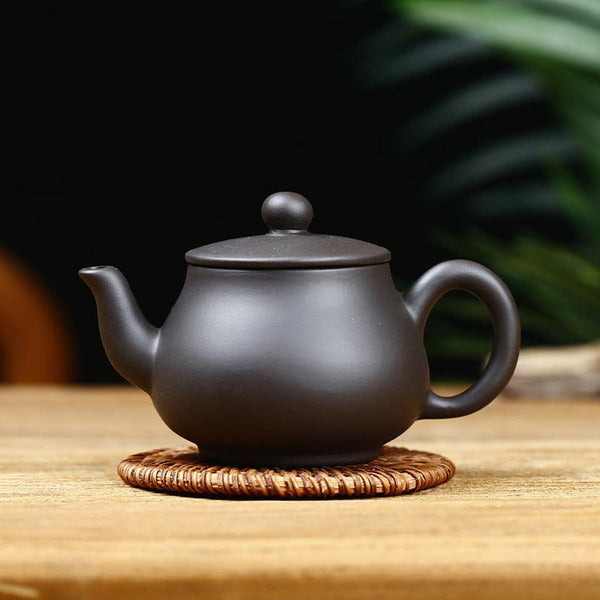
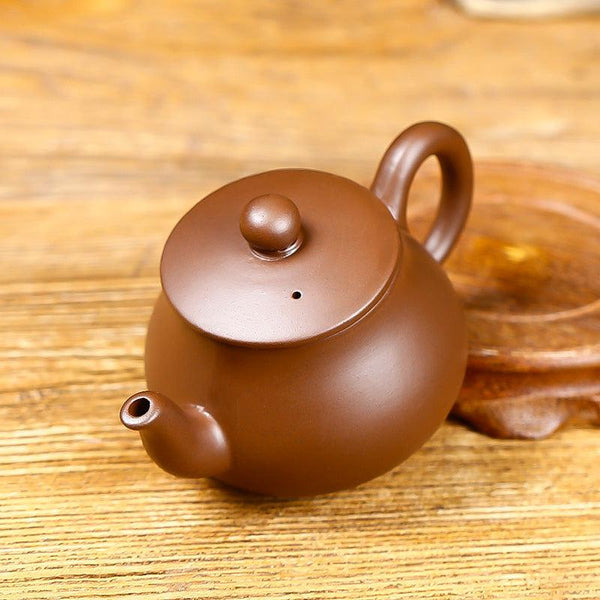
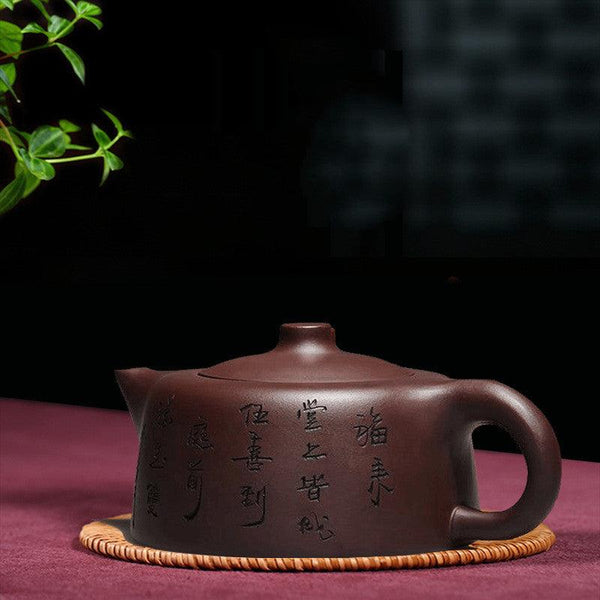
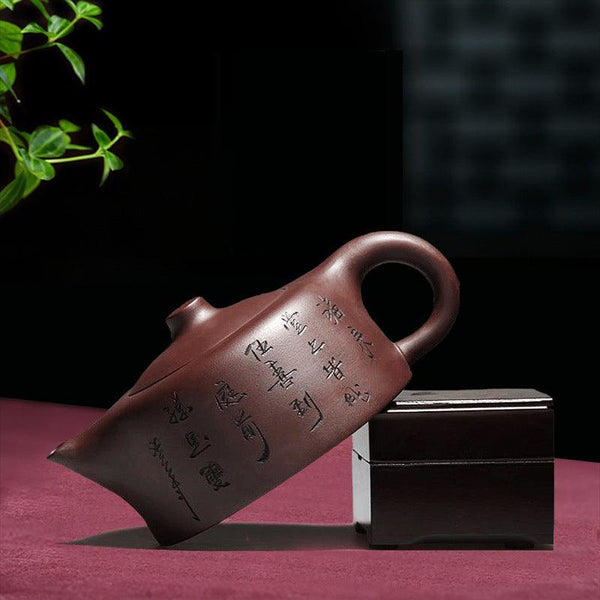
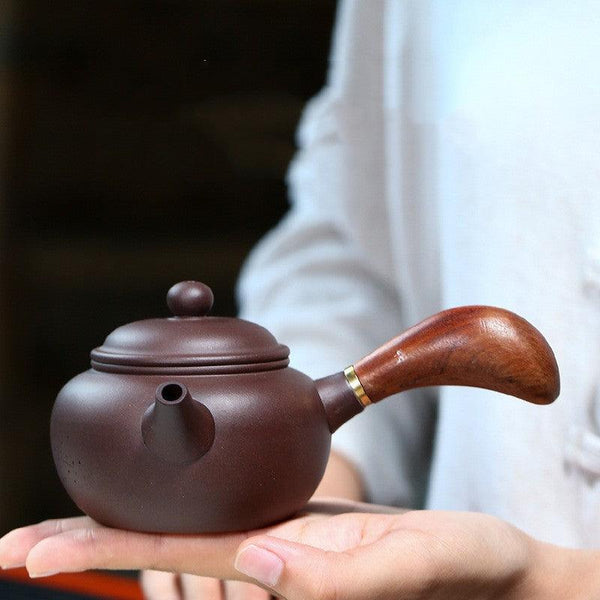
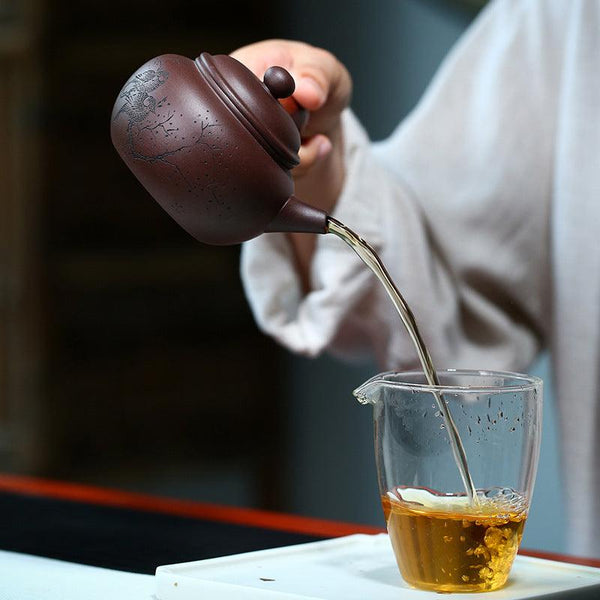
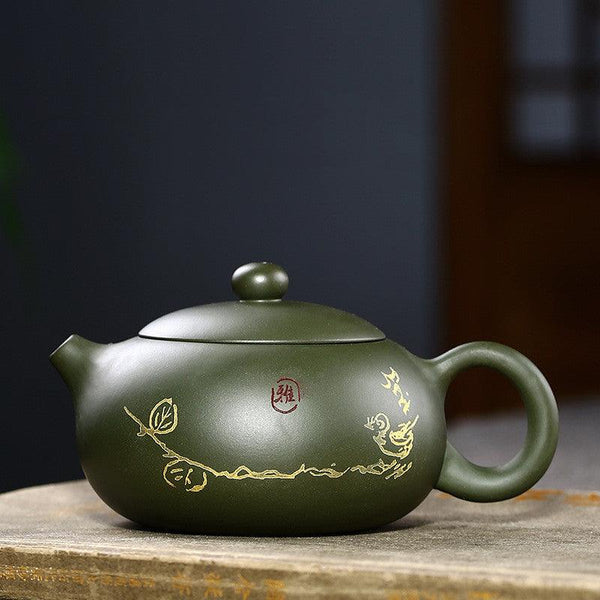
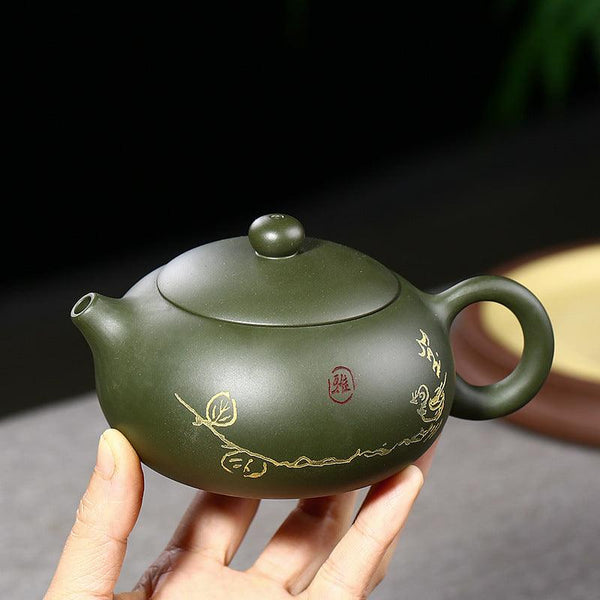
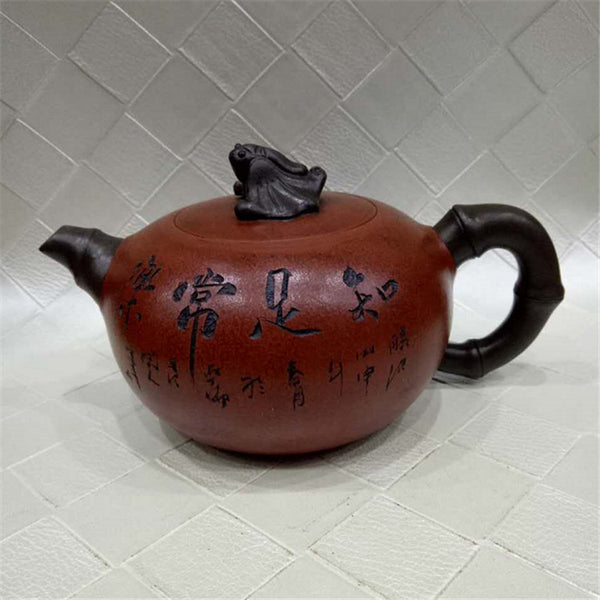
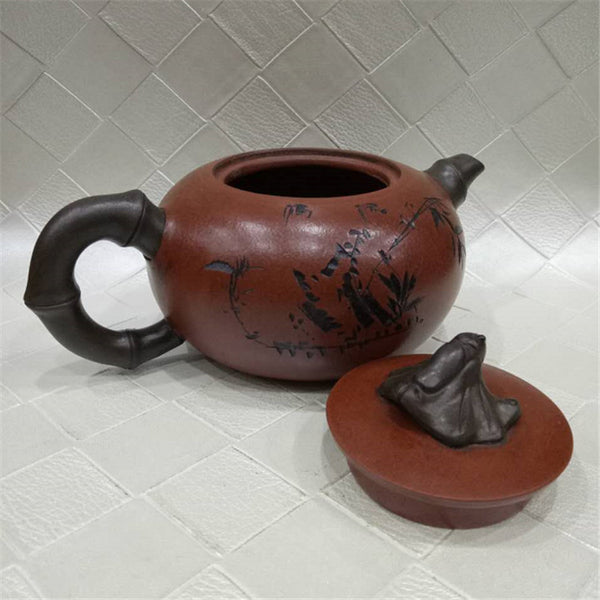
First, take a moment to reflect: what was your motivation for buying a Zisha (Purple Clay) teapot in the first place? Was it because you saw someone else's teapot—perhaps under the glow of a lamp—exhibiting a bright, lustrous sheen? Yet, after bringing your own home, did you find its colour to be dull and matte, perhaps even leading you to suspect that you had purchased a fake?
In reality, this transformation is known as "Patina." It is a physical phenomenon that develops on a Zisha teapot after prolonged use and immersion in tea. So, how exactly does this "Patina" form?
The Formation of "Patina"
Yixing clay teapots are unglazed; their clay bodies are permeated with microscopic pores. The formation of patina is, in essence, a cyclical process involving both physical and chemical interactions.
1. Internal Absorption: Whenever you brew tea, the liquid contains essential oils and tea polyphenols. These substances seep into the open pores within the walls of the teapot. Over time, the interior of the teapot reaches a state of saturation.
2. Thermal Migration: When you pour boiling water over the surface of the teapot, the clay body undergoes thermal expansion and contraction. As the clay contracts, the absorbed tea oils within are compressed and begin to migrate outward through microscopic channels toward the teapot's exterior surface.
3. Frictional Curing: At this stage, you wipe the teapot's body with a clean cloth while it is still warm, or gently caress it with your fingers. This physical friction polishes the microscopic particles on the surface, rendering them smoother. Simultaneously, the exuded tea oils react with the oxygen in the air, undergoing a subtle curing process.
Thus, a permanently bonded, "natural protective film" is born.
Why do so many enthusiasts find themselves irresistibly captivated by this particular lustre?
Authentic Tactility: Zisha teapots possess a distinct granular texture and a palpable warmth. With every touch, the surface undergoes subtle, minute changes. For people living in the modern world, this evolving tactile experience offers a profound sense of stress relief.
A Chronicle of Time: The *baojiang*—the patina that develops over time—serves as a mirror reflecting your personal tea-drinking habits. The colour the teapot eventually acquires depends entirely on the type of tea you prefer: Ripe Pu-erh deepens its hue, while Oolong imparts a brighter sheen. It stands as a tangible record of the hundreds of afternoons you have spent brewing tea.
The Pride of Participation: Unlike porcelain—which remains exactly as it was the moment you purchased it—Zisha teapots are different. The artisan crafts the vessel's form, but it is *you* who, through the passage of time, brings about the "final evolution" of this work of art.
The Pros and Cons of Patina
Current online articles tend to romanticise the concept of *baojiang* (patina), but as objective enthusiasts, we must speak the unvarnished truth. Once tea oils have filled the clay's pores, the physical properties of the teapot undergo a transformation. This brings with it both advantages and, naturally, disadvantages.
The Benefits of Patina
A Smoother Mouthfeel: As tea oils partially fill the internal pores, the teapot’s initial, somewhat "aggressive" absorption capacity is tempered. It no longer indiscriminately strips away the tea liquor's highest, most volatile aromatic notes; instead, it renders the mouthfeel of the tea smoother and sweeter.
Slightly Enhanced Heat Retention: The layer of solidified tea oils acts as a microscopic barrier. It slightly boosts the teapot's heat-retention capabilities, helping you maintain the water temperature more effectively during the winter months.
The Costs of Patina
The "Dirty Tea Residue" Misconception: Many novices struggle to distinguish between tea residue and true patina. Genuine patina is clean, crisp, and smooth. In contrast, the dark, sticky buildup often mistaken for patina is merely grime. This residue harbours bacteria and completely destroys the pure, authentic flavour of the tea liquor.
Reduced Clay Breathability: This is a truth that most articles are reluctant to mention. The thicker the patina, the more thoroughly the clay's pores become sealed. This diminishes the Yixing teapot's inherent ability to actively "absorb impurities." When brewing aged teas—particularly those carrying a "storage scent"—a teapot that has been "nurtured" to an extreme degree may actually be less effective at eliminating off-flavors than a brand-new pot.
The Pitfalls of *Duan Ni* Clay and Colour Absorption: If you use a light-colored *Duan Ni* (Duanni) teapot and neglect to clean it promptly after use, its open pores will readily and unevenly absorb tea stains. This results in a mottled, blotchy appearance on the teapot's surface, and can even lead to the absorption of ambient odours from the surrounding air.

How to Develop a Superior Patina on Your Teapot?
Cultivating a fine patina requires a mindful approach that respects the physical properties of the teapot.
Step One: One Pot, One Tea. Before preparing a new teapot for use, designate its "lifelong companion"—the specific type of tea it will exclusively brew. If you wish to cultivate a clean, pure colour in the patina, avoid brewing Ripe Pu-erh one day and Oolong the next. Mixing different tea types not only causes their aromas to clash but also results in a patina that appears muddy or greyish.
Step Two: Hot Baths and Thermal Expansion. Before each brewing session—and again after discarding the spent tea leaves—thoroughly scald the teapot, both inside and out, with boiling water. This technique leverages the principle of thermal expansion, compelling the teapot's microscopic pores to "open wide" and breathe. In the intervals between brewing rounds, you may use a tea brush dipped in clean tea liquor to gently and evenly brush the surface of the pot.
Step Three: The Pivotal Step—"Dry Rubbing While Hot." Many people mistakenly believe that "nurturing a teapot" simply involves leaving tea liquor on its surface without washing it off; this is incorrect. Immediately after finishing your tea, thoroughly rinse the teapot with hot water until it is completely clean. Next—while the teapot is still scalding hot from the rinse and its pores are actively exuding natural oils—grab a clean, dry cotton cloth and vigorously rub the body of the pot! This step is the key to achieving a high-gloss finish through physical friction polishing.
Step Four: Thorough Drying (Avoid Stickiness). After wiping, remove the lid and invert the teapot in a clean, well-ventilated area, allowing it to dry out completely. Yixing clay teapots thrive on a rhythm of "alternating wet and dry cycles." If the pot remains constantly damp, it will merely develop mould and accumulate tea stains; only when it has dried out completely can the protective layer of exuded natural oils truly solidify and bond to the teapot's surface.
Conclusion
Cultivating a Yixing teapot is not a process that can be accomplished overnight; rather, it requires a sustained commitment—brewing tea frequently, wiping the surface diligently, and maintaining cleanliness over a long period. There are absolutely no shortcuts to developing a rich patina. If you attempt to cut corners or resort to artificial tricks, the result will inevitably be a Yixing teapot with a dull, lacklustre appearance.
The greatest allure of the Yixing teapot lies precisely in the fact that its development cannot be "accelerated." Much like our approach to any endeavour in life, it is only by taking steady, step-by-step measures that one can successfully cultivate a Yixing teapot to reveal its radiant, lustrous sheen.