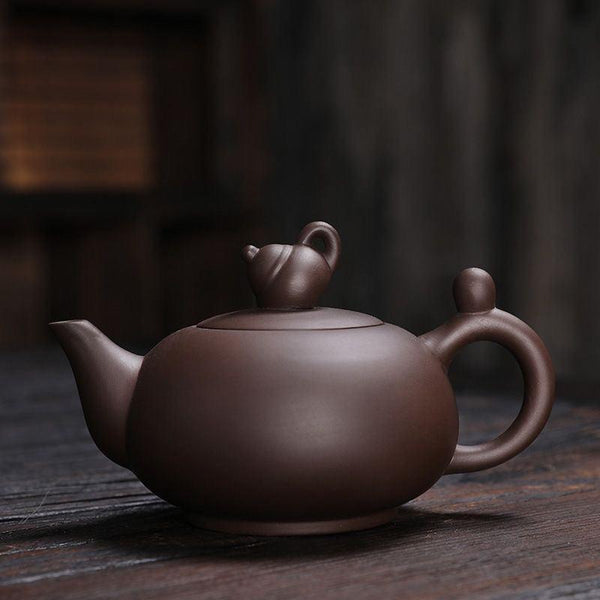
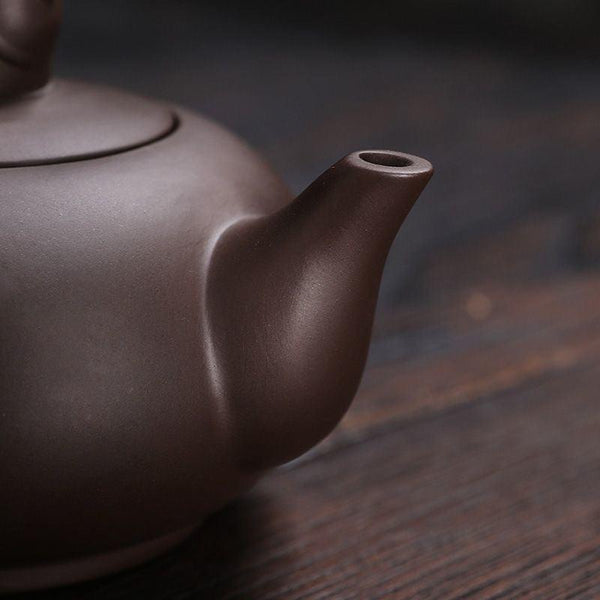
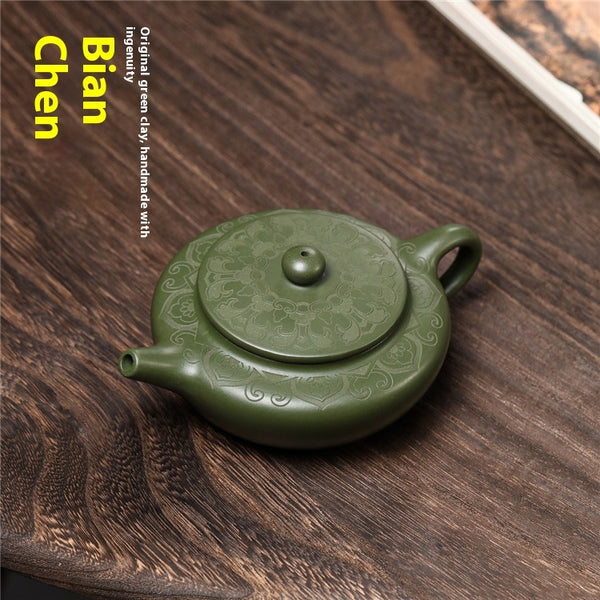
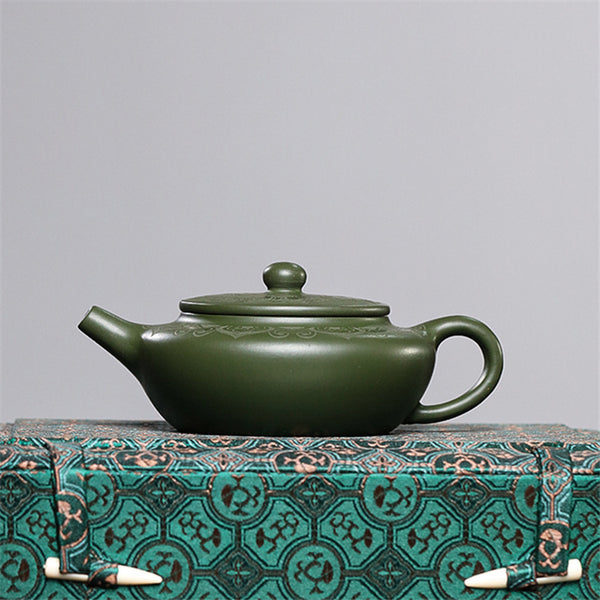
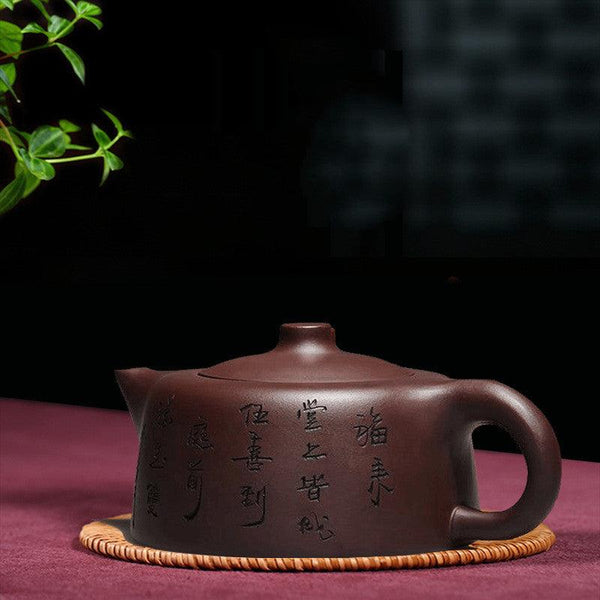
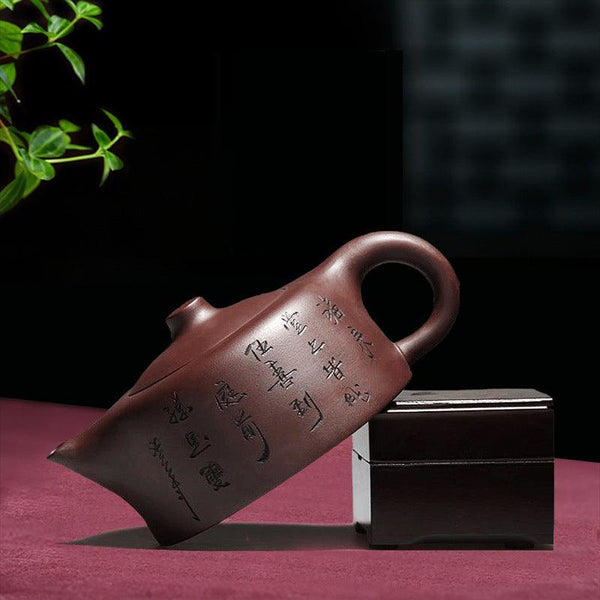
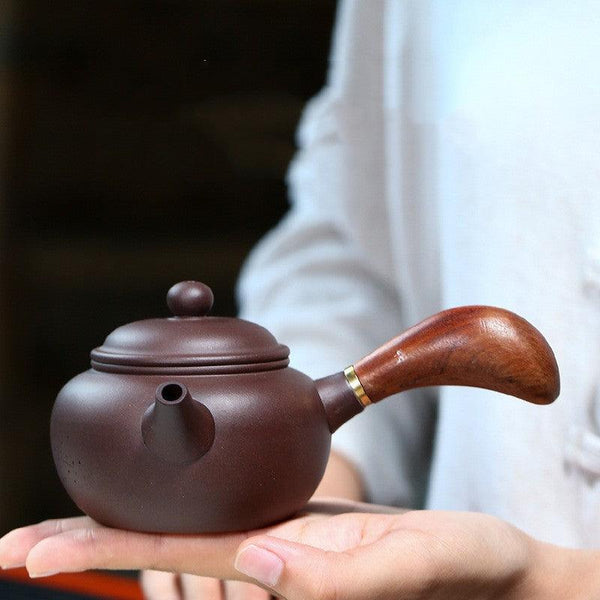
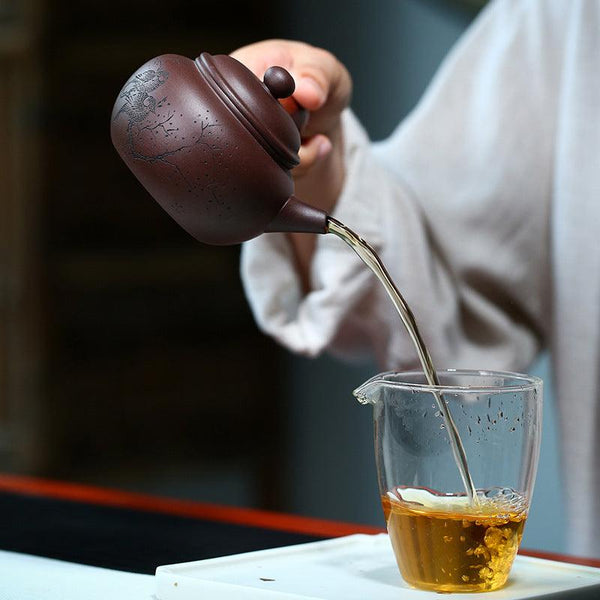
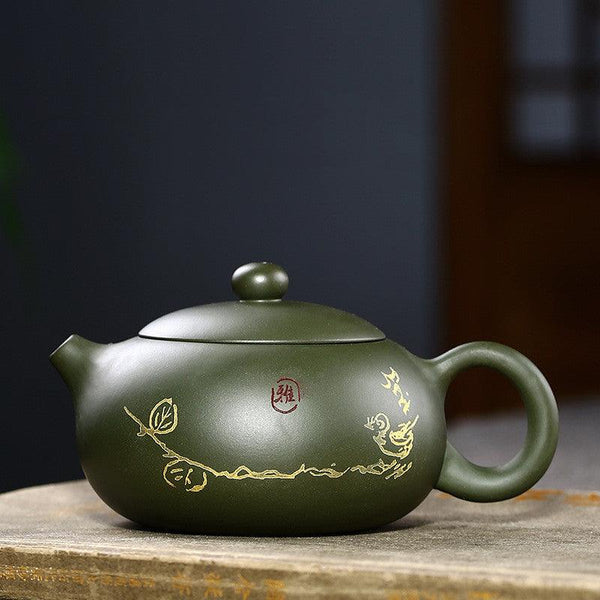
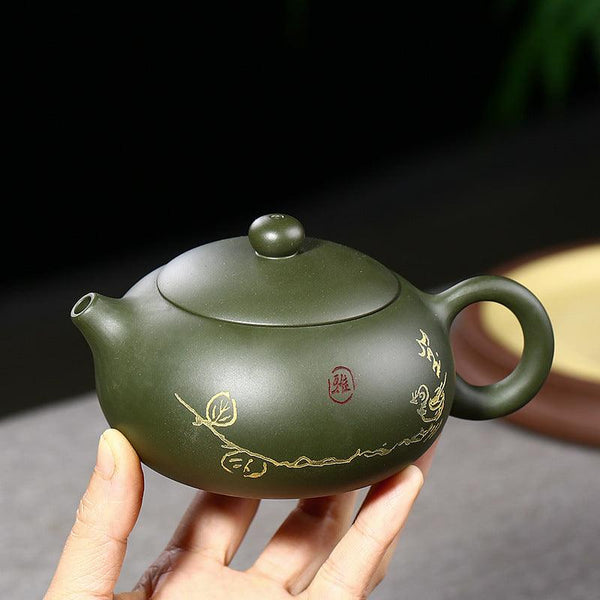
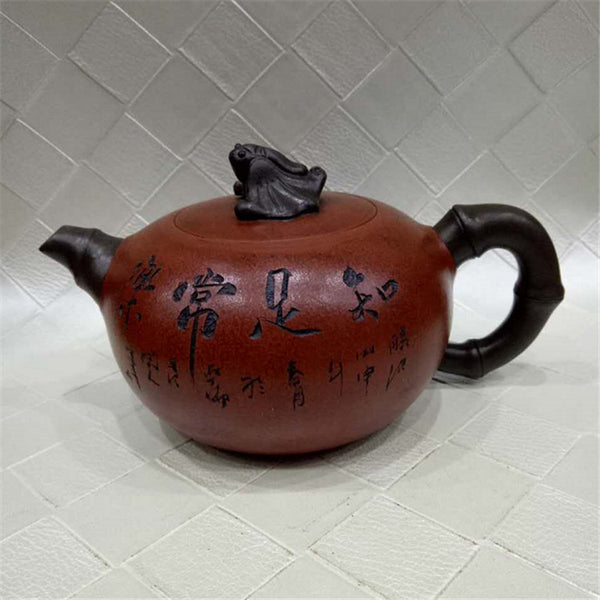
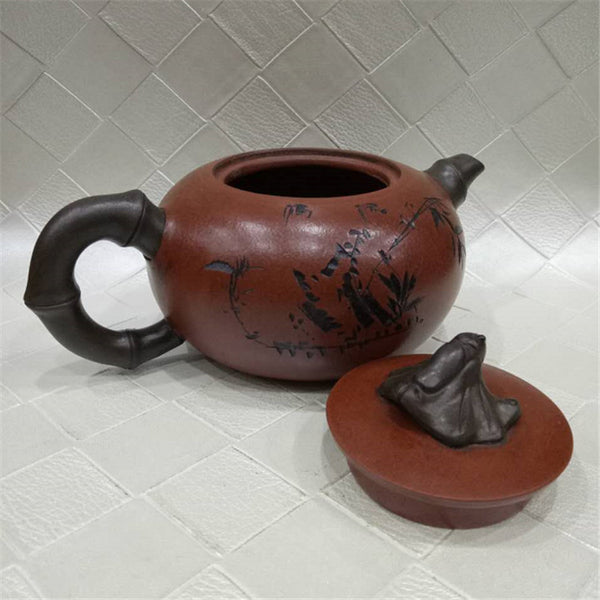
In the rich and ancient world of Yixing purple clay (Zisha) ceramics, round teapots (Yuán Qì) represent the absolute foundation of the craft. To the untrained eye, many round teapots may look similar, but seasoned tea masters know that every classic silhouette tells a different story. Among these classic forms, the Fanggu Teapot stands as one of the most influential, respected, and aesthetically powerful designs in history.
While the famous Xishi teapot is loved for its soft, feminine curves, the Fanggu is celebrated for its robust, commanding, and balanced masculine energy. It is a masterpiece of geometric harmony that has captured the hearts of scholars and tea connoisseurs for generations.
In this comprehensive guide, we will dive deep into the meaning, anatomy, history, difficulty, and scientific brewing benefits of the legendary Fanggu teapot.
1. The Meaning and Origin of "Fanggu"
To truly appreciate the Fanggu teapot, we must first unpack its dual-layered name, which holds a beautiful linguistic and cultural history.
Originally, this shape was called Fanggu, which translates literally to "Imitating a Drum." Famed for its wide, flat-spherical body and taut, swelling belly, the teapot was designed to mirror the powerful, resonant shape of a traditional Chinese battle drum.
Over time, as the teapot became a staple in the study rooms of elite scholars, tea lovers began using a homophonic character with a much deeper cultural resonance. The name transitioned from "Imitating a Drum" to "Imitating the Ancient". This new name perfectly captured the spirit of the literati class: a profound respect for classical antiquity, a desire to emulate the noble character of ancient sages, and a pursuit of timeless, understated elegance.
The mastermind behind this legendary form was Shao Daheng, a genius potter of the late Qing Dynasty. Shao Daheng took the rustic, folk-style drum-shaped pot and refined its lines with mathematical precision. He elevated it into a clean, sophisticated art form, establishing the Fanggu as the undisputed king of geometric round teapots.

2. Defining Features of an Authentic Fanggu Shape
A classic Fanggu teapot is a study in tension and proportion. When evaluating an authentic Fanggu, master potters look for several defining structural elements:
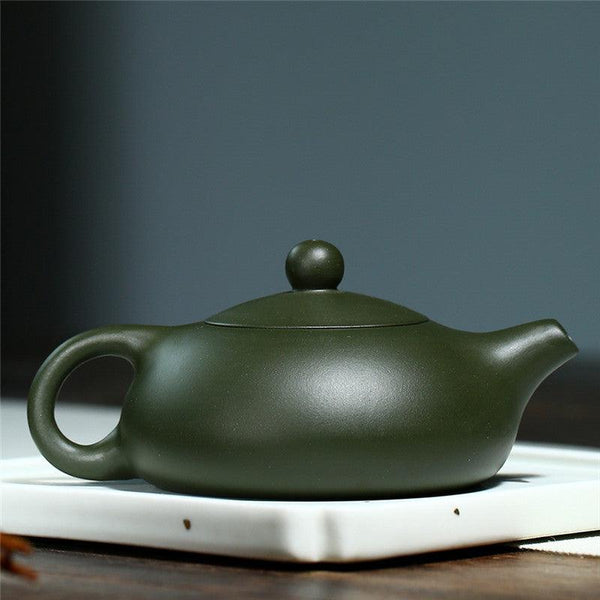
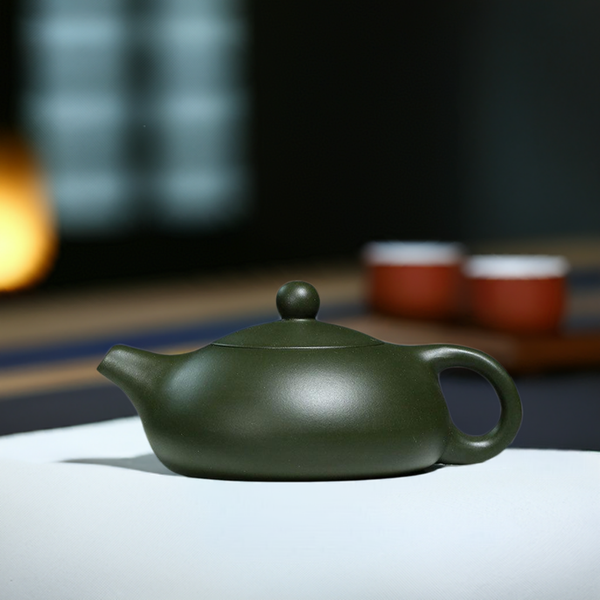
- The Drum Belly: The main body of the teapot is flat-spherical. The curve of the belly must look as though it is under immense internal pressure, like a drum skin stretched taut, radiating energy and strength without looking bloated.
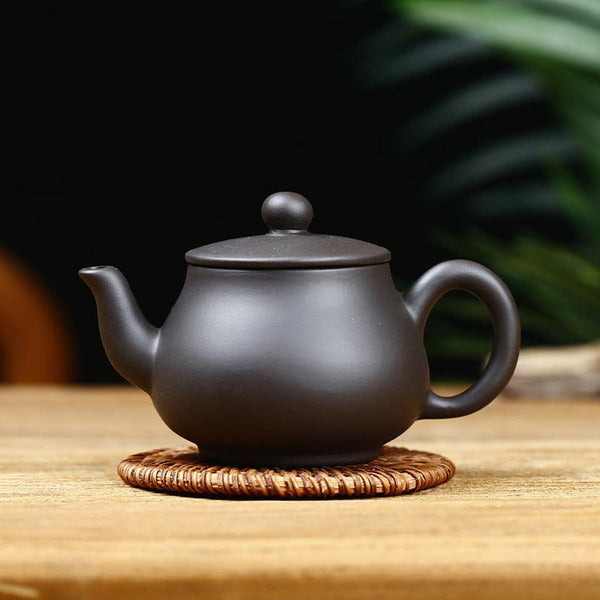
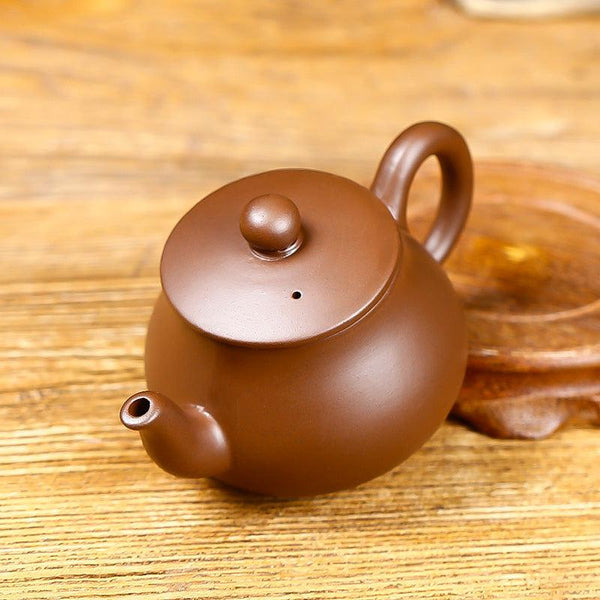
- The High Neck and Flat Shoulder: Unlike other round teapots where the body curves directly into the opening, the Fanggu features a distinct, flat shoulder that transitions into a proud, vertical neck. This high neck gives the teapot an upright, dignified posture.
- The Double-Line Lid Rim: The Fanggu utilizes a flat pressed lid (Ya Gai). When the lid is placed on the pot, the lower rim of the lid and the upper rim of the teapot opening form two perfectly parallel, horizontal lines. This "double-line" symmetry is a hallmark of the Fanggu design.
- The Large Ring Handle: The handle forms a generous, flowing circle that balances the visual weight of the spout. Many classic variations feature a subtle "fly-key" (飞扣)—a tiny, elegant lip at the bottom of the handle that provides a delicate touch of movement to the solid form.
3. The Trinity of Design: Body, Neck, and Lid
The true beauty of the Fanggu teapot lies in the "trinity" of its three main components: the body, the neck, and the lid. Achieving harmony among these three elements is one of the greatest challenges in Zisha art.
Because the Fanggu features an exceptionally wide lid opening, the visual scale of the lid is immense. If the lid is too thick, the teapot looks heavy and clumsy; if it is too thin, it looks weak and cheap. The vertical neck acts as a crucial transition zone, anchoring the massive lid to the swelling drum-like body.
When you look at a well-crafted Fanggu, your eyes should slide effortlessly from the spherical pearl knob on top, down across the gentle slope of the lid, through the upright neck, over the flat shoulders, and finally wrap around the drum belly. The transition is seamless, creating a perfect balance between solid clay mass and the "empty" negative spaces formed by the handle and spout.
4. Why the Fanggu Is Exceptionally Difficult to Craft
There is an old saying among Yixing potters: "The simplest shapes are the hardest to master." The Fanggu is the perfect example of this paradox.
No Room for Mistakes
Because the Fanggu is completely minimalist—devoid of carved landscapes, poetry, or clay appliqués—the artisan cannot hide any flaws. If a line is off by even half a millimeter, if the neck is slightly too short, or if the spout angle is slightly weak, the entire teapot loses its spirit and looks dull and lifeless.
High Warping Rates in the Kiln
The wide lid and mouth of the Fanggu present a massive technical obstacle during the firing process. Fired at extremely high temperatures around 1180°C (2156°F), Yixing clay undergoes significant shrinkage. Because of the vast span of the open rim, the circular opening is highly prone to warping into an oval in the kiln. Getting a perfectly round, airtight, and flush lid-to-body fit requires seasoned expertise and relentless precision during the raw sculpting phase.
Balancing "Bone" and "Flesh"
A master potter must balance Gu (骨, structural strength and sharp lines) with Rou (肉, softness and fullness of the clay). The Fanggu must feel incredibly strong and structured, yet possess the soft, tactile, and warm qualities of jade.
5. Famous Historical Interpretations
Throughout history, two master artisans have defined the benchmark for the Fanggu teapot:
- Shao Daheng's Style: Shao Daheng's original creation is characterized by its grand, powerful, and majestic presence. His teapots possess an unmatched sense of wild, uncontained energy. The body is slightly fuller, and the overall spirit is bold and commanding.
- Gu Jingzhou's Style: In the 20th century, Grand Master Gu Jingzhou refined Shao Daheng's blueprint. Gu Jingzhou applied rigorous mathematical symmetry and modern aesthetic proportions to the design. His interpretation features incredibly smooth, flowing lines and meticulous finishing, representing the absolute peak of modern geometric elegance and precision.
6. Exceptional Brewing Science of the Fanggu Form
While the Fanggu is highly valued for its artistic design, it is also a powerhouse when it comes to the science of brewing tea.
The Physical Advantages of the Flat, Wide Shape
Ample Room for Leaf Expansion: The wide mouth and flat-spherical belly are perfect for large-leaf and twisted teas, such as Wuyi Rock Teas (岩茶) or strip-style Phoenix Dancong. The leaves can spread out flat across the wide bottom and roll freely during hot water convection, leading to an even, full extraction.
Effortless Cleaning: The massive opening makes loading compressed Pu-erh chunks or delicate leaves completely spill-free, and spent leaves can be rinsed out in a single second.
Even Heat Circulation: The flat profile prevents water from stacking too deep, creating a stable, gentle thermal environment that doesn't "smother" the delicate, fresh notes of your tea.
The Dual Micro-Pore Structure
Fired from authentic Yixing clays like Purple Clay (Zisha) or Red Clay (Zhuni), the Fanggu possesses a complex, microscopic dual-pore system. This matrix allows the teapot to "breathe" (exchanging gases with the outside air) while remaining completely watertight.
Scientific studies show that brewing tea in authentic Yixing clay vessels offers clear chemical benefits over glass or porcelain:
- Antioxidant Preservation: It retains higher concentrations of beneficial tea polyphenols and catechins (such as EGC and EGCG) in the brew.
- Smoothness and Bitterness Control: The clay naturally absorbs heavy, astringent compounds and slows the extraction of bitter caffeine, resulting in an incredibly smooth, sweet, and aromatic tea soup.
7. Fanggu vs. Xishi: Which One Should You Choose?
When starting a Yixing collection, tea lovers often find themselves torn between the Xishi and the Fanggu. Here is a simple comparison to help you choose the perfect match:
|
Feature |
Xishi Teapot |
Fanggu Teapot |
|
Aesthetic Vibe |
Soft, feminine, plump, cute,highly approachable curves |
Upright, masculine, bold, robust,dignified scholarly presence |
|
Mouth / Lid Size |
Small, delicate opening |
Very wide, flat-pressed opening |
|
Best Tea Types |
Ball-rolled Oolongs, highly aromatic strip Oolongs |
Wuyi Rock Tea, Pu-erh, Dark Teas,large-leaf Black and White teas |
|
Ease of Use |
Extremely easy to clean and seaon |
Easy to load/unload, multi-purpose |
Choose the Xishi Teapot if:
You prefer a compact, delicate, and rounded hand-feel. It is perfect if your daily tea ritual revolves around highly concentrated Gongfu sessions with ball-rolled Oolongs (like Tieguanyin), where you want rapid pours and maximum aroma concentration in a small capacity (typically 100ml–150ml).
Choose the Fanggu Teapot if:
You appreciate strong, geometric design, flat profiles, and want a highly versatile "daily driver." The wide mouth is incredibly forgiving, making it the perfect vessel if you brew a wide variety of teas—including large-leaf Wuyi Rock Teas, compressed Pu-erh tea cakes, or aged White teas—and want a stable, easy-to-clean pot that looks majestic on any tea tray.
Conclusion
The Fanggu teapot is a stunning testament to the genius of Yixing craftsmanship. By seamlessly merging the powerful form of a war drum with the elegant, understated aesthetics of Chinese scholars, it represents a timeless classic that will never go out of style.
Whether you choose a grand Daheng style or a highly precise Jingzhou style, brewing your favorite tea in an authentic Yixing clay Fanggu promises to elevate both your sensory experience and your visual appreciation of this ancient art.