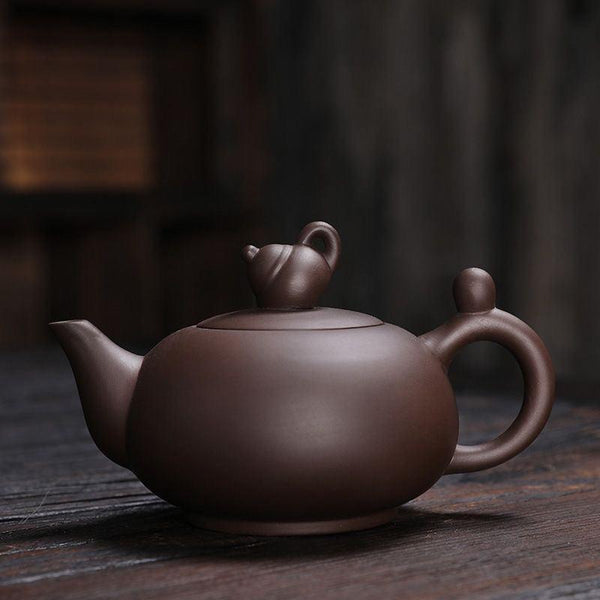
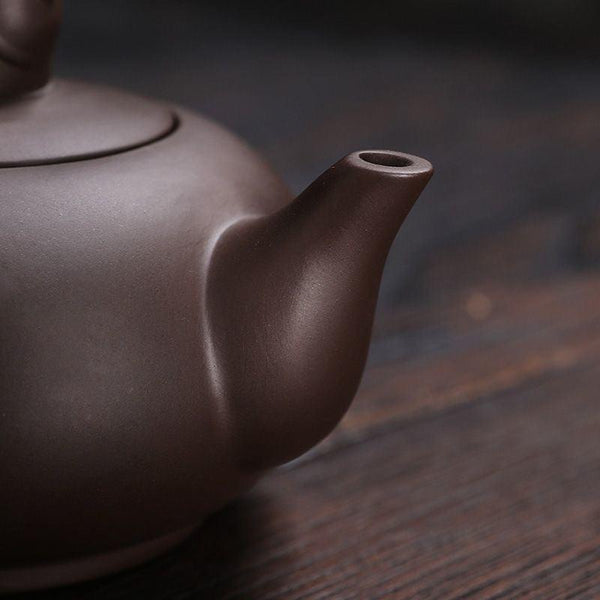
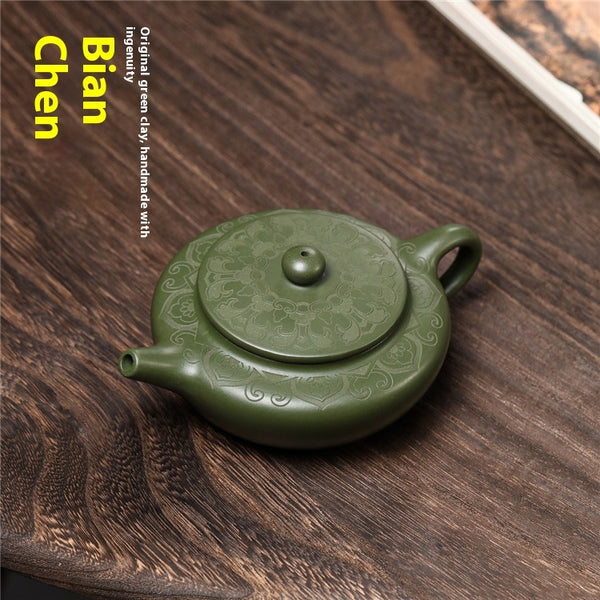
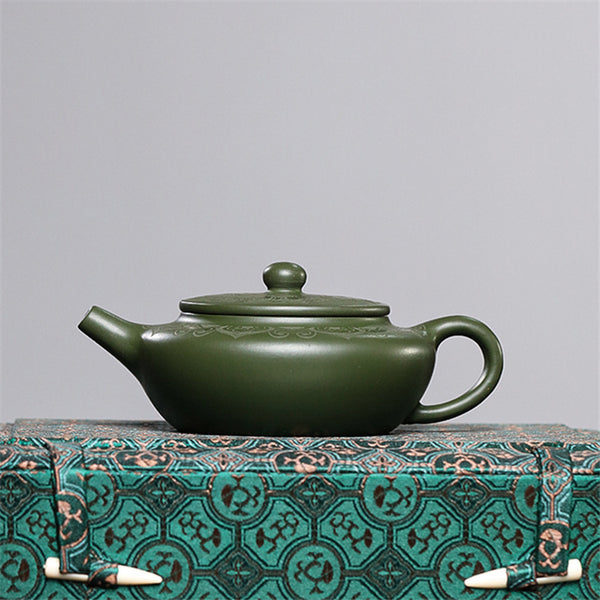
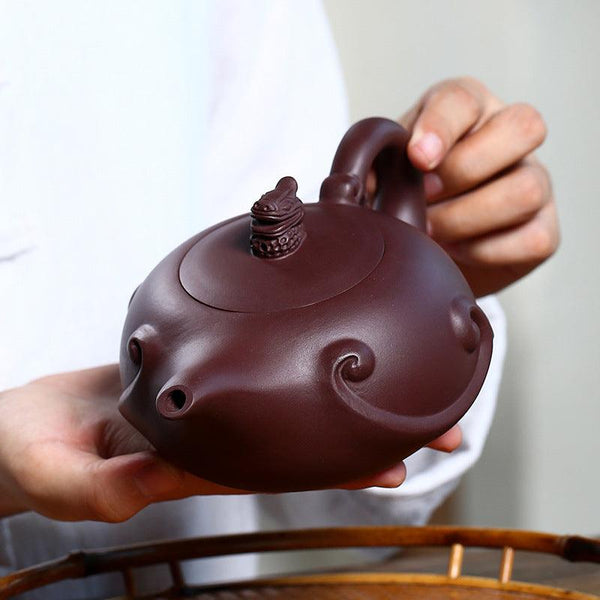
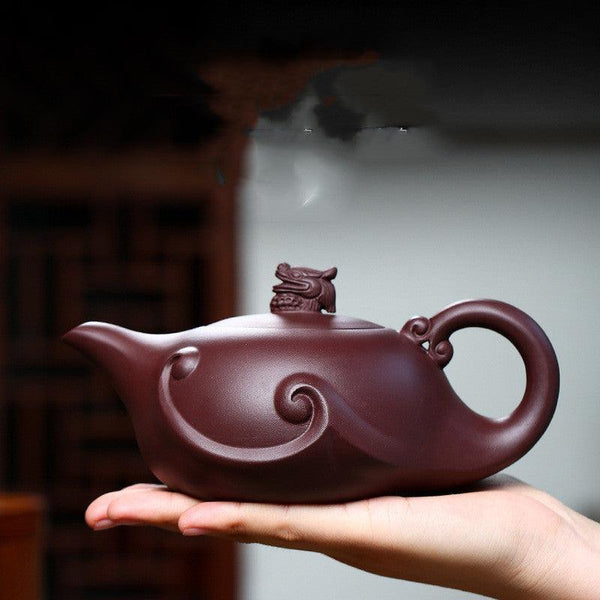
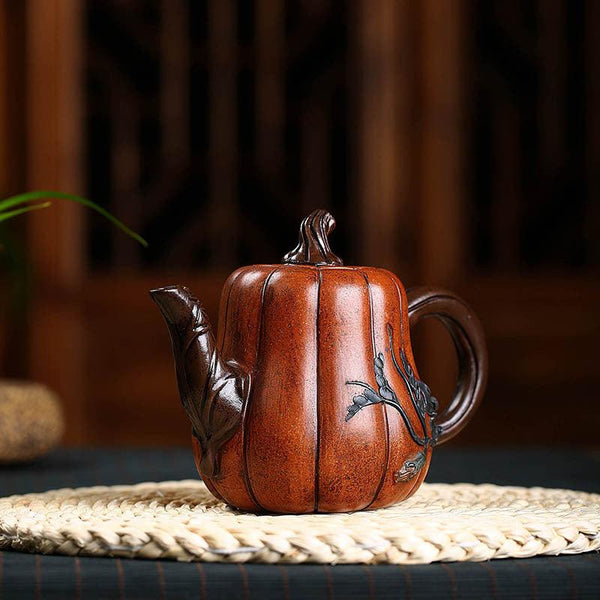
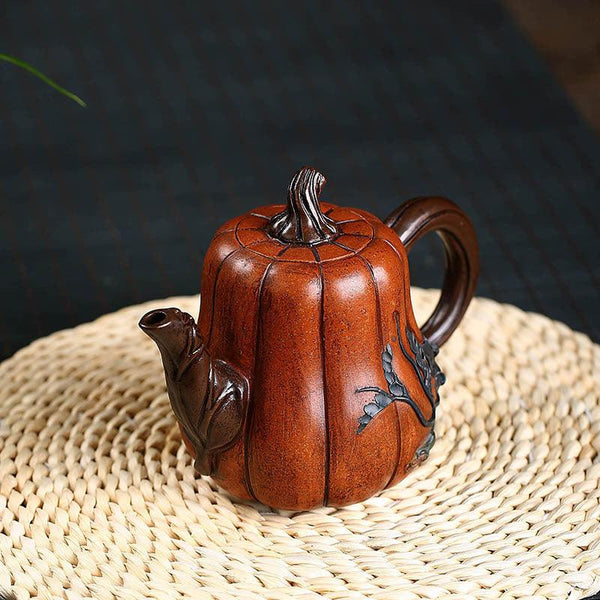
In the world of Gongfu tea, few pairings are as legendary—or as essential—as Zisha and Puerh. While a porcelain gaiwan is an excellent tool for "testing" a tea’s profile, a Zisha teapot for Puerh tea is what truly "cultivates" the brew. This relationship isn't just based on tradition; it is rooted in a unique geological phenomenon found only in the ore of Yixing: the double-pore structure.
- Closed Pores: These provide the incredible heat retention Zisha is famous for, keeping the water at a near-boiling temperature—essential for "opening up" compressed Puerh leaves.
- Open Pores: These microscopic channels allow the teapot to "breathe." This breathability acts as a natural filter.
"Clay Compass": Matching Porosity to Fermentation
Puerh comes in Sheng Puerh, Aged Sheng Puerh, and Shou Puerh varieties, each requiring specific clay. Choosing the right clay is a matter of matching the porosity and heat retention of the pot to the specific "energy" of the tea.
"Clay Compass" approach:
For Raw Puerh
Young Sheng Puerh (under 5–8 years) is vibrant, floral, and often quite astringent. It behaves much like a high-mountain Oolong.
- Match: Zhu Ni (Cinnabar Clay) or Hong Ni (Red Clay).
- Why it works: These clays have a high density and low porosity. They do not "absorb" the delicate, high-pitched floral aromas that define a young Sheng. Instead, they reflect the heat quickly, ensuring the tea’s natural brightness is preserved while slightly smoothing out the "bite" of the tannins.
For Aged Sheng Puerh: The Balance of Zi Ni
As Sheng Puerh ages, it loses its floral "greenness" and develops deeper notes of camphor, dried fruit, and wood. It becomes a more complex, heavier tea.
- Match: Zi Ni (Purple Clay) or Jiangpo Ni.
- Why it works: Zi Ni is the classic "all-rounder" with moderate porosity. It is excellent at "rounding" the edges of a tea that has been in storage for a decade. It provides the heat stability needed to extract the deep "Huigan" (sweet aftertaste) without muting the tea's evolving character.
For Shou (Ripe) Puerh: The Deep Warmth of Duan Ni
Shou Puerh is fully fermented, yielding a brew that is earthy, thick, and sometimes reminiscent of dark chocolate or damp earth.
- Match: Duan Ni (Fortified/Yellow Clay) or Thick-Walled Zi Ni.
- Why it works: Duan Ni is highly porous and has exceptional heat-insulating properties. Because Shou Puerh requires a constant, high temperature to release its full body, the thick walls of these pots act like an oven. Furthermore, the high porosity is perfect for absorbing any residual "pile flavors" (Wo Dui), resulting in a cleaner, smoother, and sweeter cup.
Yixing Teaart Tip: If you are a collector looking for vintage Zisha teapots for sale, prioritize Zi Ni from the 1980s or 90s (often referred to as "Factory 1" clay).
"Shape Secret": Architecture of the Steep
While the clay type determines the flavor profile, the physical shape of the teapot determines the extraction quality. In the world of Puerh, where leaves are often large, thick, and compressed, the internal "architecture" of your pot is critical.
The goal is to provide enough space for the leaves to unfurl completely without being crushed, while managing how heat circulates within the chamber.
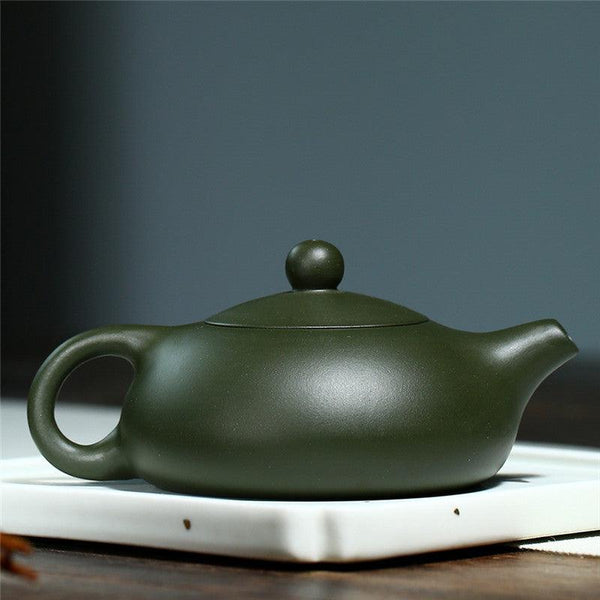
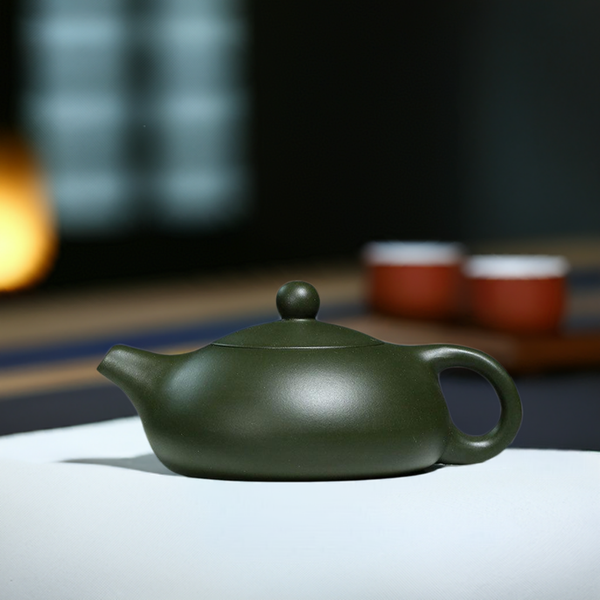
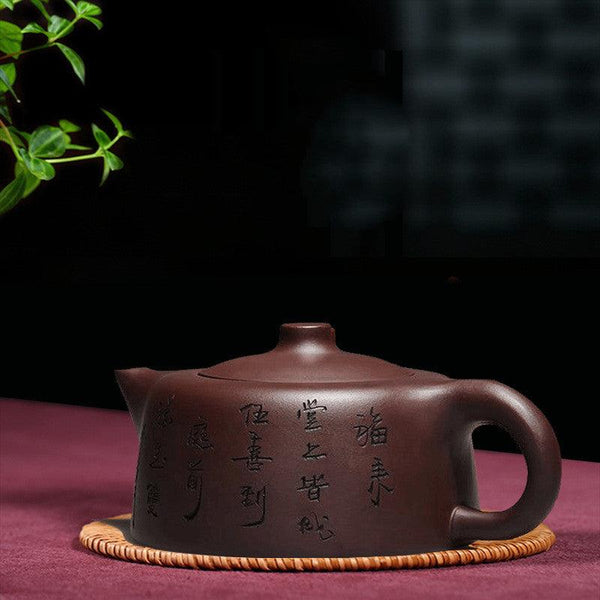
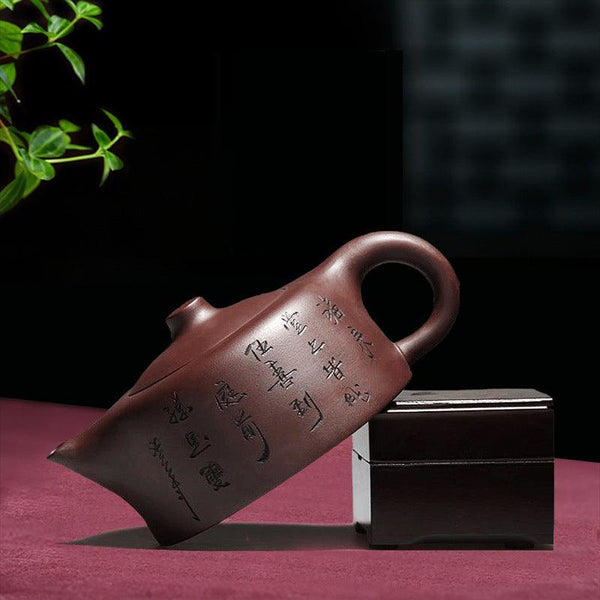
Flat & Wide Shapes: The "Breathing Room" for Sheng
- Classic Shapes: Shi Piao (Stone Gourd), Fang Gu (Drum Shape).
- Best For: Large-leaf Sheng Puerh and Loose-leaf Puerh.
- Logic: Sheng Puerh leaves are often harvested from ancient trees (Gushu) and are quite large. A flat, wide-bottomed teapot allows these leaves to spread out horizontally. This prevents the leaves from "clumping" together, which can lead to uneven extraction and a bitter brew.
Tall & Cylindrical Shapes: The "Heat Trap" for Shou
- Classic Shapes: Qin Quan (Bronze Weight), Duo Zhi (Tall Hat), Han Duo.
- Best For: Shou (Ripe) Puerh and Small-leaf/Tightly Compressed Buds.
- Logic: Shou Puerh is heavy and dense. It thrives in a "high-pressure" environment. A tall, narrow teapot keeps the water in contact with the compressed tea for longer as the heat rises and recirculates.
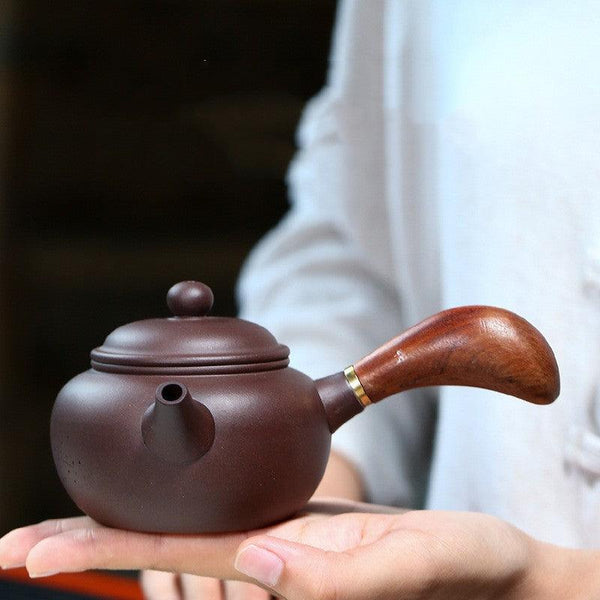
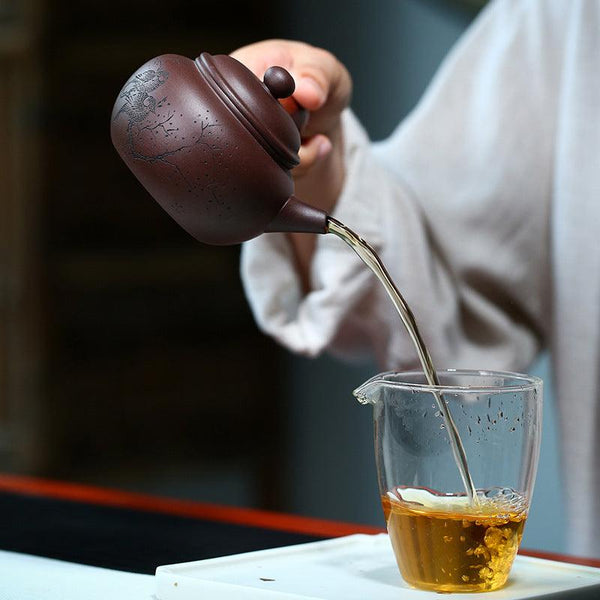
Round & Spherical Shapes: The "Universal" Circulator
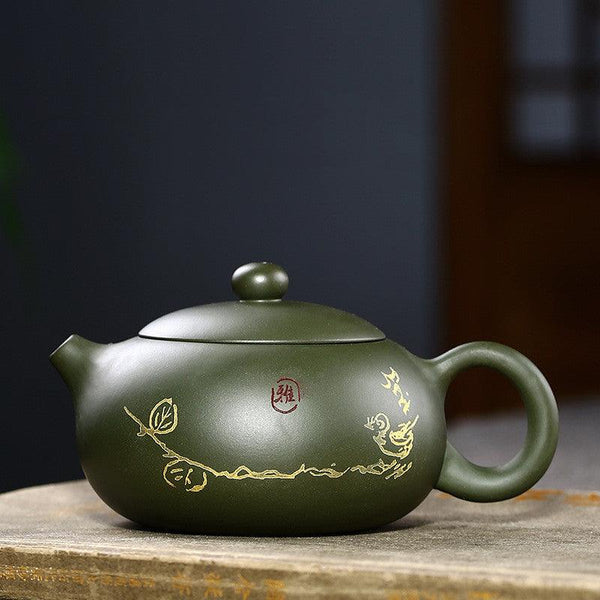
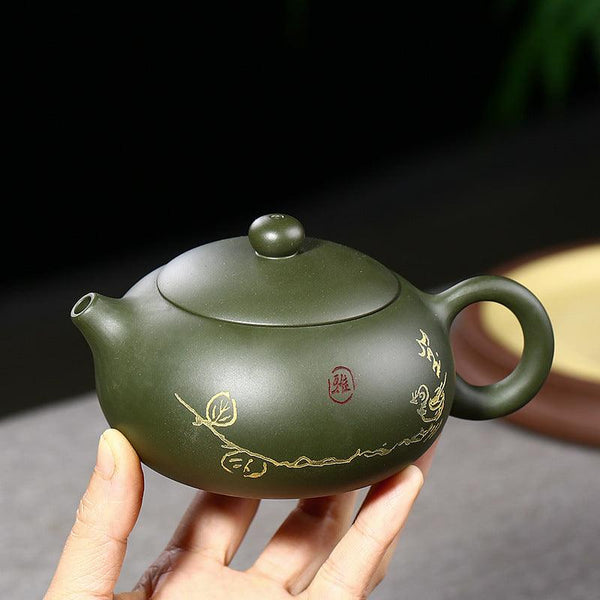
- Classic Shapes: Xi Shi, Long Dan (Dragon Egg).
- Best For: General Purpose / Puerh Mini-Tuocha.
- Logic: The spherical shape is the most efficient for heat convection. The water moves in a circular motion, ensuring every part of the leaf is touched equally.
"Lid-to-Body" Ratio
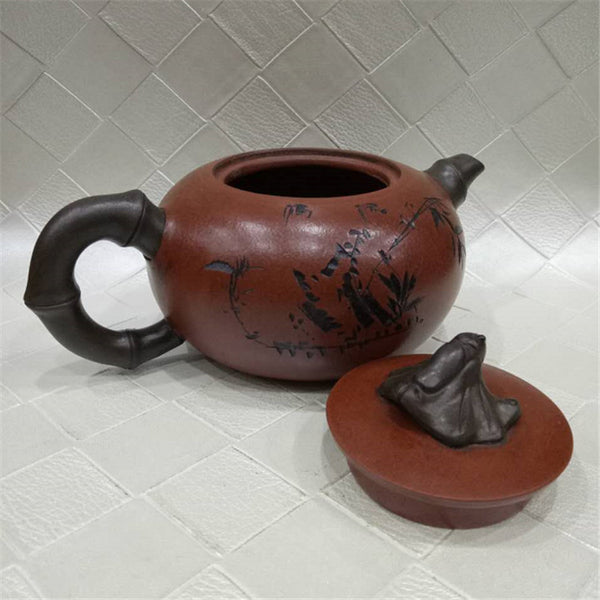
Wide mouths are essential for Puerh cakes! It allows you to put in large, unbroken chunks of tea. And the small mouths are great for heat retention.
Want to buy a Yixing teapot? Read our article "How to Buy Authentic Yixing," where we address the trust issues and "tone tests" mentioned in your research.