In the world of Yixing Zisha teapots, few debates spark as much passion among tea connoisseurs as the choice between traditional wood firing and modern electric kiln firing.
Is a rustic, wood-fired teapot with natural ash glazes inherently superior to a clean, precisely fired electric-kiln teapot? Does the firing method alter how the clay interacts with tea leaves during brewing? Or is wood firing primarily an aesthetic choice for art collectors?
To help you make an informed decision for your tea table, here is a complete guide to the history, physics, surface aesthetics, brewing science, and collector value of wood-fired versus electric-kiln Yixing teapots.

1. Traditional and Modern Kiln Systems
To understand why kiln types matter, one must look at how Yixing firing technology has evolved across centuries.
The Legacy of Ancient Dragon Kilns
Historically, Yixing teapots were fired in massive, slope-built brick structures known as Dragon Kilns (Long Yao), fueled entirely by pine wood. These traditional kilns relied on the natural draft of the hillside, with potters stoking wood manually into fire ports over days to reach temperatures near 1200°C. Firing was a dramatic, unpredictable battle with nature, where flame movements, weather conditions, and ash placement created one-of-a-kind ceramic pieces.
The Rise of Modern Electric Kilns
In the mid-to-late twentieth century, modern ceramic production introduced computerized Electric Kilns and gas kilns to Yixing. Electric kilns use resistance heating elements to raise temperatures according to precise, digital heating curves. This technological shift brought unprecedented temperature control, consistency, and clean firing conditions to the craft.
Today, while electric kilns are the workhorse of high-quality daily Yixing production, wood firing has experienced a powerful artistic renaissance among master artisans seeking vintage aesthetics and unpredictable natural glaze effects.
2. How Wood Firing Works: Fire, Resin, and Natural Ash
Wood firing is not simply heating clay with wood; it is an organic, multi-day interaction between minerals, flame, and airborne ash.
The Magic of Natural Ash Glaze (Ziran Luohui)
During a wood firing, pine wood burns at high temperatures around 1200°C, releasing organic resins, pine oils, and fine wood ash into the kiln draft. As hot air swirls through the chamber, microscopic ash particles land on the sticky, glowing surfaces of the raw teapots.
At peak temperatures, the mineral compounds in the wood ash (primarily calcium, potassium, and silica) melt and react with the silica embedded in the Yixing clay. This chemical reaction forms a natural ash glaze (自然落灰釉)—an un-applied, organic glaze layer featuring glossy drips, golden amber speckles, and rough, stone-like textures.
Reduction Atmospheres and Flame Marks
Because wood feeding creates moments of oxygen starvation inside the kiln chamber, wood firings naturally produce a reduction atmosphere. This chemical reduction converts red iron oxides into black and blue ferrous oxides, creating dramatic flame shadows (Huo Hen), two-toned color shifts, and deep metallic lusters across the teapot body.
3. Characteristics of Electric-Kiln Firing: Pure Clay Expression
If wood firing is defined by wild, unpredictable nature, electric-kiln firing is defined by mathematical precision and purity.
- Absolute Temperature Control: Microcomputer controllers manage heating rates, soaking periods, and cooling cycles down to the degree. This guarantees that the clay reaches its exact optimal sintering point without over-firing or under-firing.
- Pure Clay Expression: Electric kilns operate in a clean, ash-free environment. Without airborne wood ash, the fired teapot preserves the unadulterated, natural color and sand-grain texture of the raw ore—whether it is the deep warm chocolate of Purple Clay (Zisha), the vivid crimson of Red Clay (Zhuni), or the golden tan of Fortified Clay (Duanni).
- High Yield and Environmental Safety: Electric kilns eliminate smoke pollution and significantly reduce thermal shock, resulting in a drastically lower failure rate and making high-grade, handmade teapots more accessible to daily tea drinkers.
4. Differences in Surface, Color, and Consistency
Comparing the visual and tactile qualities of these two firing systems highlights two distinct artistic philosophies:
|
Feature |
Wood-Fired Yixing Teapot |
Electric-Kiln Yixing Teapot |
|
Surface Texture |
Multi-layered, rustic, glossy ash drips, rugged "sun and shadow" |
Smooth, satin-matte, uniform,distinct quartz sand particles |
|
Color Dynamics |
Multi-colored flame shadows, unpredictable reduction shifts |
Pure, accurate, predictable,highlights natural raw ore hue |
|
Lid Fit & Sealing |
High risk of warpage; requires careful post-firing refitting |
Highly precise, airtight seal;smooth, flush lid-to-neck alignment |
|
Uniqueness |
100% unique one-of-a-kind art; impossible to replicate |
Consistent batch quality; classic traditional geometric accuracy |
The Wood-Fired Aesthetic
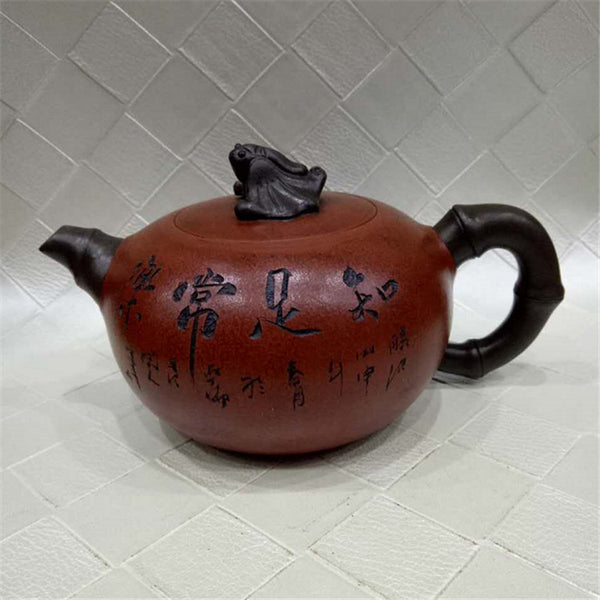
A wood-fired teapot is an expressive, individual work of art. One side of the pot might display a glossy, amber ash drip where it faced the burner, while the reverse side shows a dark, matte, charcoal-reduced shadow. The tactile hand-feel is rich, weathered, and rustic.
The Electric-Kiln Aesthetic
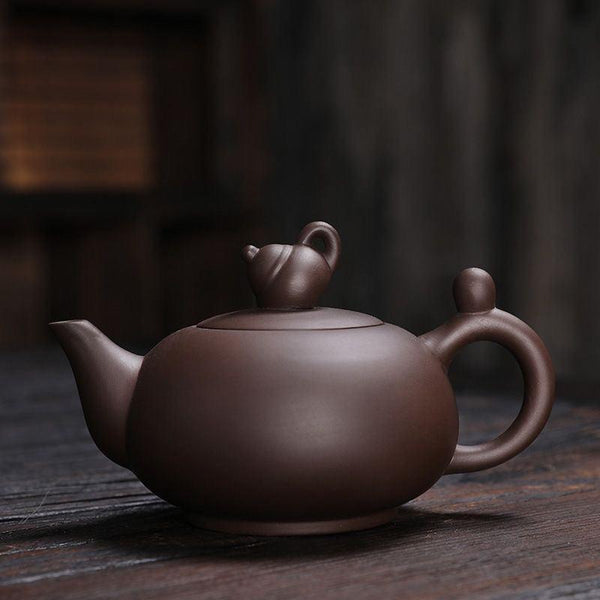
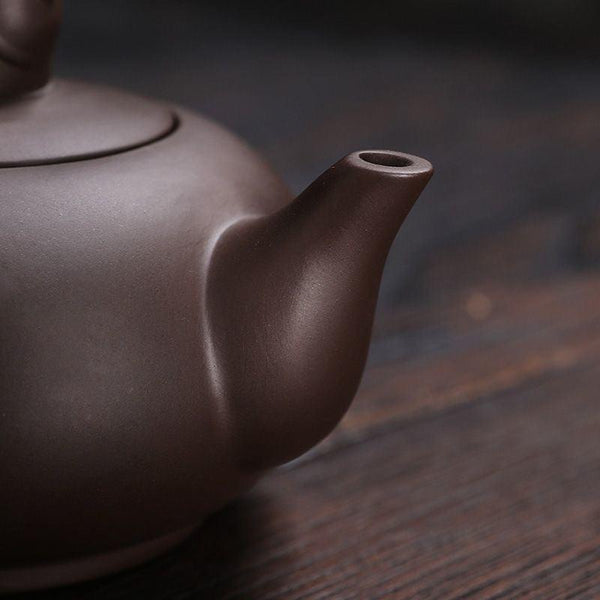
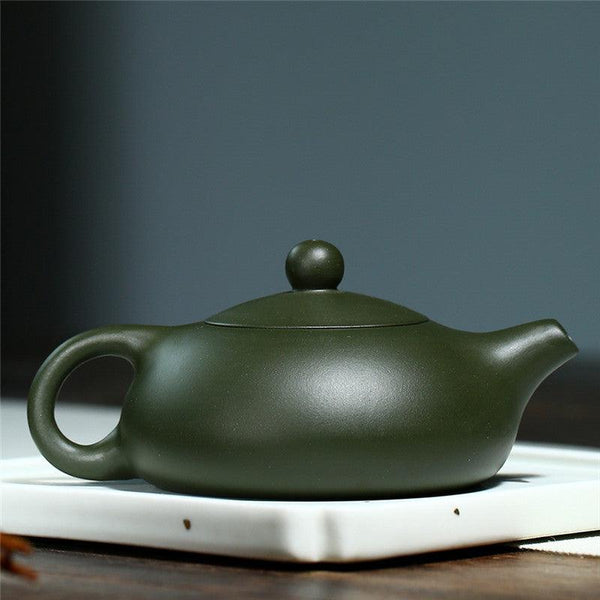
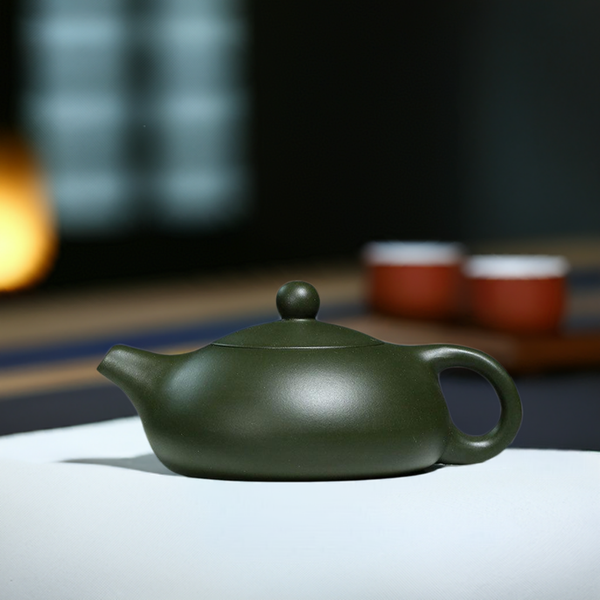
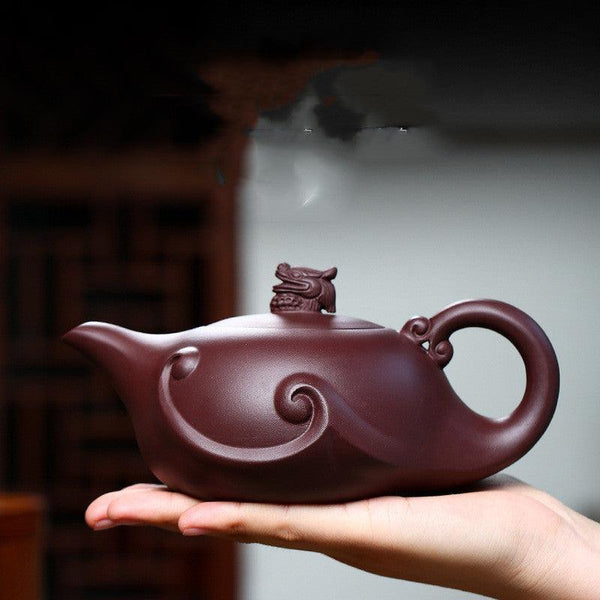
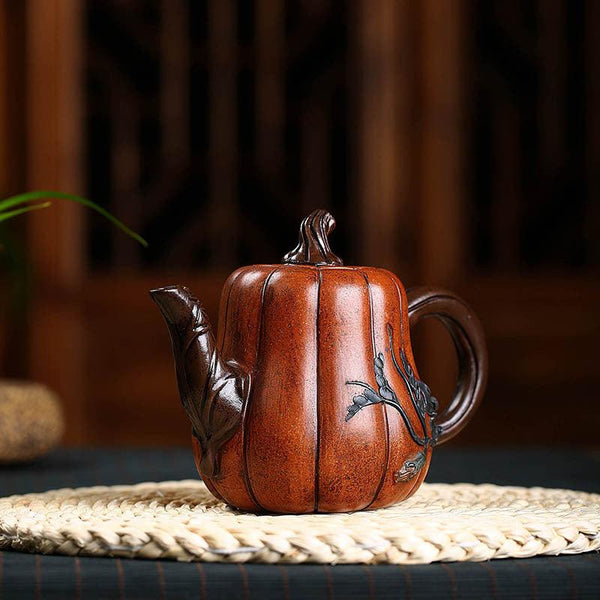
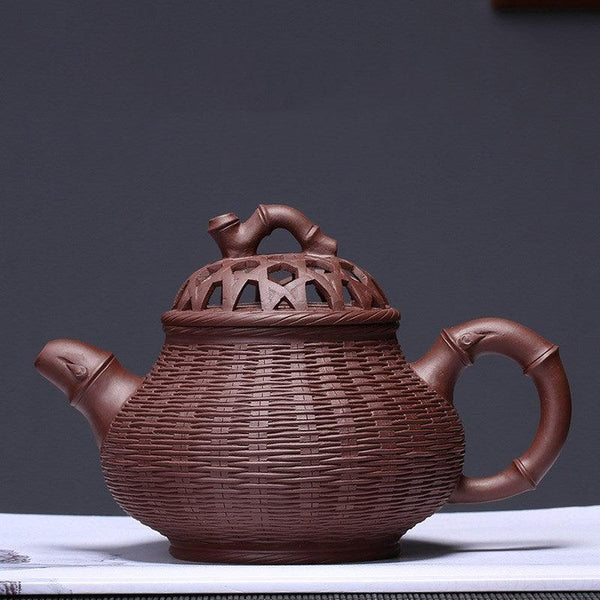
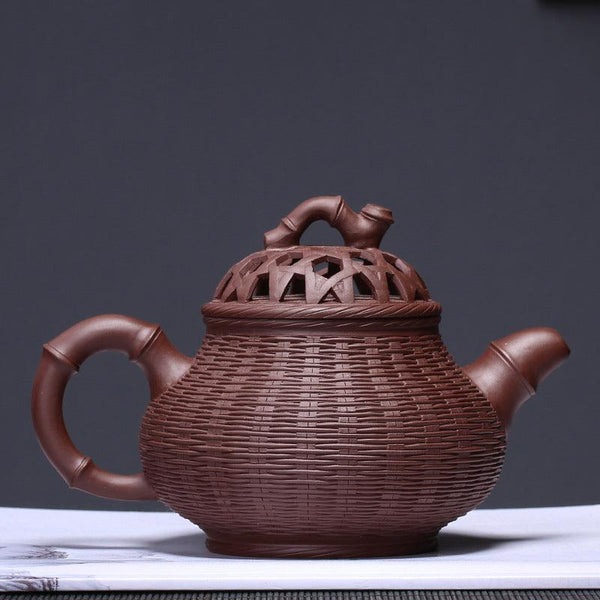
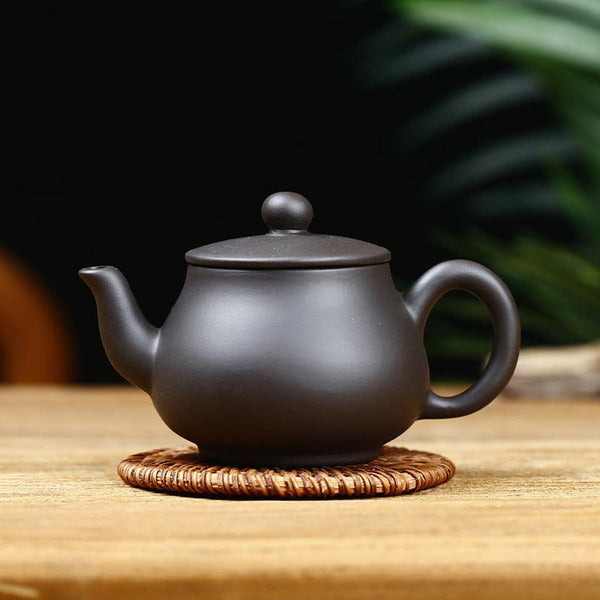
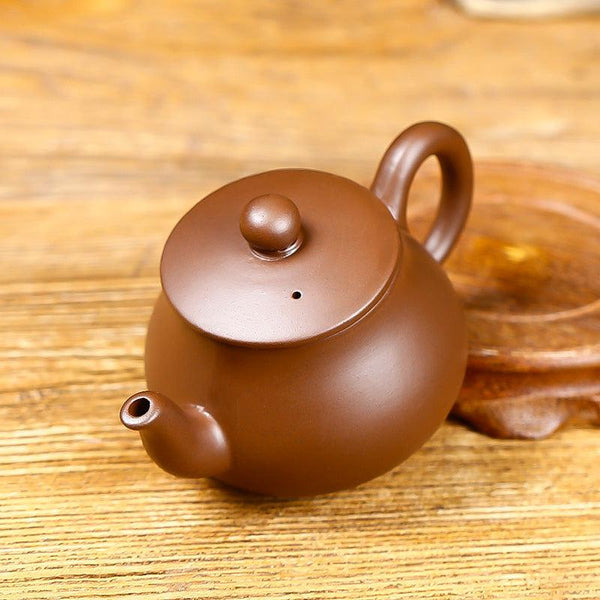
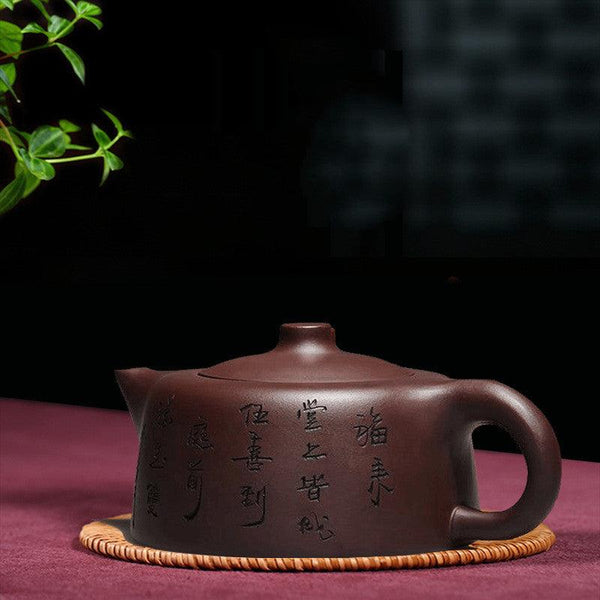
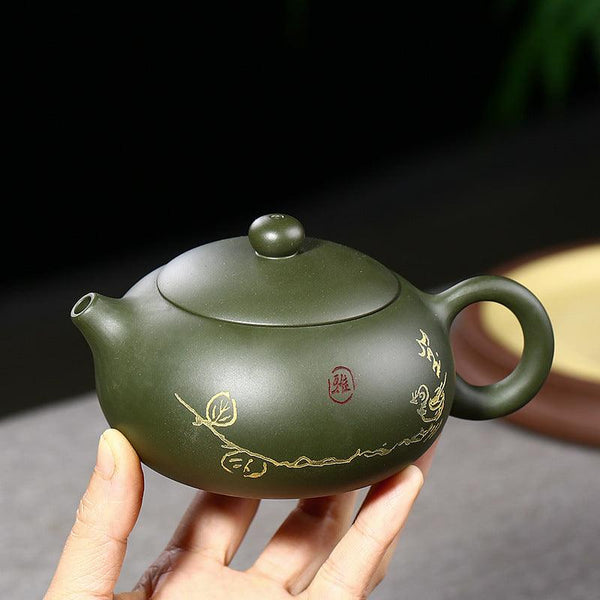
An electric-kiln teapot showcases clean geometric mastery. The lines are crisp, the lid fits with airtight precision, and the surface displays the classic "warm jade" matte luster characteristic of fine Zisha clay. The hand-feel is silky, balanced, and smooth.
5. Does Wood Firing Improve Tea Flavor?
A common claim among tea enthusiasts is that wood-fired teapots yield sweeter, softer tea soup due to minerals in the wood ash. What does ceramic chemistry say?
The Dual Micro-Pore Matrix
The primary factor governing a Yixing teapot's brewing performance is its internal dual micro-pore structure. Microscopic channels between fired clay grains allow the teapot to retain heat, absorb heavy bitter notes, and moderate caffeine extraction, resulting in smoother infusions rich in healthful tea catechins.
- Electric-Kiln Performance: Because electric firing precisely hits the ideal vitrification window, it reliably preserves the clay's native micro-porosity, ensuring optimal gas permeability and heat retention.
- Wood-Fired Performance: When wood ash melts across a teapot's surface, it forms a vitreous glaze layer. If the ash layer is thick, it can partially seal the outer micro-pores on that side of the pot, slightly reducing gas permeability while locking in higher surface heat.
Water Softening: Myth vs. Reality
While some tea drinkers feel that trace calcium and potassium in wood ash glazes subtly soften water, the actual physical effect during a brief Gongfu tea steep is minimal compared to the clay's fundamental micro-porous structure and heat convection. Both firing methods produce exceptional brewing vessels, but they offer slightly different thermal dynamics.
6. Risks of Uneven Firing and High Defect Rates
The striking visual appeal of wood-fired teapots comes at a high technical cost for the artisan.
- Severe Thermal Gradients: Temperatures inside a wood kiln vary dramatically between the front fire ports and the back chamber draft. Pots near the fire face intense heat that can cause clay body sag or surface blistering, while those further back risk remaining under-fired.
- Thermal Shock and Warping: Stoking cold wood into a hot kiln causes rapid temperature spikes and drops. Because Yixing clay undergoes significant firing shrinkage (from 10% up to 25% for Zhuni), these sudden expansion and contraction cycles frequently warp flat lids into ovals or crack spout attachments.
-
Extremely High Loss Rates: The defect rate for handmade wood-fired teapots can reach 30% to 50%. This high failure rate, combined with multi-day firewood and labor costs, directly drives up the market price of defect-free wood-fired pieces.
7. Which Type Is Better for Users and Collectors?
Choosing between a wood-fired and an electric-kiln Yixing teapot depends entirely on your personal priorities as a tea drinker:
Choose an Electric-Kiln Yixing Teapot if:
- You want pure clay expression: You want to experience the authentic, unadulterated color, texture, and natural patina development (Bao Jiang) of raw Zisha ore.
- You prioritize functional perfection: You value an airtight lid seal, a smooth, splash-free pour, and flawless geometric balance.
- You seek excellent value: You want a high-performance daily Gongfu brewing tool without paying the high failure-rate premium associated with wood firing.
Choose a Wood-Fired Yixing Teapot if:
- You love unique, one-of-a-kind art: You appreciate bold flame marks, natural ash drips, and dramatic reduction color shifts that can never be duplicated.
- You collect vintage, rustic aesthetics: You enjoy dramatic visual energy and rustic, tactile depth on your tea table.
- You are an art collector: You view a teapot as a unique sculpture forged through the unpredictable synergy of human hands, natural earth, and raw fire.
Conclusion
Neither firing method is universally "better"—they represent two distinct artistic destinations.
An electric-kiln teapot celebrates the master potter's control over form, line, and pure clay geology. A wood-fired teapot celebrates the wild, magical transformation of fire, ash, and chance. Whichever path you choose, pairing an authentic Yixing teapot with fine tea promises a lifetime of rewarding brewing sessions.