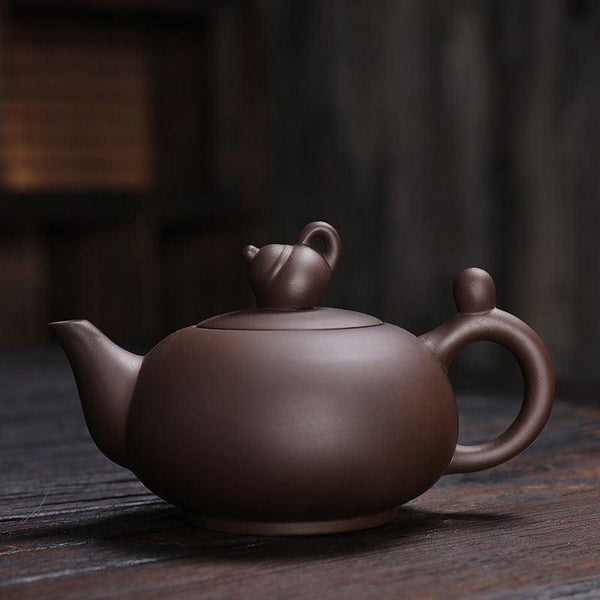
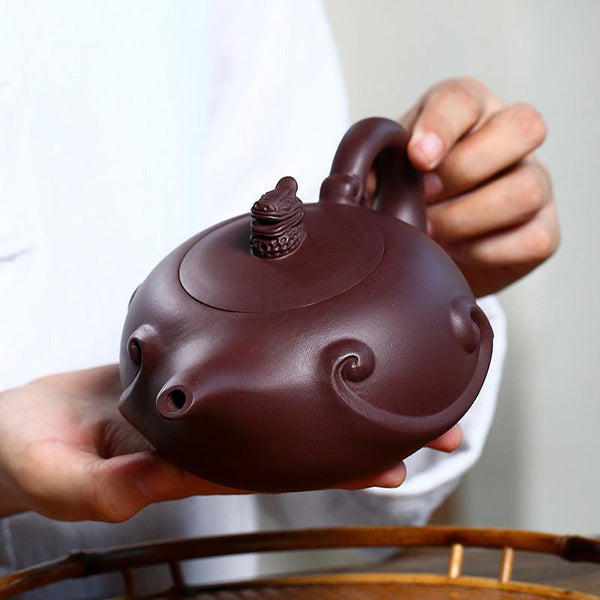
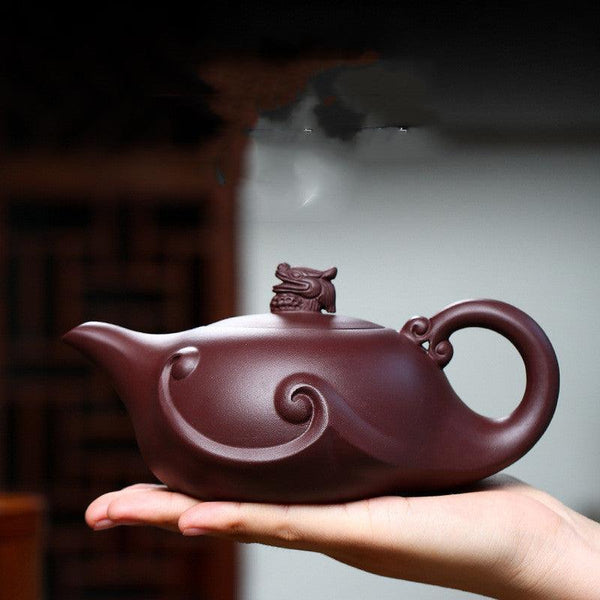
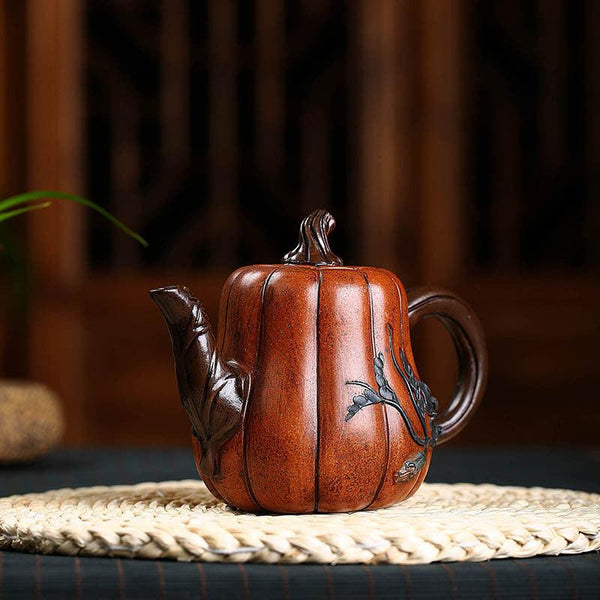
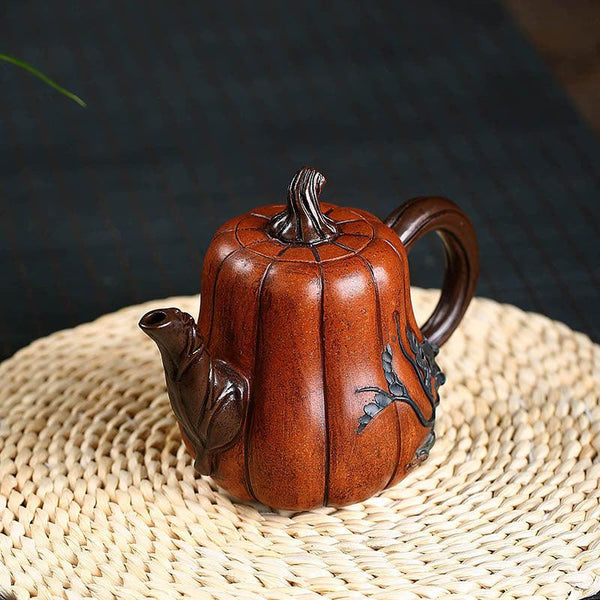
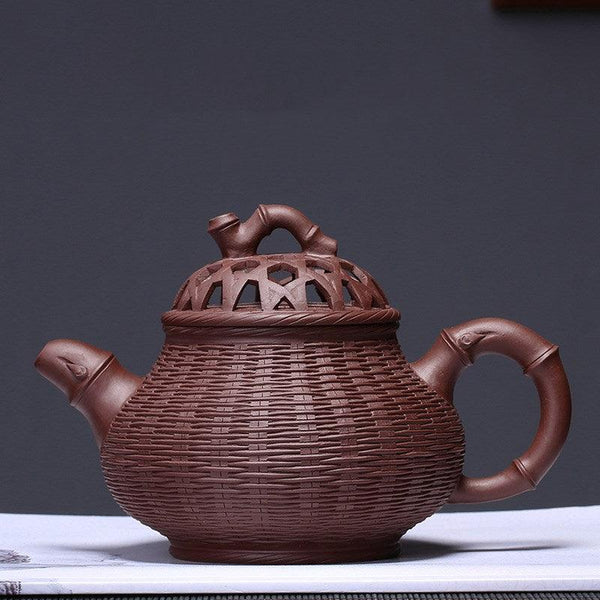
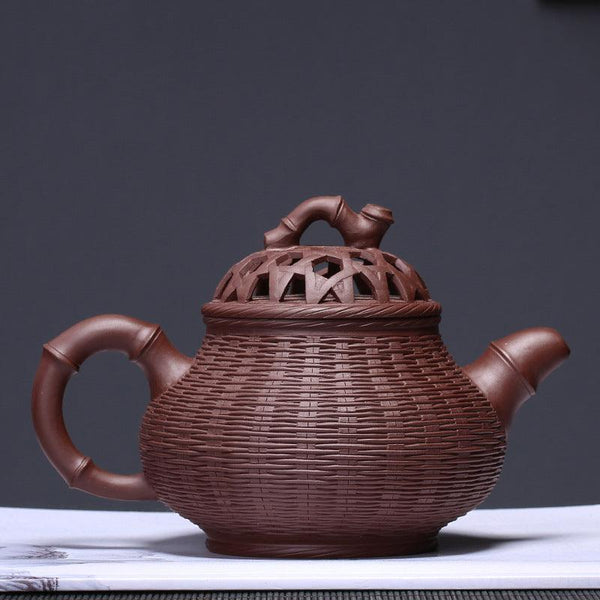
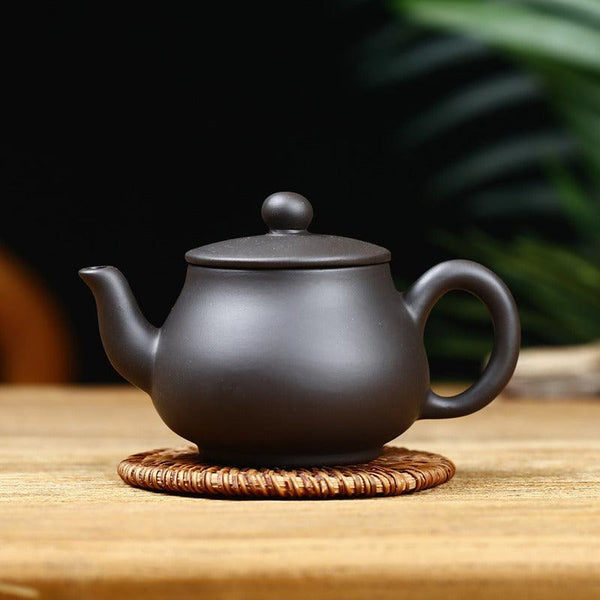
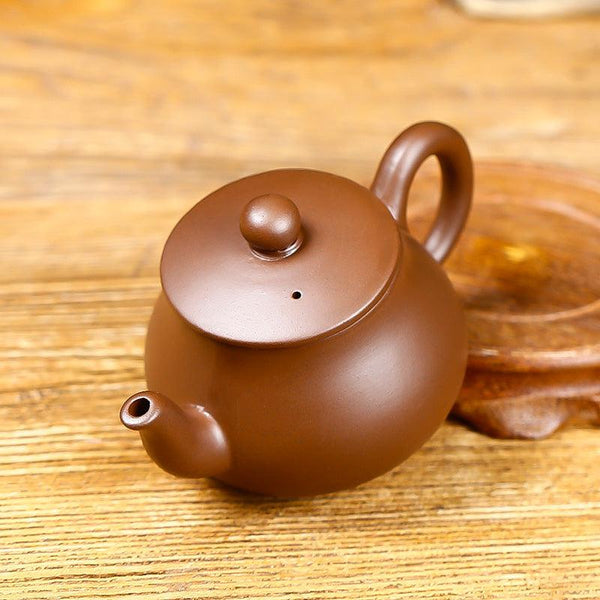
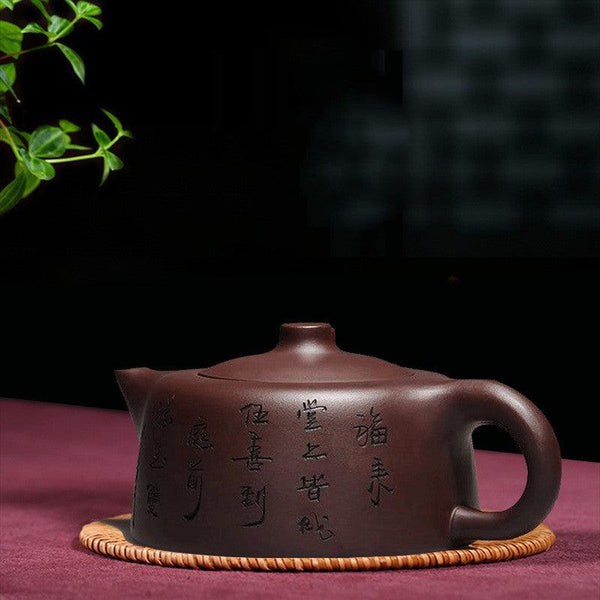
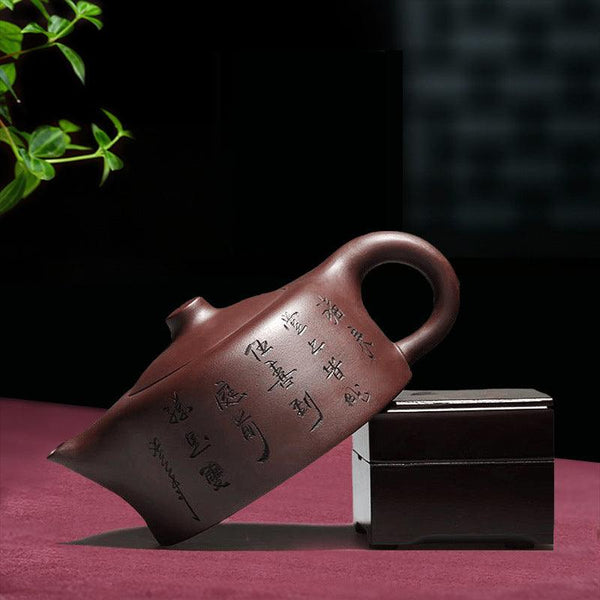
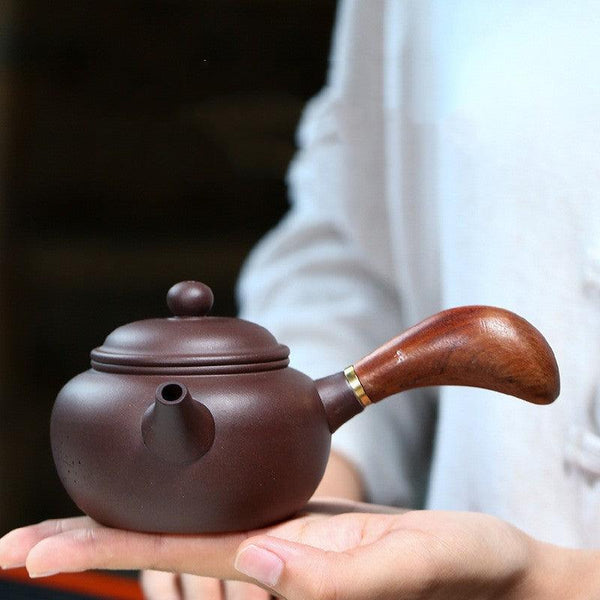
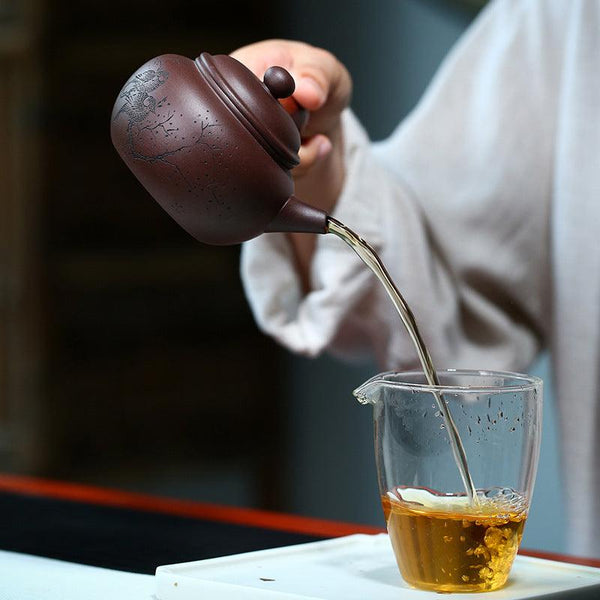
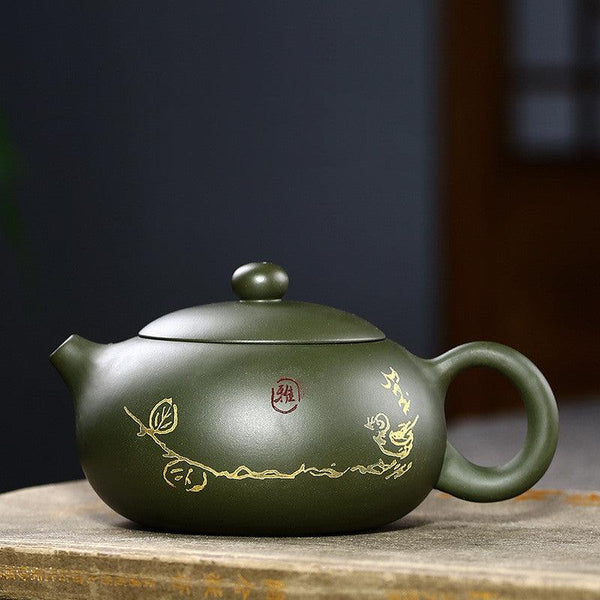
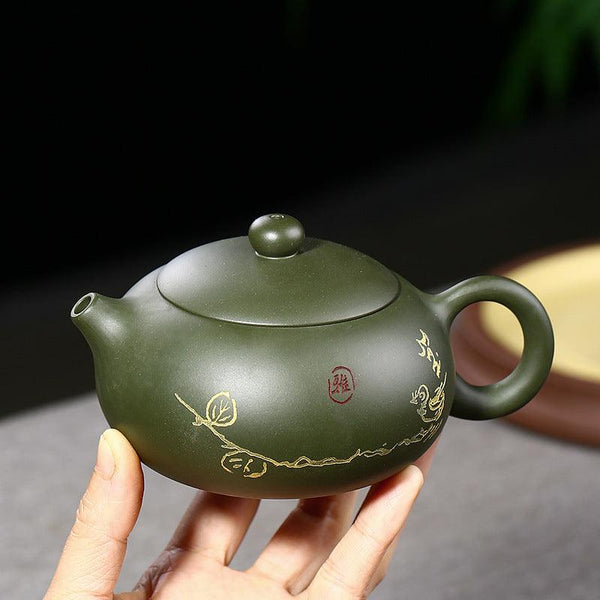
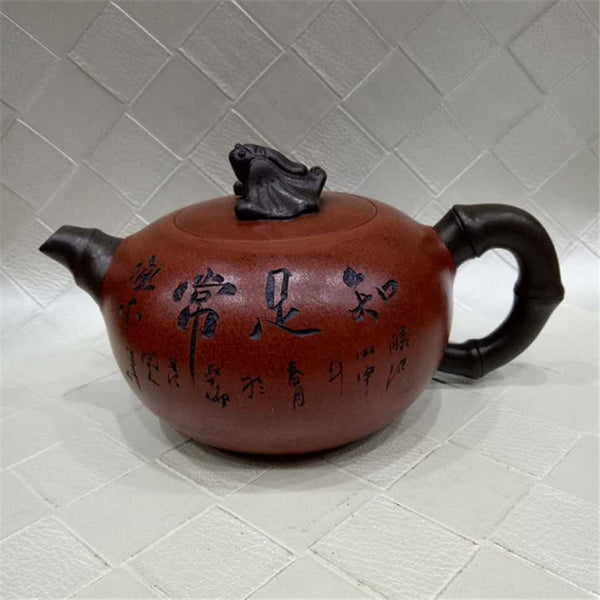
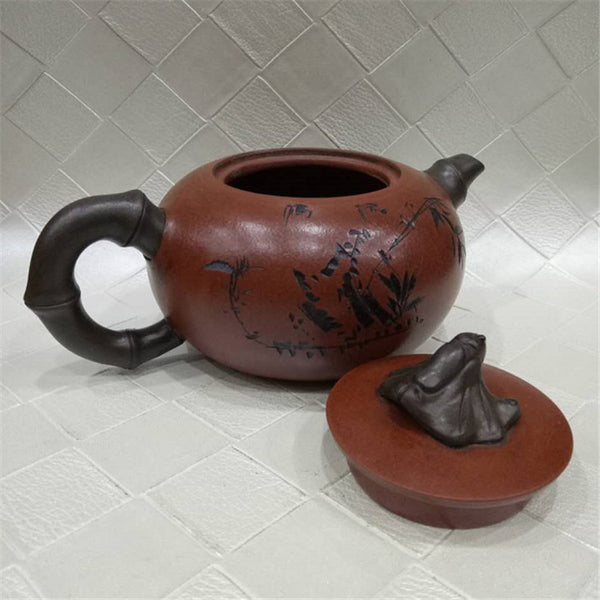
Step inside a traditional Yixing Zisha teapot workshop in Dingshu Town, Jiangsu, and you will not find high-speed electric potter’s wheels or assembly-line casting tanks. Instead, you will see a low hardwood workbench (nideng) covered in neat rows of dark wooden mallets, aged bamboo paddles, steel blades shaped like river fish, and translucent sheets of polished water buffalo horn.
Unlike porcelain or standard stoneware thrown from wet, plastic clay on a spinning wheel, Yixing teapots are built using an ancient slab-paddling and joining technique passed down for centuries. That unique construction method gave rise to an entire ecosystem of specialized hand tools—often numbered in the hundreds across a master potter’s lifetime.
Below, we explore why Yixing clay demands its own toolkit, break down 15 essential traditional teapot-making tools, look at why masters carve their own instruments, and explain how hidden tool marks inside a teapot reveal how it was made.

1. Why Yixing Teapots Require Specialized Tools
Everything in a Yixing workshop begins with the stubborn personality of Zisha ore. Raw clay—such as iron-rich purple Zini, golden-tan Duanni, or rare Benshanzhu red clay—is mined as hard stone, crushed, sifted, mixed with water, and aged through months of natural weathering. Even after aging, Zisha remains rich in coarse quartz and mica particles, making it far less fluid than porcelain paste.
Because potters do not pour liquid slip into plaster molds or pull wet clay up on a fast wheel, they must pound conditioned clay into flat slabs and gently coerce those slabs into three-dimensional silhouettes:
- Round Shapes (Yuan Qi): Built by wrapping a rectangular clay strip into a cylinder and paddling it inward (da shentong) into harmonious spheres and curves.
- Square Shapes (Fang Qi): Constructed by cutting crisp geometric slabs and joining them edge-to-edge (xiang shentong) around sharp corners.
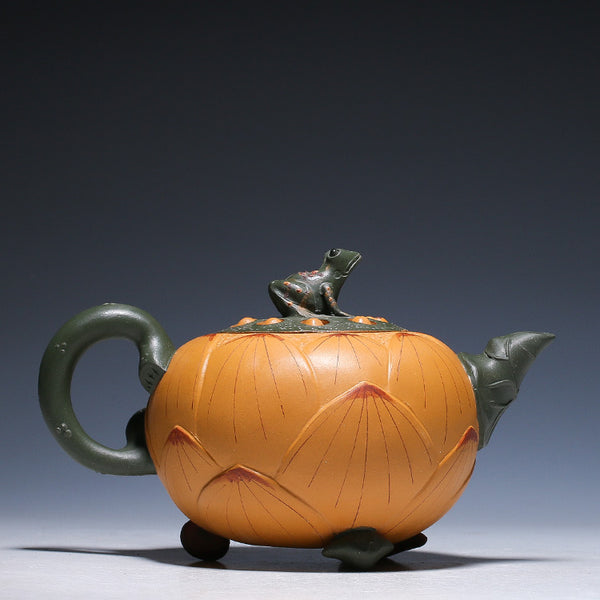
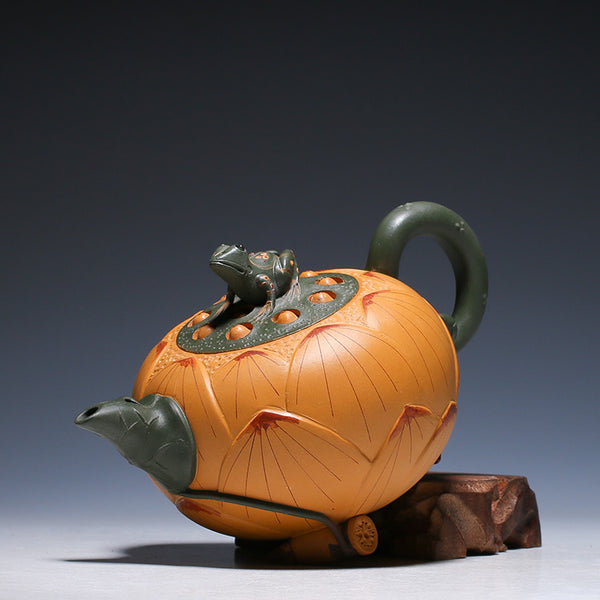
- Ribbed & Naturalistic Shapes (Jinwen Qi & Hua Qi): Sculpted with uniform melon ridges, interchangeable ribbed lids, or lifelike botanical motifs.
To work dense, gritty clay without sticking, tearing, or collapsing soft walls, artisans rely on porous hardwoods (such as rosewood, sandalwood, and jujube wood), flexible aged bamboo, water buffalo horn, soft sheep leather, and custom-ground steel blades.
2. Clay Beaters and Measuring Tools
Before a single curve is shaped, the clay must be compacted to uniform density and measured to exact proportions.
-
Clay-Beating Mallet
Shaped like a heavy wooden club with a straight handle and a half-cylindrical face, the dazi is made from dense hardwood. Artisans use its rounded side to pound aged clay blocks into smooth, even strips and flat slabs, expelling trapped air pockets and aligning mineral grains before cutting. -
Wooden Turntable
Because freshly beaten Zisha clay is too soft to grip directly with fingers, the potter works atop a low, hand-spun turntable (traditionally called yuefu, often resting on the wooden nideng bench). Spinning the zhuanpan with one hand lets the artisan strike, trim, and burnish the teapot evenly with the other without warping its walls. -
Compass Clay Cutter
The juche is a traditional bamboo-and-wood beam compass fitted with a sharp iron scribing pin and a bamboo locking peg. Potters adjust the pin spacing to slice perfectly circular disks for the base, lid, and mouth opening, as well as to measure uniform wall-strip heights (qiangche) before rolling the body cylinder.
3. Shaping and Cutting Tools
Once clay slabs are cut to size, the artisan transforms flat sheets into a hollow vessel.
-
Wooden Shaping Paddle
Carved from dense rosewood, jujube, or cypress—whose fine wood pores absorb surface moisture so wet clay does not stick—the mu paizi resembles a flat, smoothly tapered wooden spatula. Artisans use it to slap and coax a standing clay cylinder into plump round forms like the Xishi or Fanggu, and to pat mouth rims level. -
Bamboo Shaping Paddle
Crafted from air-dried aged bamboo in large, medium, small, and pointed sizes, bamboo paddles offer controlled springiness. Large flat bamboo paddles compact the crisp, straight planes of square teapots, while narrow pointed zhu paizi reach inside the shoulder and body to smooth internal seams. -
Bitterling-Shaped Clay Knife
Named after the small, sleek bitterling river fish, this thin, razor-sharp steel blade is the most versatile knife on the workbench. Tapered like a willow leaf, its curved edge and fine tip handle slicing, beveling mitered seams, paring excess clay, lifting edges, and trimming rims. -
Bamboo Clay Lifter and Ruler
A long, slender bamboo blade with a flat back and a thin, knife-like front edge, the ni qian chi allows potters to slide cleanly underneath freshly beaten clay sheets on the workbench and lift them onto the turntable without stretching, fingerprinting, or tearing the slab.
4. Surface-Finishing Tools
A great Yixing teapot owes its quiet, jade-like glow not to liquid glaze—which authentic Zisha never uses—but to meticulous surface finishing while the clay is leather-hard.
-
Ox-Horn Burnishing Blade
Considered the soul of Zisha finishing, mingzhen are thin, flexible scrapers hand-shaved from water buffalo horn and polished mirror-smooth on whetstones. Kept soaked in clean water for suppleness, the horn blade glides across the leather-hard teapot under firm, rhythmic pressure. Rather than sealing the clay like glaze, mingzhen presses coarse sand grains flush into the surface and draws fine mineral slurry (jiang) upward—tightening the outer skin, improving heat conduction during 1180°C firing, and creating the satin finish that develops a rich tea patina over years of brewing. -
Curved Bamboo Profile Scraper
A bizi is a bamboo template whose edge is carefully filed to match the exact parabolic contour of a specific teapot belly or domed lid. As the teapot rotates on the zhuanpan, the potter sweeps the bizi clockwise across the exterior, shaving away microscopic high spots and locking in true geometric symmetry. -
Decorative Line Scraper
Notched from horn, bamboo, iron, or hardwood, a xiangeng is custom-ground to match raised decorative fillets, recessed waistlines, and stepped neck collars. Running it carefully around the turning pot leaves crisp, unbroken architectural lines. -
Clay-Slip Applicator & Joint Smoother
This bamboo-and-horn duo handles structural transitions. The fuzhi applies soft bonding clay slip (zhini) into corners where the neck, foot ring, or lid flange meets the body, and the lezhi follows immediately after to fillet and smooth the joint into a clean, flowing curve.
5. Spout and Handle Tools
A teapot's spout and handle determine both its visual poise and how cleanly it pours without dripping.
-
Pointed Detail and Bore Knife
Workshop drawers hold entire families of jian dao—straight steel knives, curved blades, and long tongzui knives. Potters use them to bore open the center of hand-rolled clay spout cones, trim angled bases, and pack fine clay seamlessly around the spout and handle joints (zhuo zui and zhuo ba). -
Spout-Hollowing Hook
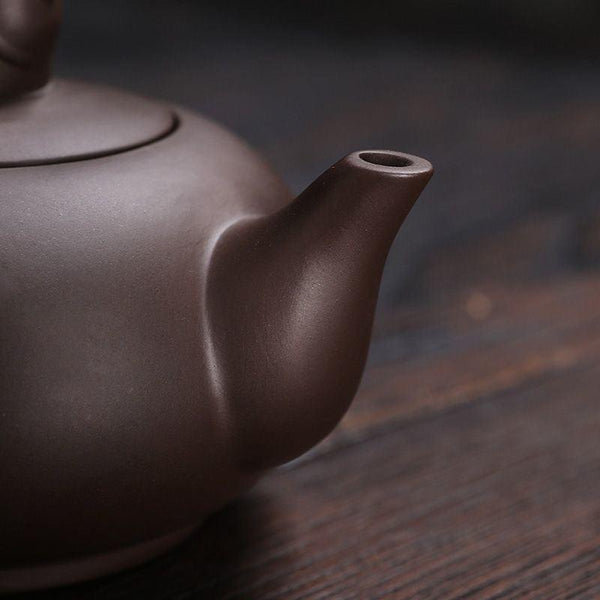
Made by fitting a slender 2–3 mm steel wire with a curved scraping tip into a wooden handle, the wa zui dao reaches inside the attached spout to clear burrs and smooth the internal water channel, ensuring fast, laminar pouring. -
Bamboo Hole & Spout Shaper
Carved from wear-resistant old bamboo into flat-tipped or double-pointed pegs, du ge tools gently round out the spout tip, calibrate the steam vent hole in the lid knob, and sculpt fine details on naturalistic teapots without snagging wet clay. -
Brass Filter-Hole Punch
Small hollow brass tubes in graded diameters allow the potter to punch crisp, evenly spaced strainer holes through the inner teapot wall behind the spout—creating single-hole, multi-hole, or diamond-grid filters that keep tea leaves inside the chamber while letting tea soup rush freely.
(Beyond these fifteen core instruments, artisans also rely on soft sheep-leather strips to wipe rims gently without over-polishing, a cloth water brush called a shuibizhou to keep dry clay workable, stone or Zisha clay dome molds called xutuo for shaping curved lids, and a brass-tipped dingzhu anvil with a small wooden hammer to brace the interior wall when stamping the maker’s seal underneath.)
6. Tools Made by the Artisan
Perhaps the most surprising truth inside a traditional Yixing workshop is that you cannot simply buy a complete master toolkit off a hardware shelf. In Yixing, artisans make their own tools—and every teapot shape demands its own custom set.
Historical studio records tell of twentieth-century Grand Master Gu Jingzhou using over 120 specialized tools across more than twenty steps to build a single Duozhi teapot. When switching to a different silhouette, those profile scrapers (bizi), fillet blades (xiangeng), and curved mingzhen had to be carved anew. Gu famously tested new apprentices—including future masters such as Xu Hantang and Gao Zhenyu—by requiring them to build an accurate juche compass from scratch and spend months crafting tools before ever touching a clay slab.
Because every potter holds tools at a slightly different wrist angle and applies unique hand pressure, even two master artisans crafting the same classic Shipiao shape rarely share custom mingzhen or bizi. By shaving horn, filing aged bamboo, and bending steel wire to fit their own hands, makers forge a direct physical link between personal ergonomics and finished teapot geometry.
7. How Tool Marks Reveal the Making Process
Even after firing at high temperatures, a Yixing teapot quietly records how its maker worked the clay. Learning to read these subtle traces helps distinguish fully handmade teapots from half-handmade (press-molded) and slipcast or machine-jiggered pots—though no single mark should ever be judged in isolation.
Why the Outside Is Smooth and the Inside Is Textured
First-time buyers are often surprised to find a teapot’s exterior silky and luminous while its interior feels noticeably rougher. This contrast comes directly from tool access: the potter can glide a horn mingzhen across every exterior curve, whereas the teapot’s narrow mouth prevents mingzhen from reaching inside. Instead, the interior wall is cleaned and scraped with a narrow bamboo strip.
Tuqiang Guadi and "Sunburst" Lines
Before sealing the pot, the artisan inserts a bamboo blade to scrape excess bonding slip (zhini) and tidy the interior base and lower wall—a technique called tuqiang guadi ("pushing the wall and scraping the base"). On the floor of the pot, bamboo strokes leave faint, radiating arc striations popularly known as "sunburst lines" (taiyang xian).
However, experienced collectors know a crucial rule: sunburst lines alone do not prove a pot is fully handmade. Half-handmade teapots formed inside plaster molds also require base scraping, and even factory machine-made pots often receive artificial bamboo scratches to imitate workshop work.
Reading the Complete Evidence
When evaluating interior tool marks, experienced connoisseurs look at the whole pattern together:
- Fully Handmade Signs: Paddling a clay cylinder inward compresses the shoulder and neck, leaving subtle, organic contraction wrinkles (nimen) inside the upper wall and mouth collar that molds cannot replicate naturally. You may also feel a delicate vertical seam ridge inside the body (often tucked behind the handle), faint joining ridges around the bottom slab, and low, light guadi scraping restricted mainly to the base so natural interior texture remains intact. If an interior seal was stamped flat onto the clay slab before rolling, its characters will show slight natural curvature and angled groove walls.
- Half-Handmade Signs: Because clay slabs are pressed outward against a two-piece plaster mold, the interior often shows smoother walls, missing base-shrinkage seams, and deeper tuqiang scraping extending up to a third of the interior height to erase mold or finger impressions, sometimes accompanied by faint mold-line traces near the spout or handle.
- Slipcast & Machine-Made Red Flags: Mass-produced slipcast pots use liquid clay mixed with chemical deflocculants (such as sodium silicate) or glass-forming additives, resulting in unnaturally uniform, overly smooth or glassy interiors, mechanical parallel scrape marks, and reduced clay breathability.
Conclusion
A handmade Yixing teapot is never the work of bare hands alone—it is a dialogue between natural Zisha mineral earth and a living toolkit of wood, bamboo, horn, and steel. From the rhythmic thud of the hardwood dazi flattening raw clay to the whisper of water-softened mingzhen sealing the exterior into satin stoneware, every tool leaves its quiet signature in the balance, pour, and feel of the finished pot.