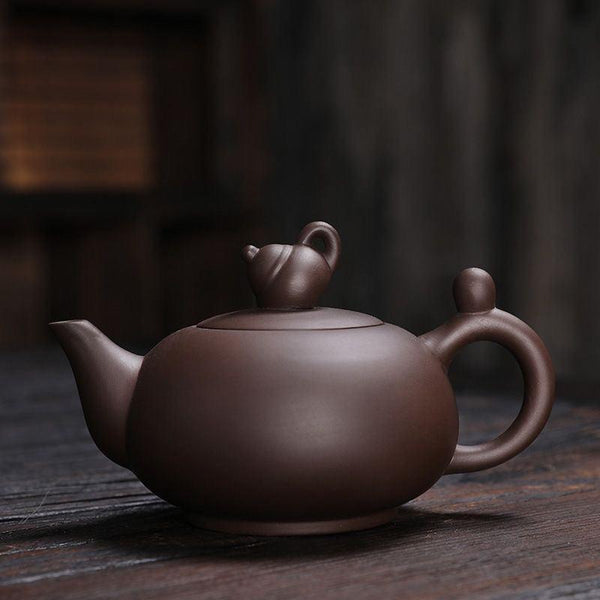
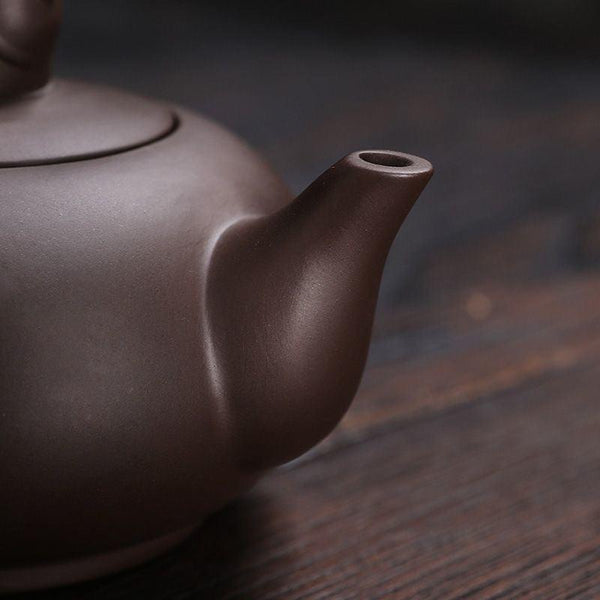
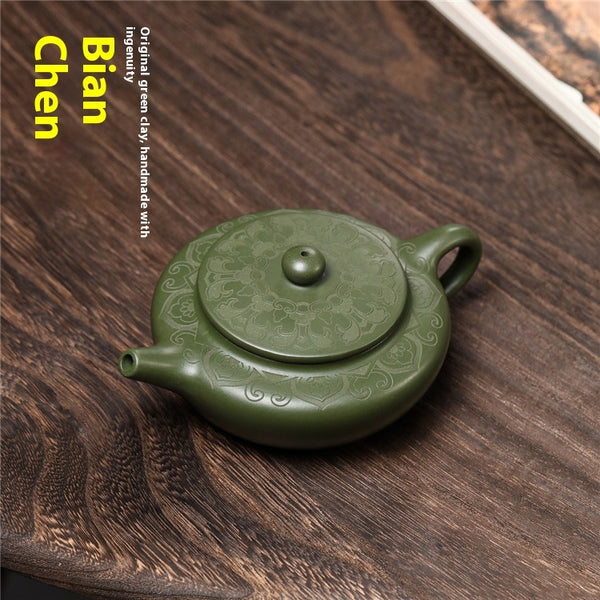
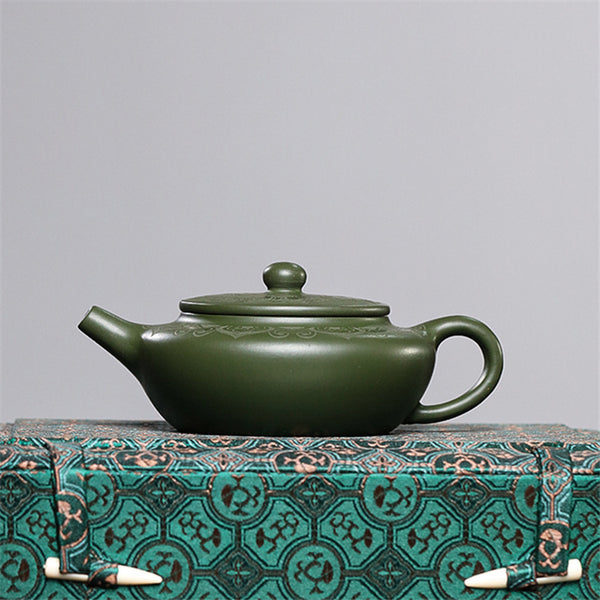
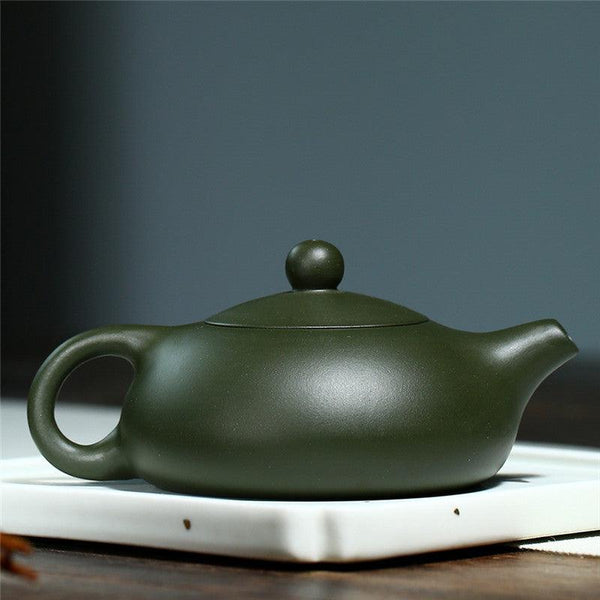
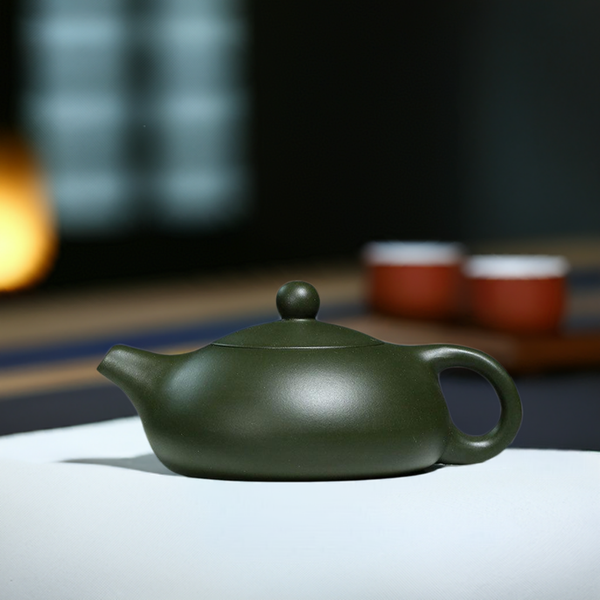
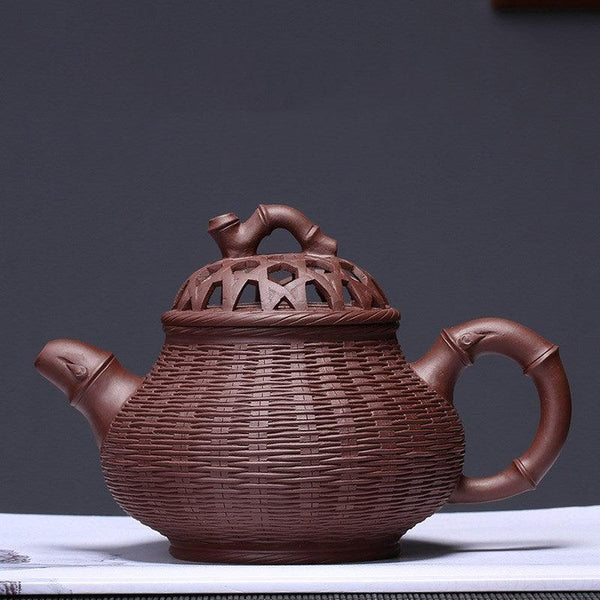
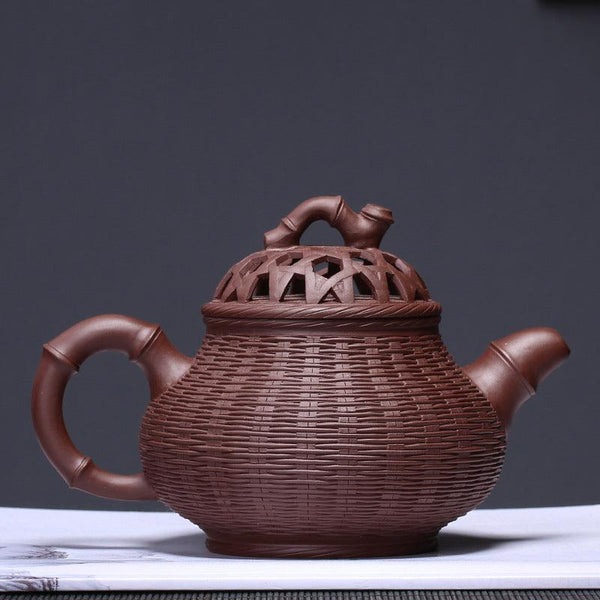
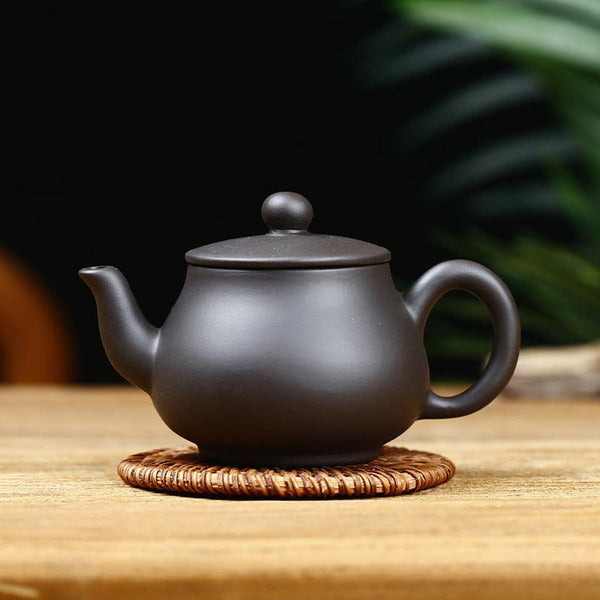
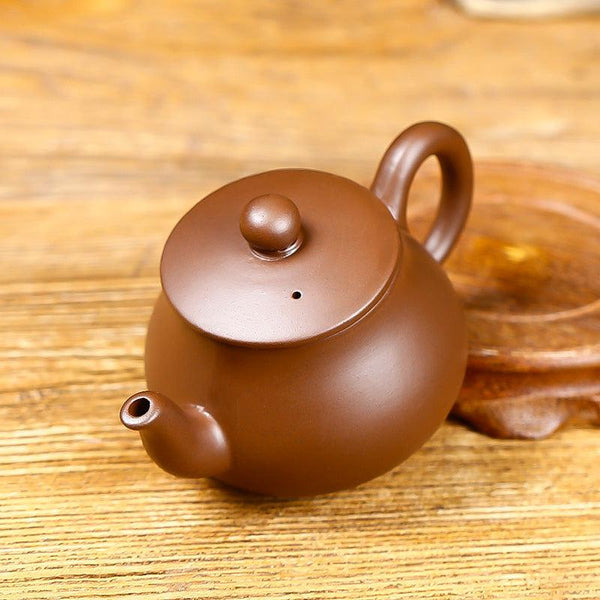
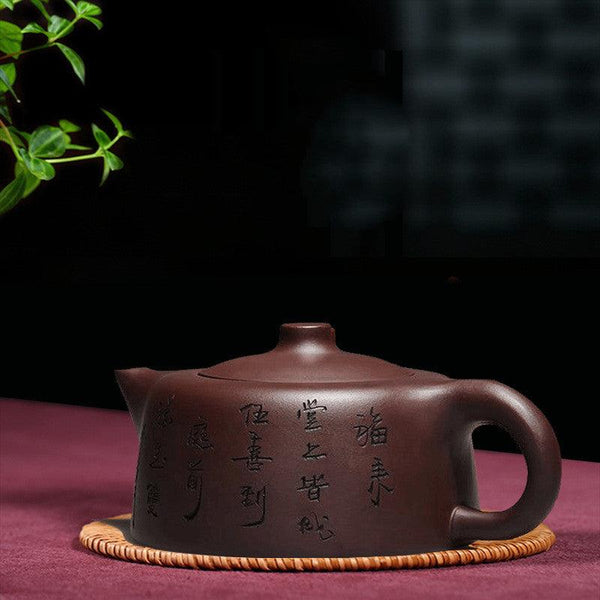
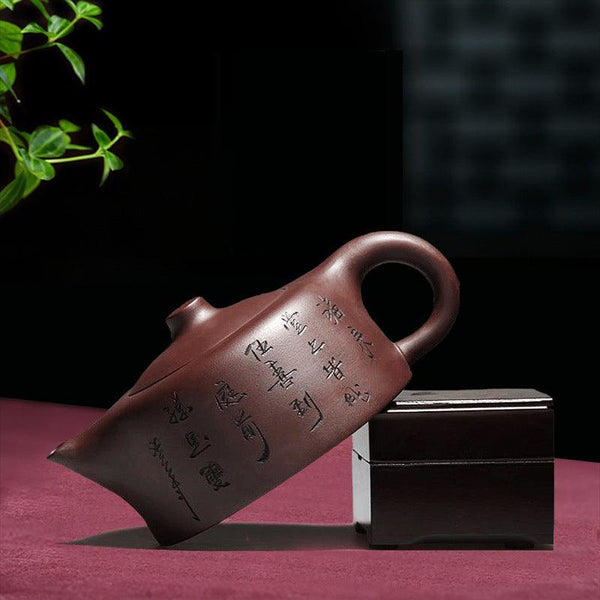
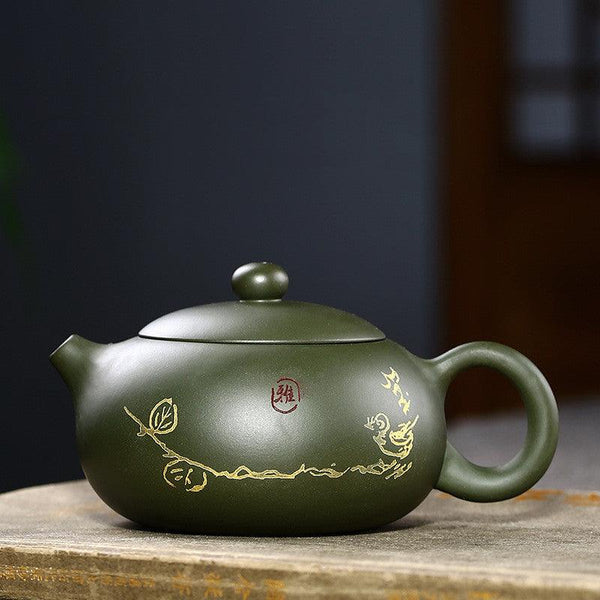
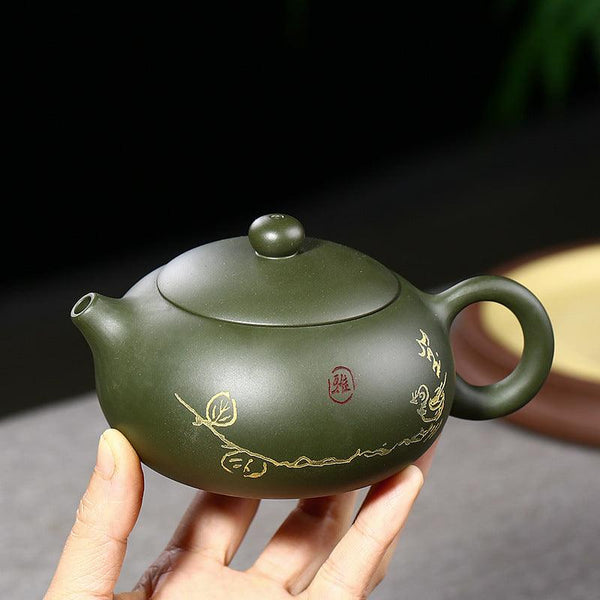
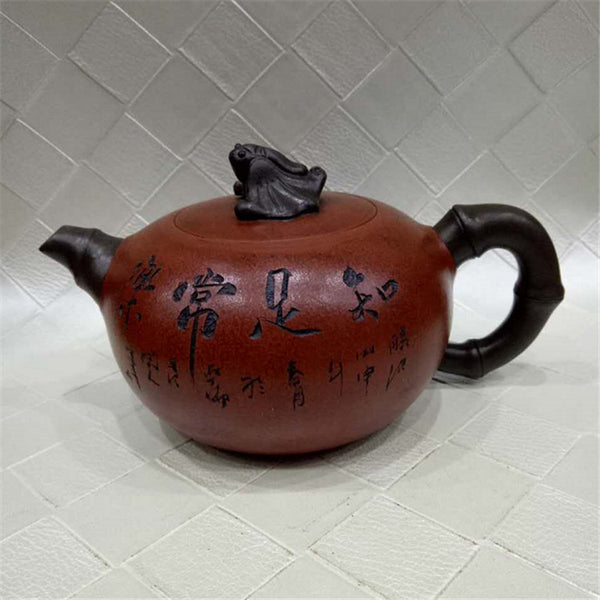
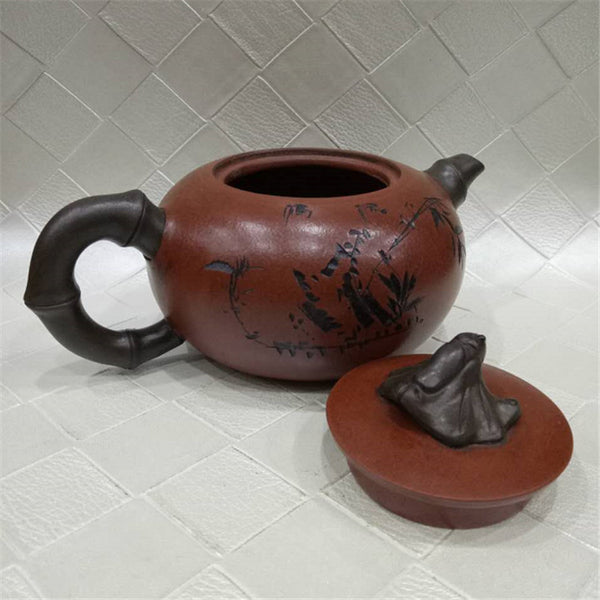
In the artistic world of Yixing Zisha, few shapes command as much respect and lasting charm as the Shipiao Teapot (Shi Piao). Unlike classic round forms like the Xishi, the Shipiao stands out with its bold, sharp geometric lines, pyramid-like structure, and a spirit that seamlessly balances strength and grace.

What Does “Shipiao” Mean?
To understand the Shipiao teapot, one must first understand the evolution of its name and its cultural significance. "Shipiao" was originally called "Shi Yao" (stone kettle). Its prototype can be traced back to Su Dongpo in the Song Dynasty. While lecturing in Yixing, he designed and made an overhead-handle stone boiling vessel using local materials, which later generations called the "Dongpo Shi Yao."
During the Ming and Qing Dynasties, with the development of Zisha craftsmanship and changes in tea-brewing methods, the large-volume water-boiling kettle gradually transformed into a compact handheld teapot. Through word of mouth over time, the character "Yao" slowly evolved into "Piao."
In the 20th century, Grand Master Gu Jingzhou officially standardized the name as the Shipiao teapot.
Historical Evolution and Scholar Heritage of the Shipiao Teapot
The evolution of the Shipiao teapot from a rough stone tea-boiling vessel into a classic symbol of Zisha art represents a history of deep integration between artisan skills and scholar aesthetics.
Song Dynasty Beginnings: Dongpo's Stone Kettle Su Dongpo created the stone kettle, laying the engineering prototype for its wide base and practical grip.
Qing Dynasty Peak: Mansheng 18 Styles and Ziye's Scholarly Spirit In the mid-to-late Qing Dynasty, Chen Mansheng, a famous epigrapher and potter, collaborated with Yang Pengnian, a master potter. Chen Mansheng refined and geometrically sliced the traditional stone kettle shape, inscribing seal carving, poetry, and inscriptions onto the teapot body, giving the Shipiao teapot its scholarly structure and soul. Subsequently, Qu Yingshao (known as Ziye), a calligrapher, painter, and master potter, further strengthened the geometric tension of the Shipiao. He tightened the diagonal lines and straightened the body, creating the crisp, erect, and razor-sharp "Ziye Shipiao."
20th-Century Modern Apex: Gu Jingzhou's Standard Format In the mid-to-late 20th century, Zisha Grand Master Gu Jingzhou introduced modern geometric composition and engineering mechanics to make micro-adjustments to the Shipiao. While retaining the triangular frame, Gu Jingzhou cleverly incorporated subtle convex curves, softening the overly harsh edges and elevating the Shipiao teapot to the pinnacle of art where straightness and curvature complement each other with dignified elegance.
Ziye, Jingzhou, and Other Classic Shipiao Styles
Although all Shipiao teapots adhere to a geometric trapezoidal structure that is wide at the bottom and narrow at the top, masters from different historical periods developed distinct styles in their handling of details:
Ziye Shipiao: Characterized by extremely straight lines, a steep body incline, and a lean, flat lid. The overall shape resembles stiff, slender bamboo bones, full of sharp and erect scholarly spirit.
Jingzhou Shipiao: Characterized by a subtle convex curve along the belly, rounded shoulders, and a short, thick, substantial spout. The overall design exudes a plump, well-balanced, dignified, and regal presence.
Han Piao (Low Shipiao): Lowers the height of the teapot body while further widening the base area. With an exceptionally low center of gravity, it delivers a visual impact that is as stable as Mount Tai and quietly tranquil.
Ribbed Shipiao: Combines traditional geometric trapezoids with fluted ribbed craftsmanship, featuring precise petal-like flutes carved into the body and lid to showcase ultimate symmetrical beauty and rhythm.
Deconstructing the Pyramid Geometric Triangular Structure
The enduring appeal and strong aesthetic tension of the Shipiao teapot stem from its strict internal triangular geometric structure.
Trapezoidal Body (Pyramid Structure) Viewed from the front or side, the main body of the Shipiao teapot forms a trapezoidal parabola that is narrow at the top and wide at the bottom. This top-light, bottom-heavy architecture endows the entire teapot with incredible visual stability.
Tripod Feet (Go-Piece Feet) The bottom of the Shipiao teapot does not sit flat on the tabletop. Instead, it is elevated by three "Go-piece feet" (or tripod feet) arranged in an equilateral triangle. Slightly rounded, these three feet not only offer firm support but also inject a touch of floating agility into the otherwise heavy body.
Flat Lid and Bridge Knob The pressed flat lid fits seamlessly against the teapot opening, topped with a smoothly curving "Bridge Knob." The arc of the bridge knob echoes the triangular lines of the teapot body, balancing solid form with empty space.
Proportions and Mechanics: Aesthetic Balance of Spout, Handle, and Body
In terms of practical functionality, the Shipiao teapot is equally a masterpiece of ergonomics and fluid mechanics:
Direct Conical Spout and Rapid Pouring: Featuring a short, straight conical spout, liquid inside the teapot is compressed by geometric tension when pouring, producing a fast, powerful stream like a pillar, and cutting off cleanly without dripping when pouring stops.
Tension of the Inverted Triangular Handle: The handle features an inverted triangle design that is rounded on the outside and flat on the inside, slender at the top and thicker at the bottom. Running parallel to the outer diagonal line of the teapot body, it provides an excellent lever point for fingers in physical mechanics, effectively distributing the weight burden after filling water.
Three-Point Level Alignment: In a static state, the tip of the spout, the flat rim of the opening, and the highest point of the handle line up strictly along a single horizontal plane, ensuring that hot liquid will not spill from the spout prematurely when filled.
Suitable Tea Types and Brewing Science
Many veteran tea lovers choose the Shipiao teapot as their daily primary teapot because of the dual synergistic effect of its structural characteristics and Zisha material properties:
Physical Brewing Advantages
- Wide Base and Leaf Expansion: The broad teapot bottom provides space for loose-leaf or tightly pressed tea leaves to lie flat and roll, facilitating thermal convection.
- Large Lid Opening: The wide, flat lid opening makes loading dry tea (such as large Wuyi Rock Tea leaves or Pu-erh cake chunks) and clearing spent tea leaves extremely convenient.
- Balance of Heat Dissipation and Insulation: The large trapezoidal surface area helps maintain stable thermal convection across multi-steep brewing sessions.
Material and Micro-Porous Synergy When fired at high temperatures around 1180°C, authentic Yixing clay (such as Purple Clay or Zhuni) forms a complex microscopic dual micro-pore structure. Scientific experiments demonstrate that this porous medium plays a unique chemical adsorption and extraction optimization role when brewing tea:
Retains Key Catechins: Effectively extracts and preserves abundant catechins (EGC, EGCG, and other antioxidant components) in the tea infusion.
Reduces Caffeine Bitterness: The micro-pore structure appropriately slows the rapid leaching of caffeine, making the tea infusion taste smoother, richer, and with a lasting sweet finish.
Best Tea Pairings
Wuyi Rock Tea (Da Hong Pao, Water Sprite, Cinnamon): The straight spout pours rapidly to separate tea soup quickly, preventing high-aroma Oolongs from becoming bitter due to over-steeping.
Pu-erh Tea (Raw/Ripe): The wide lid opening easily accommodates tea brick or cake chunks, and the spacious interior allows aged tea's inner substances to release step by step.
Ball-Rolled Oolong Tea (Tieguanyin, High Mountain Tea): The broad base provides ideal expansion space for ball-rolled tea leaves.
Dark Tea and Aged White Tea: Excellent heat retention and breathability perfectly bring out the aged aroma and rich texture of aged teas.
How to Compare and Select a Suitable Shipiao Style
When purchasing a Shipiao teapot, you can compare and select based on personal aesthetic preferences and usage habits:
- Line Preference: Those who pursue sharp, crisp lines choose the Ziye Shipiao; those who prefer generous warmth and a full hand-feel choose the Jingzhou Shipiao; those who like a low center of gravity and steady weight choose the Han Piao.
- Inspect Craftsmanship Details: Focus on observing whether the three tripod feet are evenly distributed and sit flat without rocking on a tabletop; whether the finger space under the bridge knob is comfortable; and whether the lid fits tightly with the opening.
- Capacity Selection: 100 ml to 150 ml is suitable for 1–2 people enjoying Gongfu tea; 150 ml to 220 ml is the golden practical capacity for sharing among 3–4 people on a daily tea table.
Conclusion
The Shipiao teapot is a rare treasure in Zisha ceramic art. It cleverly blends the functional genes of the Song Dynasty, the epigraphic aesthetics of Qing Dynasty scholars, modern geometric composition, and rigorous brewing science. No matter which style of Shipiao you choose, with mindful brewing and care, it will gradually transform into a warm, spiritual centerpiece on your tea table.