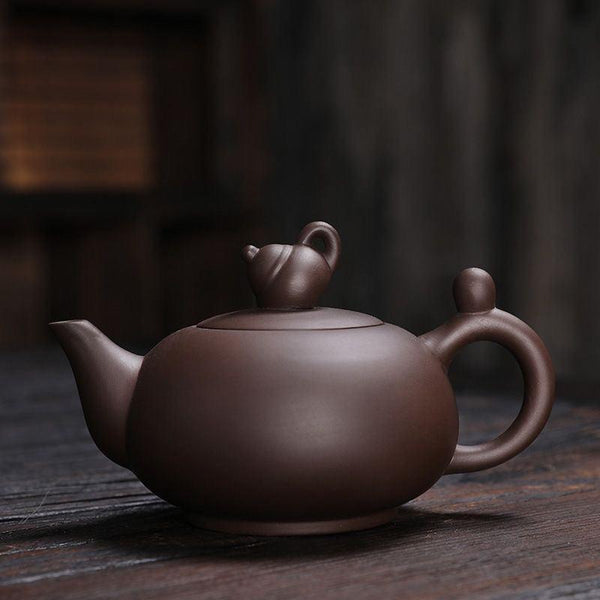
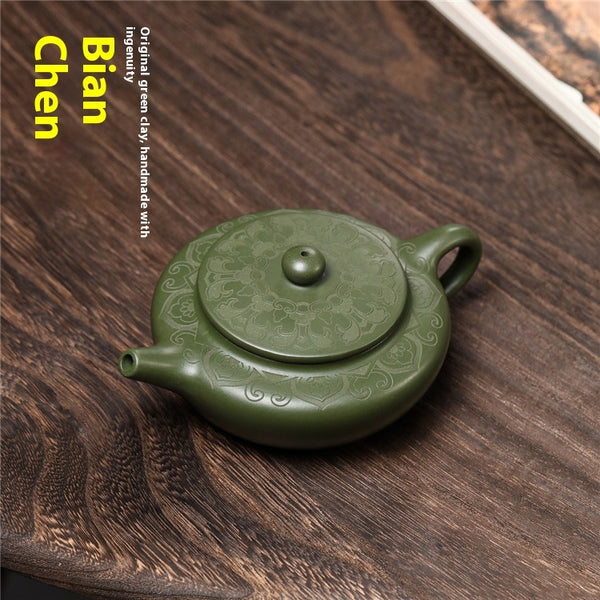
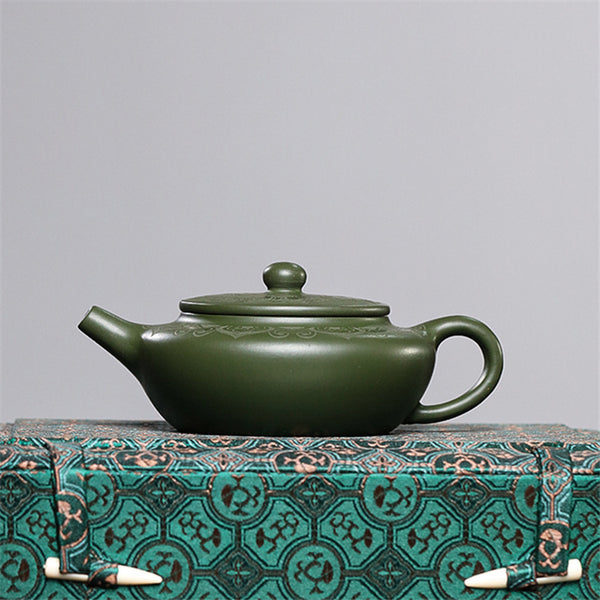
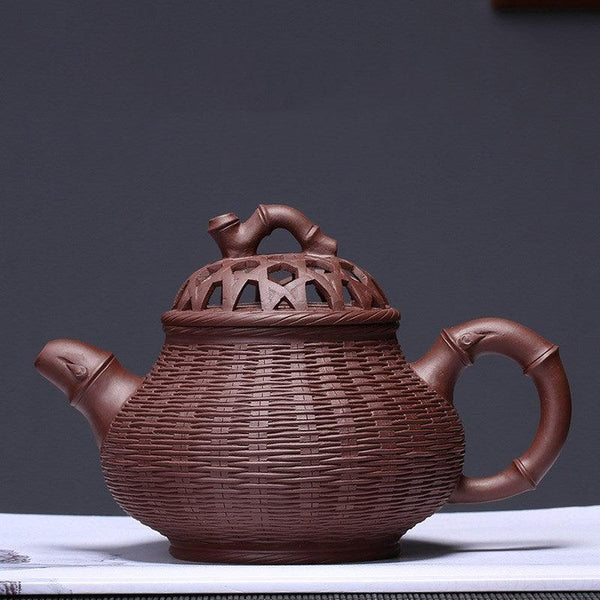
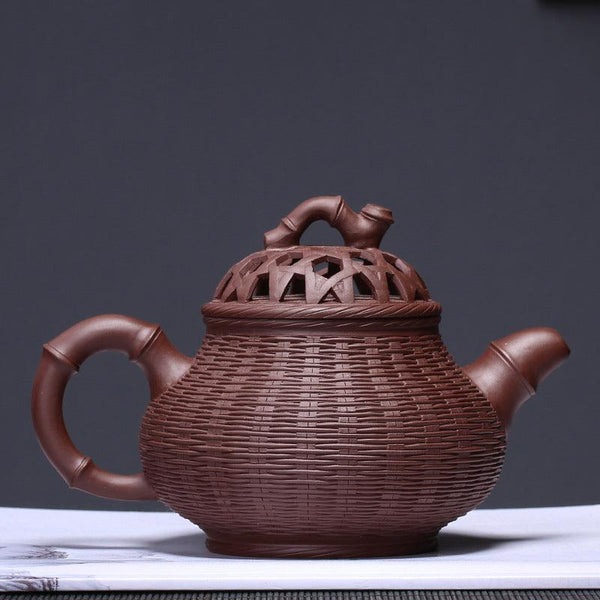
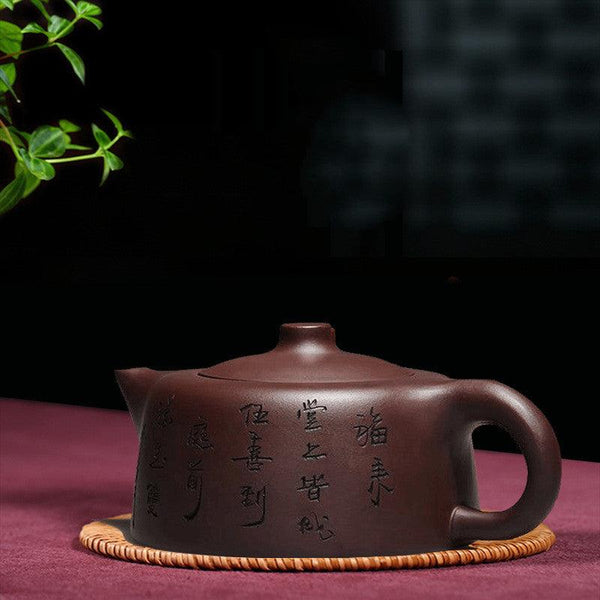
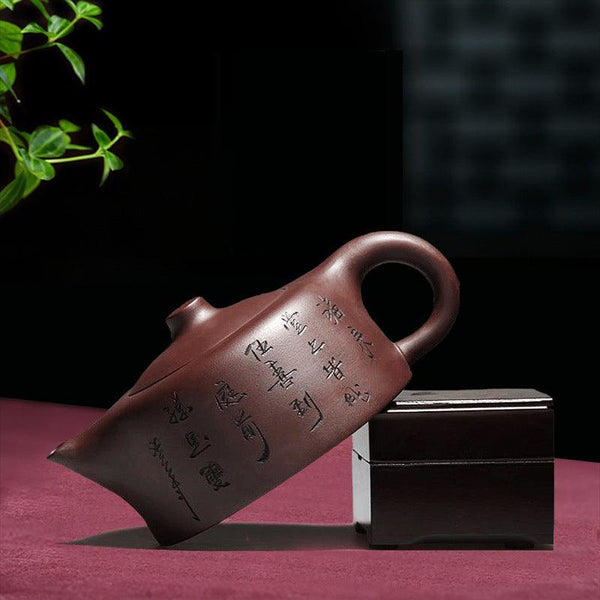
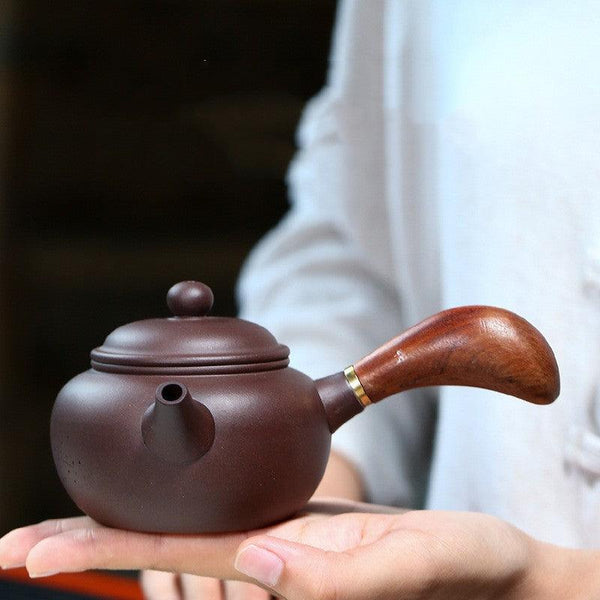
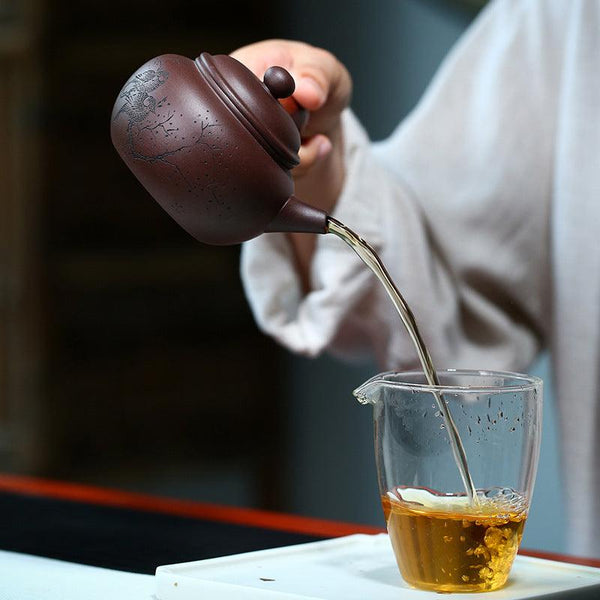
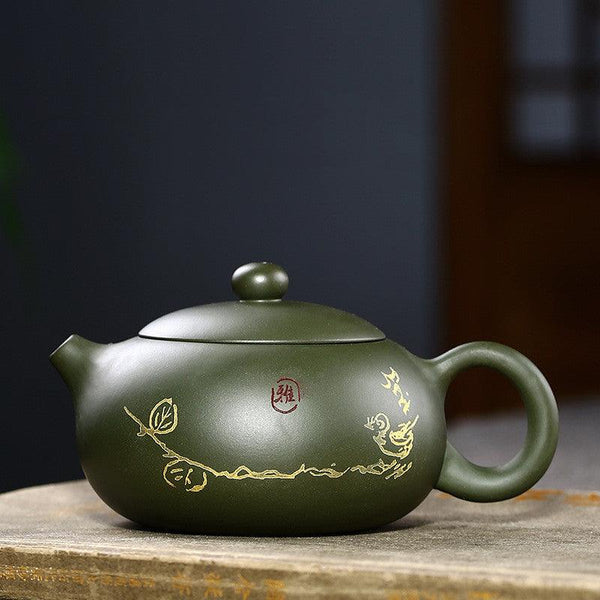
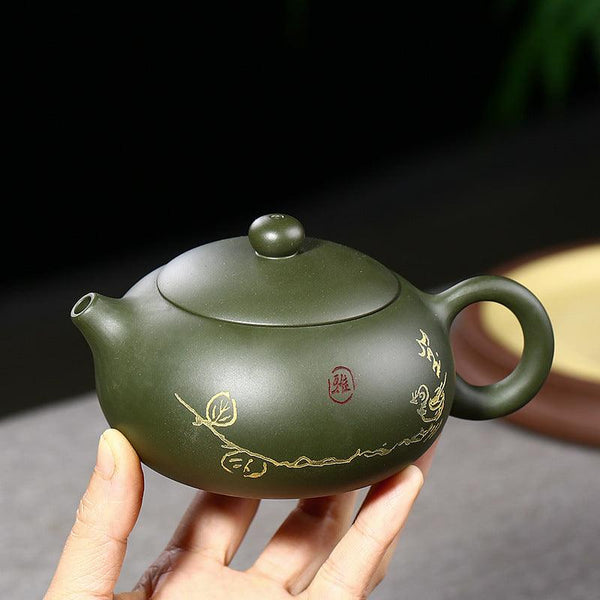
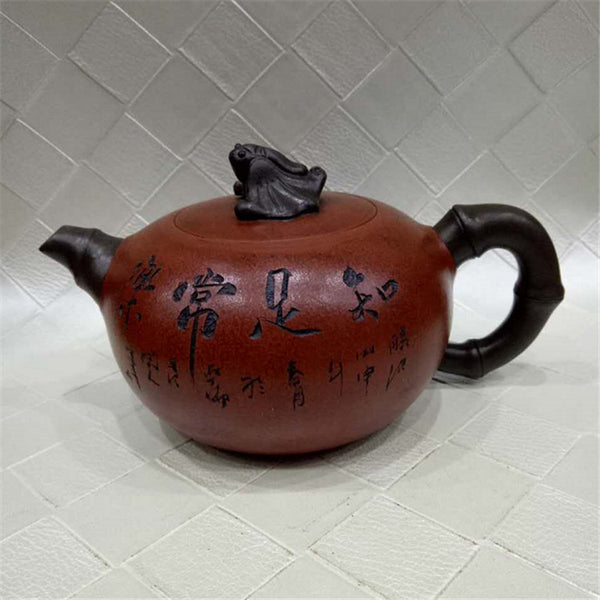
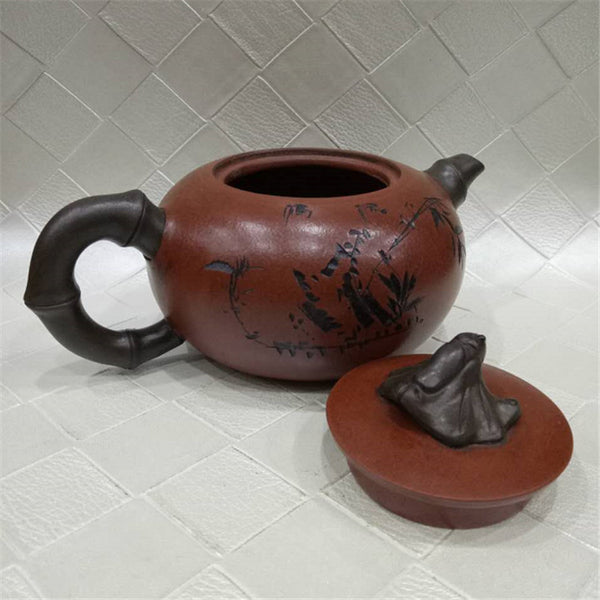
In the vast universe of Yixing clay teapots, round shapes (Yuán Qì) hold a legendary place—with every classic shape carrying its own unique name and heritage. Among all round teapot designs, none is more iconic or universally cherished by tea lovers than the Xishi Teapot.

What Is a Xishi Teapot?
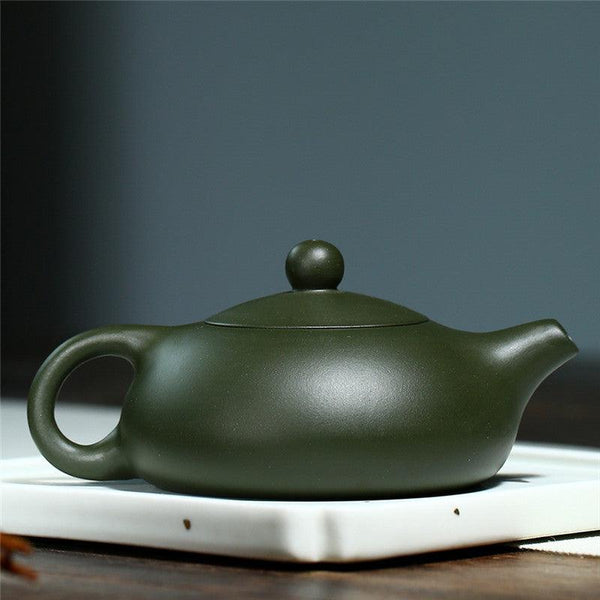
The Xishi teapot belongs to the Round Shape (Yuán Qì) category—one of the four foundational styles of Yixing ceramic art alongside Square (Fāng Qì), Special/Naturalistic (Huā Qì), and Ribbed (Jīn Wén Qì). It is celebrated for its minimalist contours and full-bodied silhouette, embodying traditional Chinese concepts of harmony, balance, and completeness.
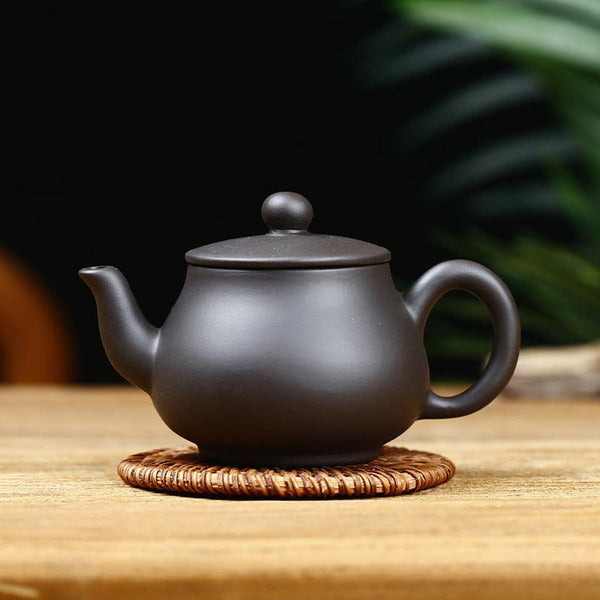
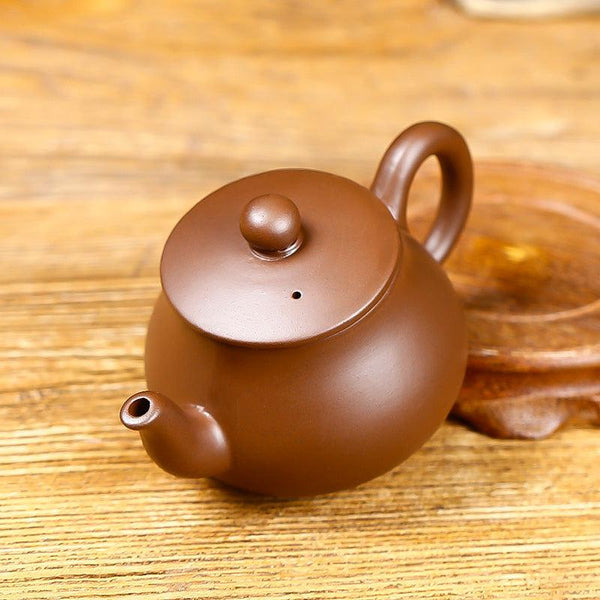
A classic Xishi teapot features five distinct design elements:
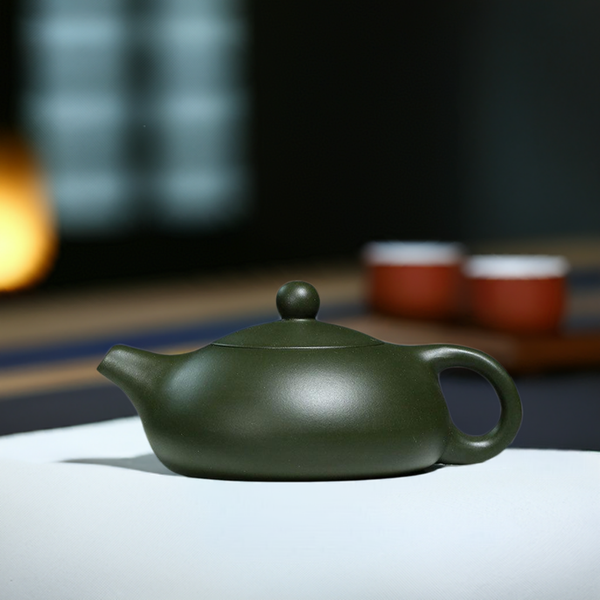
The Body: A plump, spherical belly with seamless curves and no harsh angles.
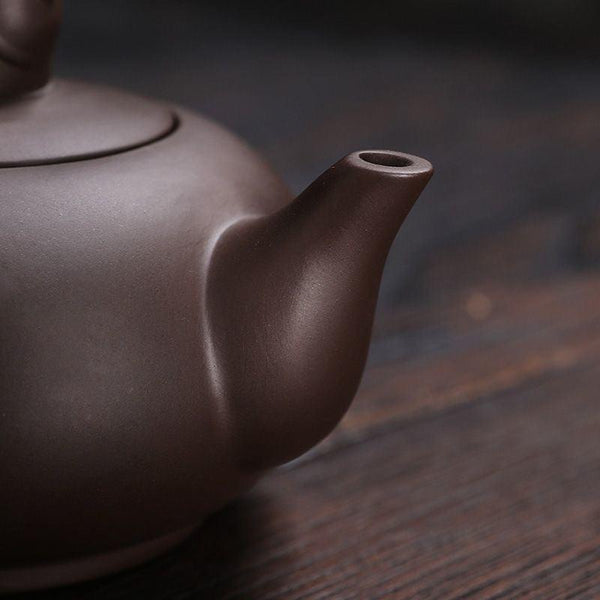
2. The Spout: A short, straight, cone-shaped spout (Submerged Spout) that emerges naturally from the teapot's belly.
3. The Lid: A seamlessly integrated submerged lid. The curve of the lid continues the exact arc of the body as if carved from a single sphere.
4. The Knob: A smooth, pearl-like button atop the lid for effortless lifting.
5. The Handle: An inverted handle that is slender at the top and thicker at the bottom, creating a perfect visual and physical balance against the short spout.
Stripped of unnecessary surface ornament, the Xishi teapot relies entirely on pure geometric tension and the raw, earthy beauty of authentic Yixing clay.
The Origin and History of the Xishi Shape
Yixing stoneware dates back to the Song Dynasty (10th century). By the 16th century during the Ming Dynasty, monks at the Jinsha Temple and legendary artisans like Gong Chun refined these crafting techniques, making Yixing teapots beloved among scholar-officials and tea connoisseurs.
As potters drew inspiration from nature and daily life, the Xishi shape emerged, inspired by Xi Shi, the most celebrated of Ancient China’s Four Great Beauties:
The Original Name: Folk potters originally dubbed this shape Xi Shi Ru ("Xishi's Breast"), poetically capturing the soft, voluptuous curves of the spherical body.
Refinement by Scholars: As Yixing teapots entered the study rooms of Ming and Qing Dynasty scholars, the name was refined to the more elegant Xishi Teapot, inspiring related round variations like the Wen Dan and Ru Ding.
This evolution from a folk design into a timeless tea table staple reflects the elevation of Chinese tea utensils into high art.
How to Spot the Classic "Golden Ratio" of a Xishi Teapot
While modern master potters subtly tweak proportions, a true, well-balanced Xishi teapot adheres to strict aesthetic guidelines:
Spherical Tension: The body must be plump and full without looking bloated. If the belly is too flat, the teapot loses its characteristic vitality.
Seamless Lid Fit: The submerged lid is a true test of a potter's skill. The seam between the lid and rim must be airtight, forming an unbroken curve across the top.
Direct, Splash-Free Pour: The short, straight spout concentrates water pressure inside the vessel, delivering a fast, powerful pour that cuts off clean without dripping.
Ergonomic Handle Balance: The inverted handle doesn't just look elegant—it shifts the center of gravity downward when filled with hot water, reducing wrist strain during pouring.
The "Three-Point Level" Alignment: When viewed from the side, the tip of the spout, the rim of the opening, and the top of the handle should rest along a single horizontal plane to prevent tea from overflowing before you pour.
How the Round Body Enhances Your Tea: The Science of Brewing
The global popularity of the Xishi teapot isn't just about looks—its rounded architecture offers proven physical and chemical brewing advantages.
Physical Advantage: Thermal Circulation & Room to Unfurl
Optimal Leaf Expansion: Tightly rolled, spherical tea leaves (like ball-rolled Oolongs) need ample space to expand. The wide, round interior of the Xishi pot lets leaves roll and unfurl freely in boiling water, releasing their full flavor profile.
Micro-Porous Thermal Control: Fired at high temperatures, authentic Yixing clays (such as Benshan Zhuni or Zisha) form a complex dual micro-pore structure ranging from nanometer to micron scales. This microscopic matrix retains heat exceptionally well while remaining gas-permeable ("breathable") yet water-impermeable, keeping tea warm without stewing or souring the leaves.
Chemical Advantage: Richer Flavor & Smoother Taste
Scientific studies demonstrate that Yixing clay actively improves tea quality compared to non-porous materials:
Higher Catechin Retention: Brewing in authentic Yixing clay (Zisha and Zhuni) retains higher concentrations of beneficial antioxidants, including EGC, EGCG, and total catechins.
Milder Bitterness: Yixing clay naturally tempers the extraction rate of caffeine, yielding a smoother, richer infusion with significantly less astringency.
Best Tea Pairings and Capacity Guide
To get the most out of your Xishi teapot, pair its physical shape and clay characteristics with the right tea variety:
Recommended Tea Varieties
Ball-Rolled Oolongs: Tieguanyin, High-Mountain Oolong, and Dong Ding. The spacious round belly allows tightly rolled leaves to unfurl completely and release high floral aromas.
Black Teas: Lapsang Souchong, Dianhong, and Yingde Black Tea. Superior thermal retention brings out deep malty sweetness and fruit notes.
Ripe Pu-erh & Aged Teas: Smaller Xishi teapots allow quick steeping cycles that yield a thick, silky-smooth soup.
Pro Tip: If brewing delicate Green or White teas, keep water temperature under 185°F (85°C) or choose a teapot with a wider mouth to prevent scorching the leaves.
Capacity Guide
100ml – 150ml (~3.4 – 5.1 oz): The gold standard for traditional Gongfu style brewing, ideal for 1 to 2 people enjoying quick, concentrated steeps.
150ml – 200ml (~5.1 – 6.8 oz): The most versatile daily size, perfect for sharing among 3 to 4 friends.
4 Common Red Flags in Modern Replica Xishi Teapots
Because the Xishi is so popular, cheap imitations flood the market. Watch out for these four common design flaws:
Overly Long or Drooping Spout: A Xishi spout should be short, straight, and subtle. A long, curved, or sagging spout ruins its compact proportions.
2. Ill-Fitting Lid with Gaps: Poorly fitted submerged lids allow heat to escape rapidly and cause messy leaks during pouring.
3. Reversed Handle Shape: Cheaper factories often mistakenly install a standard top-heavy handle instead of the traditional inverted handle, throwing off the teapot's balance and grip.
4. Chemically Altered or Slipcast Clay: Authentic Yixing teapots are hand-formed or mold-assisted using traditional slab-building techniques that preserve natural micro-porosity. Cheap mass-produced "slipcast" teapots use liquid mud mixed with sodium silicate, resulting in a dense, non-porous wall that destroys the clay's signature breathability.
Who Is the Xishi Teapot Best For?
The Xishi is widely considered the ultimate entry-level Yixing teapot for good reason:
First-Time Yixing Buyers: Its clean, curve-driven design has no awkward crevices, making it effortless to rinse, dry, and season into a glossy, lustrous patina over time.
Gongfu Tea & Oolong Enthusiasts: The fast pour spout and roomy belly match the fast-paced, high-leaf-to-water ratio of Gongfu tea brewing.
Minimalist Design Lovers: Its elegant, timeless geometry looks stunning on any modern tea tray or desk setup.
Budget-Conscious Collectors: Because it is a classic foundational style, you can find authentic Xishi teapots across every price range—from accessible daily brewers to high-end master artisan pieces.
Conclusion
The Xishi teapot is a triumph of traditional craft—where natural Yixing clay, heat-retaining physics, and centuries of aesthetic refinement come together in the palm of your hand. From its silky-smooth silhouette to the iron-oxide crystals lining its breathable micro-pores, it represents the very best of Chinese tea culture.
Select an authentic, well-proportioned Xishi teapot, dedicate it to your favorite tea category ("one pot, one tea"), and watch it develop a rich, jade-like sheen through years of mindful brewing.